Flax Straw Intake Quality Assessment and Moisture Verification
Flax straw intake quality assessment verifies core bale moisture and non-flax purity to adjust weighbridge billing mass down to standardized dry fiber yield.


Yard
Raw flax bales arriving at a scutching facility undergo immediate structural and moisture screening before unstacking. Moisture distribution across incoming bale consignments dictates whether stalk lots enter active scutching lines, go into aerated storage, or trigger contractual price penalties. Scutching mills rely on high-capacity decorticating machinery designed for dry stem processing; excess water alters stem breaking behavior and interferes with mechanical shive separation.

Visual Scoring and Field Retting Evaluation
Uniform stalk color shows how evenly dew-retting progressed across the swath prior to baling. Golden-yellow or light grey stems signal optimal pectin breakdown, allowing bast fiber ribbons to separate cleanly from the woody core during decortication. Deep black discoloration indicates over-retting from prolonged moisture exposure on soil, which degrades cellulose chains and weakens long fibers.
Bright green stalks show under-retting, where intact pectin matrices require excessive mechanical impact to break, generating heavy tow fractions instead of long line flax.
Stalk alignment within round or square bales directly affects decortication throughput. Parallel stem orientation allows scutching turbines to grip stem ends uniformly, maximizing long fiber yield. Scutchers penalize tangled or randomly oriented straw because misaligned stems break rapidly during breaking-roller pass-through.
- Weigh the delivery transport on a calibrated weighbridge before directing the load to the unstacking bay.
- Extract five sample bales across different height tiers of the truck load for core moisture testing and mass auditing.
- Perform color grading across ten random stalk bundles per bale to verify dew-retting uniformity.
- Measure bale mass, dimensions, and compaction density to verify mechanical compatibility with automated unwrapping lines.
- Check string integrity and scan for surface weed growth, soil crusting, or internal rot signatures.
Contract specifications under Confederation Europeenne du Lin et du Chanvre guidelines penalize straw consignments exceeding two percent heavy weed mass by weight.

Physical Intake Inspection Boundaries
Bale alignment and density uniformity dictate how effectively automatic decorticating turbines process incoming stalks without jamming. Industrial rectangular bales measuring 1.2 metres by 0.9 metres by 2.4 metres maintain compaction densities between 130 and 160 kilograms per cubic metre. High bale density restricts airflow, trapping moisture absorbed during rainfall events prior to field baling.
Loose bales with densities below 110 kilograms per cubic metre destabilize transport stacks and disassemble prematurely on conveyor feeds.
| Grade Designation | Retting Index | Stalk Color Profile | Fiber Separation Tendency | Processing Destination |
|---|---|---|---|---|
| Grade A Prime | Optimal Dew Ret | Silver-Grey to Light Gold | Clean Ribbon Release | Direct Scutching Line |
| Grade B Standard | Slight Under-Ret | Pale Yellow-Green | Moderate Stem Adhesion | Conditioning Shed Storage |
| Grade C Weathered | Over-Retted | Dark Charcoal Grey | Brittle Fiber Splitting | Tow-Only Extraction |
| Grade Rejection | Unretted / Rotted | Bright Green or Black Rot | Severe Adhesion or Mold | Consignment Rejection |
Inspectors pull ten random stalk bundles per delivery batch to measure stem length and stem diameter profiles. Stems exceeding 80 centimetres in length deliver superior long-fiber recovery rates when stem diameters fall within the 1.5 to 2.5 millimetre target range. Coarse stems exceeding 3.0 millimetres yield low fiber percentages due to thick woody cores.
Fine stems under 1.0 millimetre snap during breaking roll passes, increasing short fiber tow percentages. Grey stem discoloration arises either from late-harvest rainfall or over-retting cellulose breakdown.
Probe
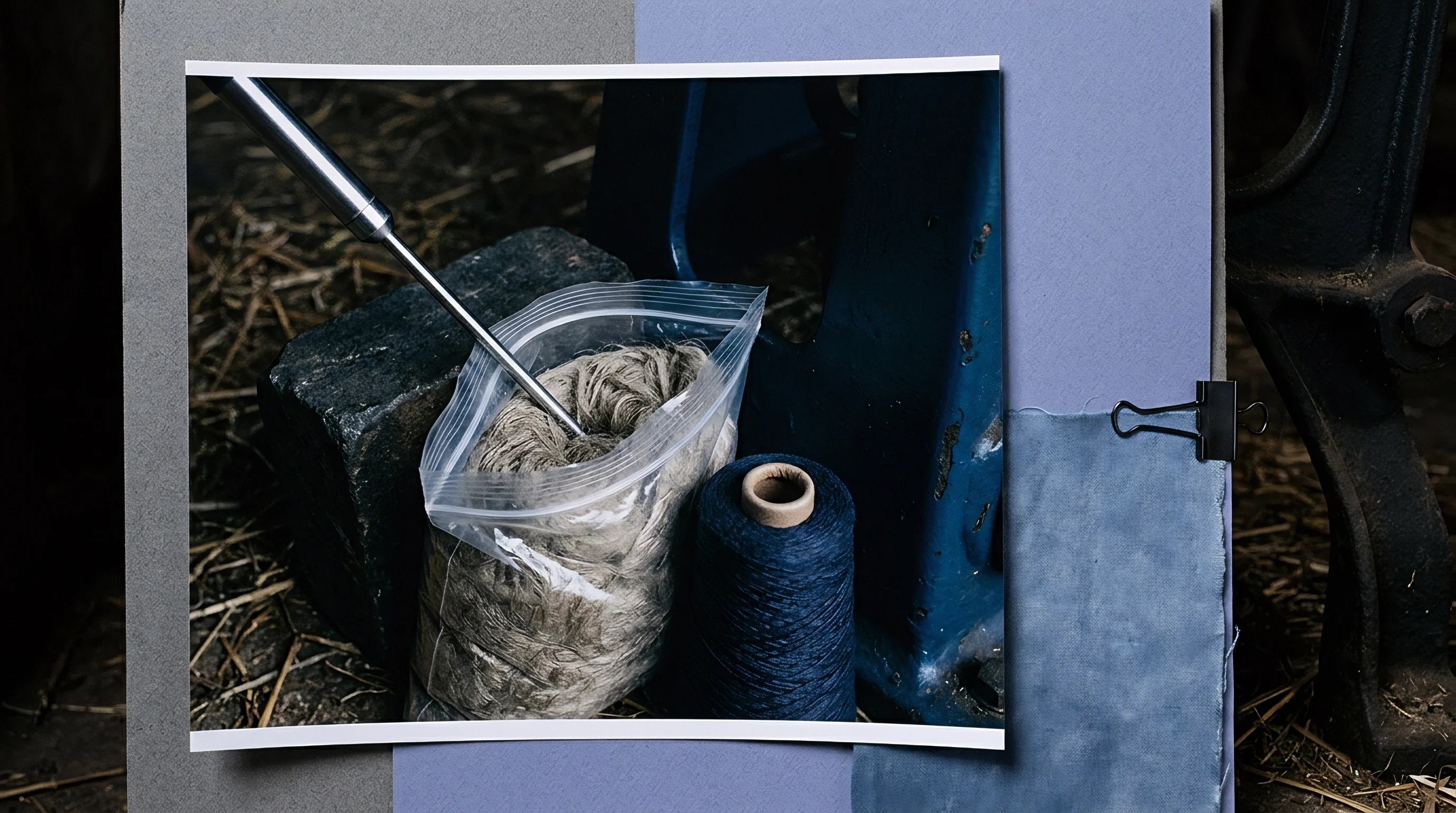
Accurate moisture assessment in high-density flax bales demands electrical or thermal testing tools capable of reading core condition rather than surface humidity. Water content directly determines the payable net mass of a delivery batch and dictates storage stability. Bales stacked at core moisture levels above 16 percent generate internal heat through microbial respiration, causing mold growth and spontaneous heating during long-term storage.

Dielectric and Resistance Measurement Mechanics
Direct-current resistance instruments pass low voltages through twin insulated stainless steel electrodes pushed deep into compressed plant material. Electric current flows through water film covering stem cells, delivering resistance values that convert instantly to moisture percentages on calibrated digital meters. Resistance probes require needle lengths between 400 and 600 millimetres to reach the inner core of high-density square bales, bypassing dry exterior layers.
Field technicians push multi-pin resistance probes into at least six distinct bale locations, recording average core moisture values across every delivery lot.
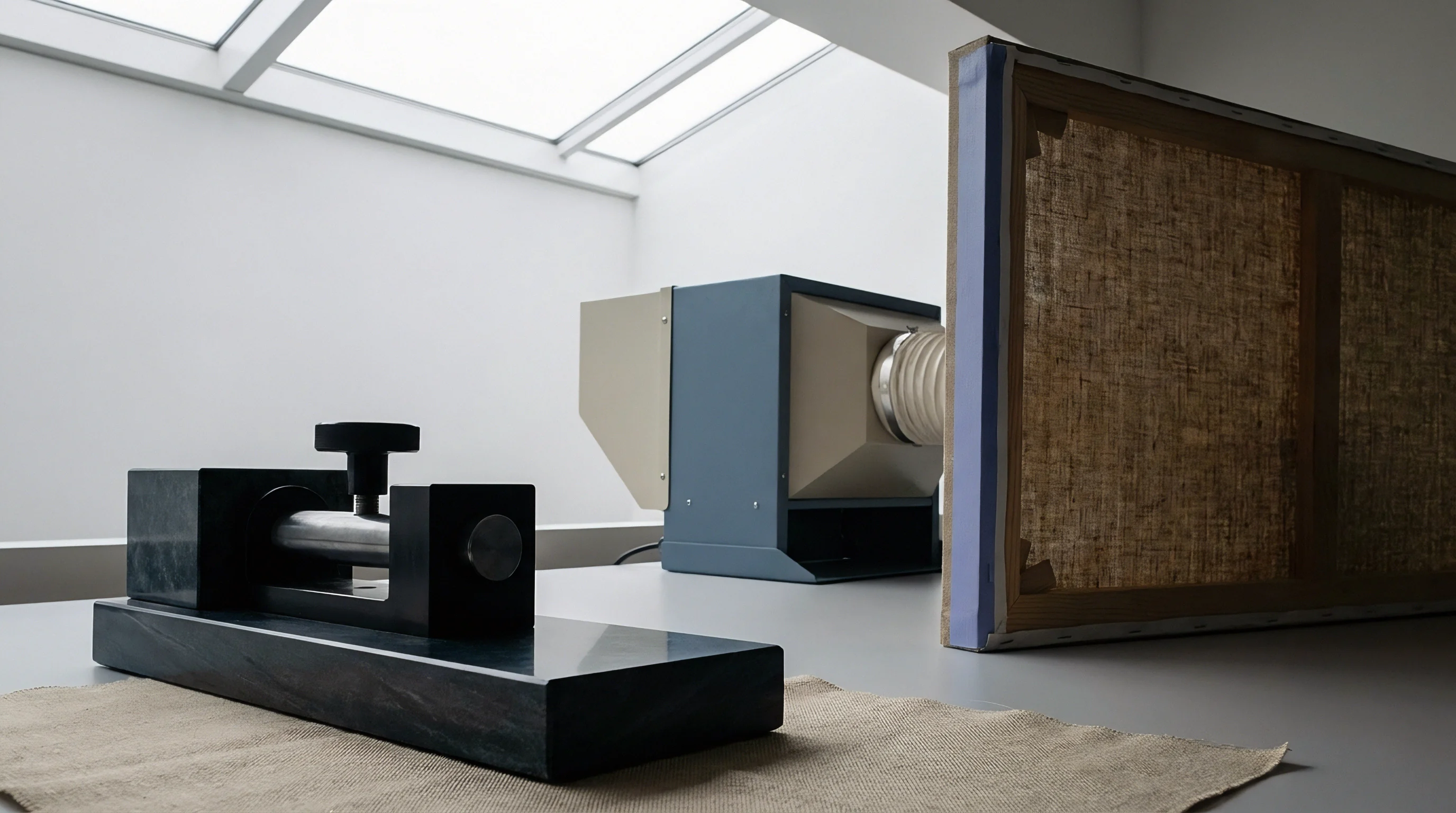
High-frequency capacitance sensors offer non-destructive surface testing by projecting electrical fields into straw bundles. Capacitance measurements register rapid readings but lack the penetration depth needed for dense 150-kilogram bales. Laboratory oven-drying remains the primary reference standard under ISO 638 specifications, requiring straw samples to dry at 103 degrees Celsius until mass stabilizes.
Oven verification takes 16 hours, making fast electrical probe testing essential for rapid unloading decisions.
Flax straw stored at relative humidity levels above seventy percent absorbs atmospheric water until core equilibrium exceeds fifteen percent moisture content.
Where Do Core Moisture Variances Shift Billing Weights?
Density variations inside big square bales create localized pockets where water accumulates unevenly during field storage. Rain falling on unsecured field stacks penetrates bale tops, creating dense wet zones while lower bale layers stay dry. Single-point surface probing misses deep wet core pockets entirely.
Testing personnel must insert probes perpendicular to the bale pressing direction, driving needles across compressed stem layers rather than parallel between them.
Temperature shifts modify electrical conductivity inside straw masses. Cold straw increases electrical resistance, causing digital moisture meters to underreport water content by up to two percentage points at near-freezing temperatures. Modern digital resistance probes incorporate internal thermal sensors, automatically adjusting moisture percentage calculations to compensate for ambient straw temperature.
Uncompensated measurements taken on frozen straw consignments register artificial dry values, leading to unexpected decay during spring storage. Bales that feel noticeably cool in the center when penetrated invariably hold wet pockets that skew mass calculations and accelerate storage decay.

Purity
Cleanliness parameters govern the net recovery rate of long textile fibers during mechanical decortication. Delivered flax straw contains non-flax biomass, soil encrustation, and harvesting debris alongside true flax stalks. Processing facilities establish foreign matter allowances to prevent equipment damage, reduce waste handling costs, and guarantee accurate long-fiber extraction yield predictions.

Trash Fiber Ratio and Non-Flax Organic Matter
Weed contamination introduces coarse foliage and seed heads that interfere with turbine scutching rollers and alter stalk mass. Broadleaf weeds, wild mustard, and aggressive grasses carry high moisture fractions that bleed into surrounding dry straw during storage. Weeds lack textile-grade bast fiber structures, passing through scutching mills as worthless dust or contaminated shives.
Foreign organic matter alters dry mass calculations during intake settlements. Soil encrustation adhering to root ends adds heavy deadweight to weighbridge scale readings. High soil loads accelerate mechanical wear on scutching breaker roll flutes, dulling metal edges and increasing power consumption across decortication lines.
Scutchers set maximum non-flax impurity thresholds at two percent by weight before enforcing heavy price deductions or batch rejection.
- Polypropylene string contamination introduces non-dyeable synthetic filaments that split during decortication and contaminate card sliver.
- Excess soil encrustation dulls scutching turbine edge blades rapidly, increasing machine maintenance expenditures and down time.
- Heavy weed mass reduces long fiber extraction efficiency by entangling bast ribbons and diverting usable line flax into tow waste.
- Fungal stalk degradation weakens individual bast fiber walls, causing excessive fiber breakage during mechanical decortication.
| Contaminant Class | Maximum Allowed Percentage | Scutching Equipment Impact | Commercial Settlement Penalty |
|---|---|---|---|
| Non-Flax Weeds | 1.5% Mass Ratio | Roller Wrap and Tow Pollution | Direct Mass Deduction |
| Soil and Rocks | 0.5% Mass Ratio | Breaker Flute Wear and Abrasion | Double Mass Deduction |
| Synthetic Twine | 0.0% Mass Ratio | Turbine Jamming and Filament Contamination | Immediate Lot Rejection |
| Decayed Straw | 2.0% Mass Ratio | Fiber Strength Collapse | Downgrade to Tow Class |

Mechanical Shive Separation Benchmarking
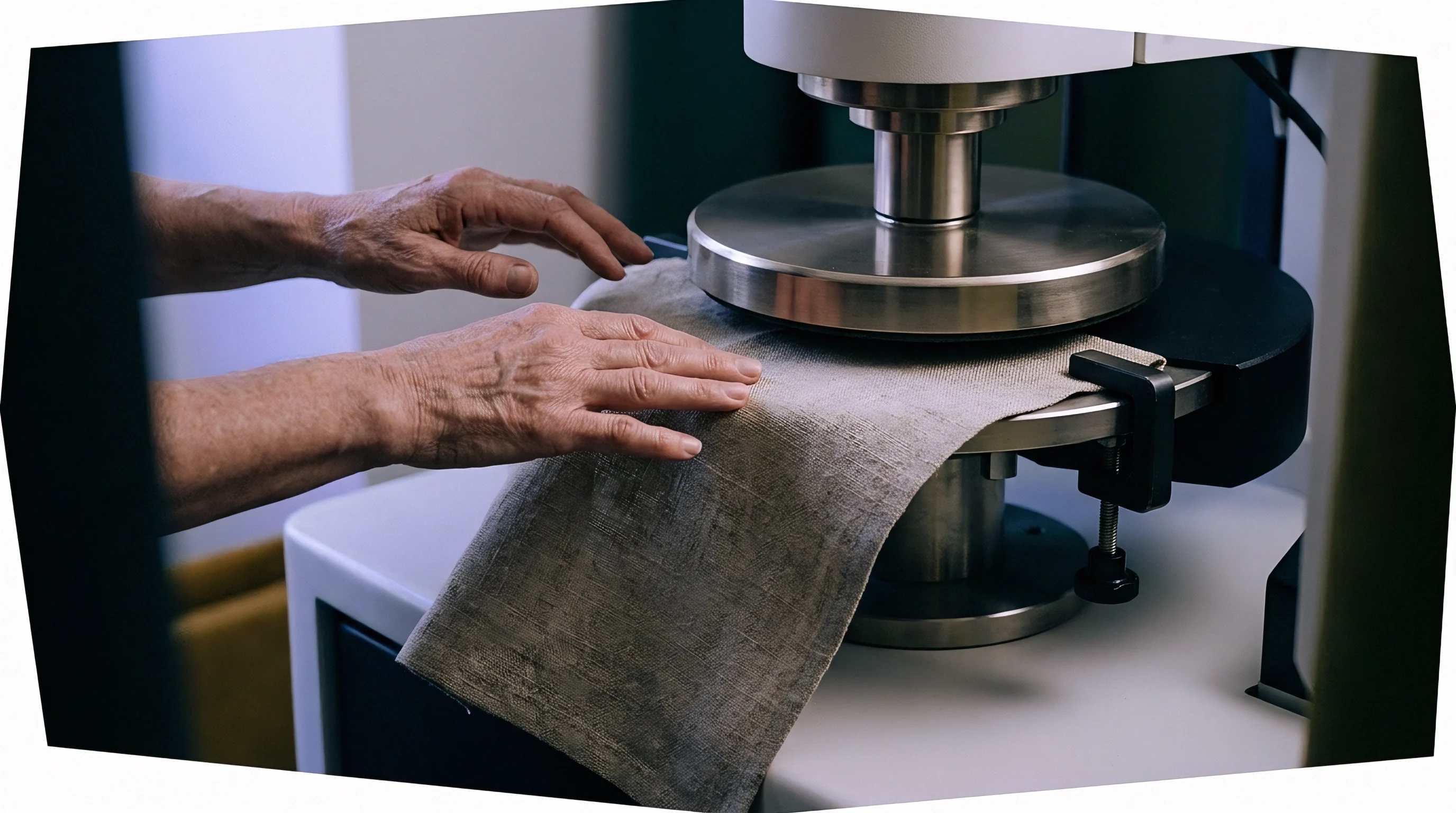
Laboratory scutching rigs process five-kilogram straw samples through breaker rolls and scutching wheels to isolate clean fiber from woody core debris. Testing technicians weigh raw straw samples before mechanical separation, collecting long line fiber, short tow fiber, and woody shives in separate fractions. Calculating the ratio of clean long fiber to initial straw mass determines the commercial grade of the straw delivery batch.
Coarse plastic baling twine fragments mixed into unretted straw shatter during turbine scutching and foul secondary carding wire.
Synthetic polypropylene baling twine fragments create severe operational failure points. Shredded plastic twine splits into micro-fibers that mix invisibly into long flax bundles. Polypropylene does not absorb flax dyes during yarn finishing, leaving un-dyed white streaks across finished woven linen fabrics.
Automatic optical sorting sensors installed on modern intake lines detect foreign synthetic fibers before straw enters decortication turbines. Accepting straw consignments without auditing non-flax purity metrics leads to unexpected processing line stoppages, prematurely worn turbine machinery, and unrecoverable yield losses during scutching.


Yield
Decortication performance tests translate raw straw weight into commercial line flax and tow output estimates. Industrial flax processing margins depend on the recovery rate of long scutched fiber, which commands market prices four to six times higher than short tow fiber. Mill intake teams evaluate incoming straw batches using bench-scale decorticating units to establish baseline yield profiles before issuing purchase credits.
Lab Scutching Calculations and Fiber Recovery
Standardized extraction protocols evaluate straw samples by recording initial mass, unretted wood fraction, long fiber mass, and tow fiber mass. Evaluation requires calculating fiber recovery percentages against dry straw mass to eliminate moisture distortion. A typical high-grade European flax straw batch yields 20 to 24 percent long line fiber, 10 to 14 percent short tow fiber, 48 to 52 percent woody shive, and 12 percent processing dust and moisture balance.
Consider a 25-tonne intake consignment delivered at 15.5 percent measured moisture content and 3.5 percent non-flax trash content. Baseline intake standards assume 12.0 percent moisture and 1.0 percent non-flax trash allowance. Processing starts by calculating net dry mass.
The raw 25,000-kilogram load contains 3,875 kilograms of water and 875 kilograms of trash, leaving 20,250 kilograms of bone-dry flax straw biomass.
At standard 12.0 percent commercial moisture regain, the baseline straw weight equals 23,011 kilograms. Deducting the 2.5 percent excess trash penalty adjusts the net payable straw mass down to 22,435 kilograms. Applying a lab-tested 22.0 percent long fiber recovery rate to this net mass yields 4,935 kilograms of long line flax, while 2,692 kilograms of tow fiber enter short-staple processing channels.
- Stalk height and diameter determine the total volume of bast fiber bundles present per stem.
- Dew retting duration controls the enzymatic dissolution of the middle lamella pectin holding fibers to the woody core.
- Mechanical breaker clearance establishes how efficiently woody shives fragment without fracturing individual long fiber ribbons.
- Moisture equilibrium state influences stalk flexibility, preventing brittle fiber snapping during high-speed scutching turbine impact.
Long Fiber to Tow Ratio Prediction
Stalk length, stem diameter, and retting degree determine the proportion of continuous line fiber retained versus short tangled tow. Stems harvested by pulling rather than cutting preserve full fiber ribbon length down to the root zone. Scutching turbines process intact root ends efficiently, keeping long ribbons parallel during turbine blade scraping operations.
| Processing Stage / Fraction | Nominal Percentage | Raw Wet Mass (tonnes) | Corrected Dry Basis Mass (tonnes) | Commercial Destination |
|---|---|---|---|---|
| Long Line Fiber | 22.0% | 5.50 | 4.935 | Wet-Spinning Mill Line Flax |
| Short Tow Fiber | 12.0% | 3.00 | 2.692 | Dry-Spinning or Non-Woven Carding |
| Woody Shive Fraction | 50.0% | 12.50 | 11.218 | Horticultural Mule or Particle Board |
| Excess Moisture Fraction | 3.5% (Over Target) | 0.875 | 0.000 | Evaporative Processing Loss |
| Excess Non-Flax Trash | 2.5% (Over Target) | 0.625 | 0.000 | Landfill or Bio-Compost Waste |
Over-retted straw fractures during breaker roll passing, shifting up to 40 percent of potential line flax into tow waste fractions. Under-retted straw retains stiff pectin bonds, causing scutching turbine knives to tear fiber bundles apart rather than scraping away clean shive particles. Benchmarking laboratory extraction results against commercial scutching line actuals ensures accurate intake pricing tiers.
Whether portable near-infrared spectroscopic tools can predict long fiber yield directly in the field prior to baling remains open to ongoing industry validation.


Deduction
Financial adjustments applied to straw delivery invoices protect scutching mills against paying clean-fiber prices for excess water and soil. Commercial flax purchasing framework agreements utilize standardized dry-weight mass formulas to calculate net payable weight. Price deduction schedules convert physical scale weight readings into commercially adjusted billing mass based on verified core probe moisture and laboratory trash testing data.

Commercial Price Adjustment Schedules
Contractual terms establish baseline moisture targets at twelve percent, specifying sliding-scale price reductions when delivery test samples exceed this threshold. Straw delivered between 12.1 percent and 14.0 percent moisture triggers a 1:1 mass deduction, where payable weight decreases by the exact percentage of excess water weight. Moisture levels between 14.1 percent and 16.0 percent incur a 1.5:1 penalty scale to compensate the mill for thermal drying energy and elevated storage rot risk.
Moisture readings exceeding 16.0 percent grant the scutching mill immediate batch rejection rights under European flax trade standards. High water levels degrade long fiber quality during storage and create fire risks inside bale warehouses. If the buyer accepts a high-moisture batch under emergency commercial agreement, a 2:1 price deduction applies across all mass exceeding sixteen percent.
Commercial flax contracts anchor billing weights to standardized dry mass calculations rather than raw weighbridge ticket figures.
Contractual Intake Settlement Formulas
Invoicing mechanisms convert gross delivery weight into standardized commercial mass using certified laboratory moisture and purity test values. Settlement adjustments apply the standardized calculation: Commercial Mass = Gross Mass (100 – Measured Moisture Percentage – Excess Trash Percentage) / (100 – Standard Target Moisture Percentage). This formula ensures suppliers earn payment purely for usable dry flax biomass brought to standard moisture equilibrium.
Purity deductions operate alongside moisture scale adjustments. Non-flax foreign matter tolerances sit at 1.0 percent by weight. Foreign matter levels between 1.1 percent and 3.0 percent reduce payable mass directly on a 1:1 weight basis.
Trash levels between 3.1 percent and 5.0 percent trigger a 2:1 weight penalty, while loads exceeding 5.0 percent non-flax impurity trigger immediate consignment rejection at seller expense. Standard trade contracts under European flax processing rules incorporate the clause stating that deliveries exceeding sixteen percent moisture content or five percent non-flax impurity grant the buyer full right of batch rejection at supplier expense.