Container Sweat Microclimates and Cargo Moisture Redistribution during Ocean Transit
Container sweat results from temperature swings driving moisture from cargo into headspace air, preventable via desiccants, foil barriers, and hold stowage.
Psychrometry
Relative humidity inside a sealed steel dry van shifts quickly when container skin temperatures drop at sea. Packed hygroscopic goods continuously exchange moisture vapour with the surrounding air. Once cargo boundary layers cool below the dewpoint, saturated air deposits liquid water onto the cold steel roof and sidewalls.
Flax fibres hold equilibrium moisture regains between 8.5% and 12% by weight under standard conditions of 20 degrees Celsius and 65% relative air humidity. A twenty-foot shipping container carrying 14,000 kilograms of processed linen yarn on wooden pallets brings over 1,500 kilograms of chemically bound and unbonded water into the vessel hold.
Vapour pressure differentials drive internal evaporation cycles. In equatorial zones, daytime sun heats exposed roof plates up to 60 degrees Celsius on exposed deck tiers. That surface heat transfers downward into top cargo tiers, evaporating interstitial moisture and raising headspace absolute humidity past 35 grams per cubic metre.
Nightfall or sudden cold ocean currents drop roof temperatures to 12 degrees Celsius within four hours. The saturated air immediately sheds its vaporous burden as heavy roof droplets, falling directly onto top cartons and unwrapped yarn cheeses.
A temperature decline of five degrees Celsius across a saturated container headspace releases roughly three grams of liquid water per cubic metre of air onto exposed cargo.
Equilibrium sorption isotherms govern how cellulose fibres react across varying thermal envelopes. Linen follows a pronounced type II sigmoidal sorption isotherm shaped by physical capillary condensation and monomolecular hydrogen bonding across hydroxyl sites. Desorption releases bound water when ambient temperatures rise, creating distinct microclimates within dense cargo stacks.
Within ten days at sea, moisture content across pallet tiers can deviate from loaded averages by several percentage points.
| Ambient Temperature (°C) | Relative Humidity (%) | Equilibrium Regain (% Dry Mass) | Headspace Dewpoint (°C) |
|---|---|---|---|
| 15 | 50 | 7.8 | 4.6 |
| 20 | 65 | 10.2 | 13.2 |
| 25 | 80 | 13.4 | 21.3 |
| 30 | 90 | 17.9 | 28.2 |
| 40 | 95 | 23.5 | 39.0 |
Thermal lag inside dense yarn packaging creates steep vapour gradients between the warm core of the pallet and outer carton perimeters. Core temperatures remain steady for days while external carton faces fluctuate with diurnal cycles. Water evaporates from warm interior packages, migrates outward along thermal gradients, and condenses against chilled outer carton barriers before reaching steel walls.
Cargo sweat manifests internally without any overhead droplet contact.
Warm cargo loaded in humid ports chills faster than its internal moisture can equilibrate.
Convection
Air circulation patterns within standard intermodal equipment follow natural buoyancy loops driven by boundary temperature differences. Cool air along exterior corrugated sidewalls increases in density and sinks toward the wooden T-floor or bottom stringers. Displaced warm air in the cargo core rises through central chimneys formed by pallet gaps, carrying water vapour toward the ceiling.
These convection loops operate continuously throughout ocean voyages, moving moisture from lower pallet centers to upper surfaces.
Stacking geometry dictates the velocity and distribution of these convective currents. Tight block stowage without perimeter clearance forces rising air into narrow flues, accelerating local velocity and concentrating moisture deposition directly beneath roof corrugation ridges. Solid slip-sheets underneath yarn boxes block horizontal air movement, trapping humid pockets in central bottom zones.
Condensation concentrates heavily in cargo corners where two chilled steel walls meet the uninsulated roof frame.
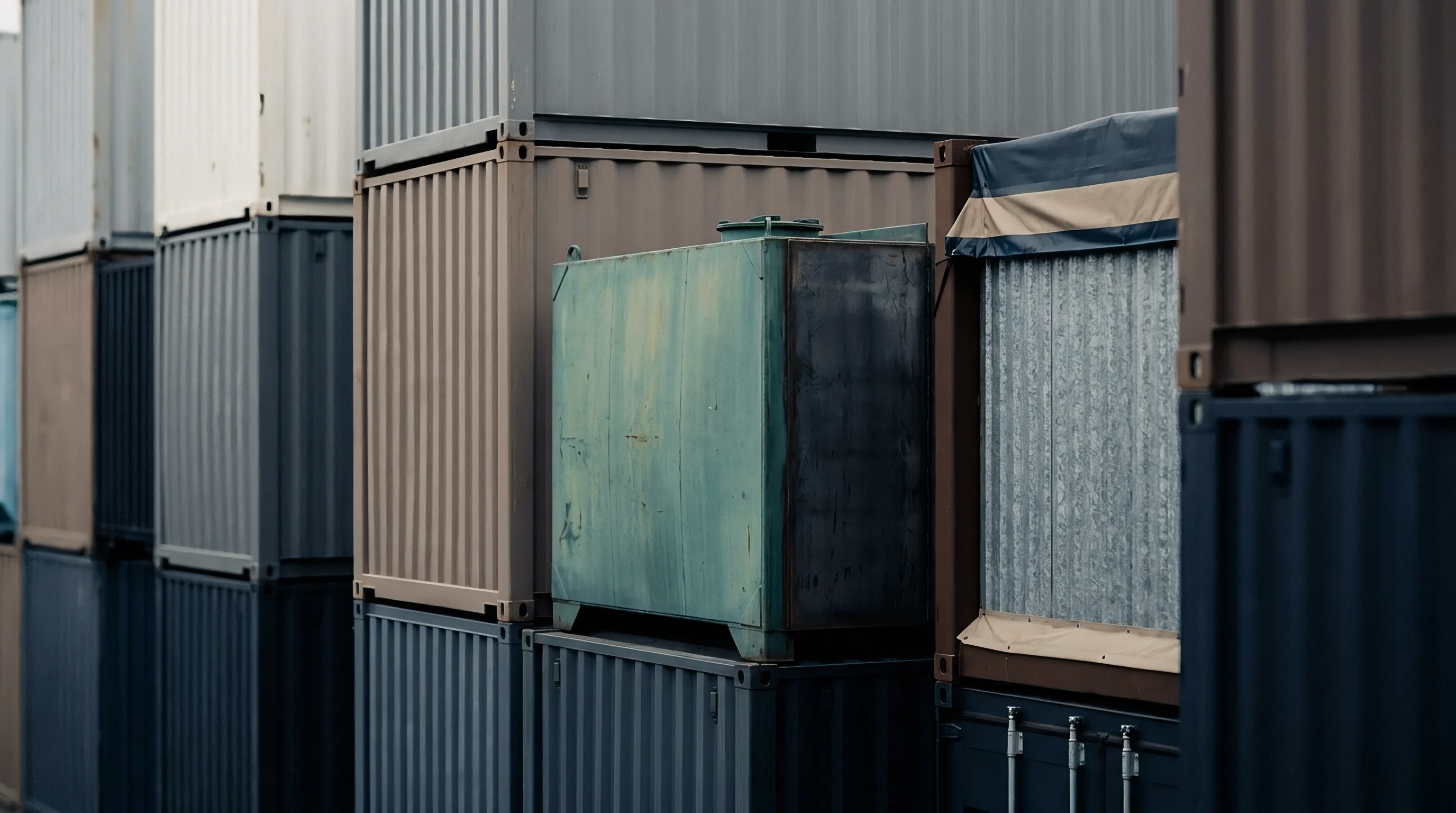
Why Top Tier Stowage Drives Condensation?
Solar radiation heats top container tiers far beyond ambient deck temperatures on container ships. Outer container skin temperatures fluctuate by 40 degrees Celsius between midday sun exposure and midnight maritime winds. The resulting expansion and contraction of container air accelerates breathing through door gasket micro-gaps, pulling humid saline air into the interior.
When evening radiation cools the roof, condensation collects at the highest point of convective loops, dripping moisture onto vulnerable carton crowns.
- Chimney Air Gaps funnel moist internal convection streams straight toward cold roof zones.
- Corrugated Wall Channels create high-velocity downward drafts that deposit condensate along bottom carton edges.
- Under-Floor Air Pockets collect dense cold air, maintaining saturated conditions beneath pallet timbers for entire voyages.
- Ceiling Clearance Deficits prevent lateral air dispersion, focusing droplet rain into narrow drip lines along central carton rows.
Bale packaging materials modify convective moisture exchange rates substantially. Heavy burlap sacking permits rapid air exchange and local desorption, whereas polyethylene wrapping traps internal vapour until seam punctures create concentrated condensation jets. Perforated plastic wrap allows localized convective entry, concentrating moisture at puncture points and producing irregular mould colonies across grey yarn cones.
Passive container ventilation grilles offer limited humidity equalization during sea transit.
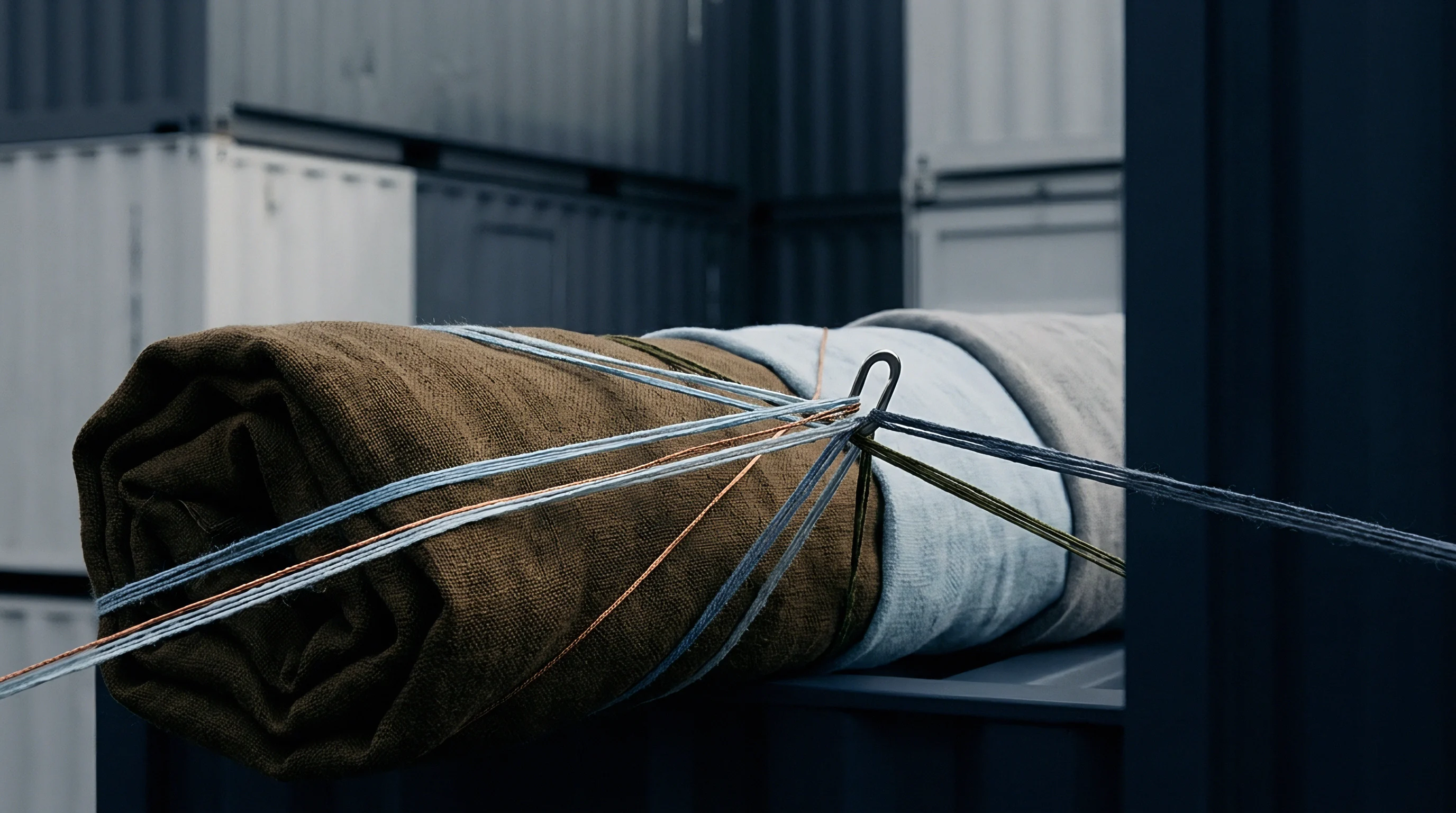
Foil
Barrier materials isolate hygroscopic textile consignments from ambient container convection loops and external temperature-driven vapour spikes. Multi-layer aluminium laminate liners, constructed with polyester backing and polyethylene sealing layers, provide water vapour transmission rates below 0.05 grams per square metre per 24 hours under ISO 15106 test conditions. Hermetically sealed foil liner bags reduce the effective moisture volume from the entire thirty-three cubic metre container envelope down to the internal package volume alone.
Desiccant sizing calculations depend directly on target relative humidity thresholds and packaging barrier permeability. Calcium chloride desiccant bags mixed with starch binders absorb between 200% and 300% of their dry weight in water vapour, converting moisture into an inert gel that resists re-evaporation at elevated temperatures. Silica gel and clay desiccants reach equilibrium saturation at approximately 30% to 40% of their dry weight, releasing collected moisture when cargo temperatures cross 45 degrees Celsius.
| Desiccant Medium | Absorption Capacity (% Dry Mass) | Thermal Stability Limit (°C) | Active Units per 20ft Container | Gel Locking Mechanism |
|---|---|---|---|---|
| Calcium Chloride with Modified Starch | 250 | 80 | 16 x 1.0 kg | Irreversible Gel Matrix |
| Standard Montmorillonite Clay | 25 | 45 | 120 x 0.5 kg | Physical Capillary Adsorption |
| Beaded Indicating Silica Gel | 35 | 50 | 90 x 0.5 kg | Surface Pore Condensation |
| Activated Molecular Sieve | 20 | 90 | 150 x 0.5 kg | Crystalline Zeolite Trapping |
Suspended desiccant poles placed in corrugated wall recesses capture boundary layer moisture before convective plumes reach the ceiling. Placement rules dictate hanging active desiccant units directly within outer convection loops while avoiding direct physical contact with carton surfaces. Trapped liquid within saturated clay packs can leach minerals through fibrous packaging walls upon prolonged direct contact.
Desiccant formulations based on calcium chloride maintain absorption capacity under ocean transit temperatures exceeding fifty degrees Celsius.
Proper evacuation of barrier liners prior to final heat-sealing removes excess initial air volume, stabilizing interior conditions. Vacuum sealing pulls aluminium foil tight against carton boundaries, minimizing headspace volume and preventing internal convection loops from establishing independent moisture cycles.
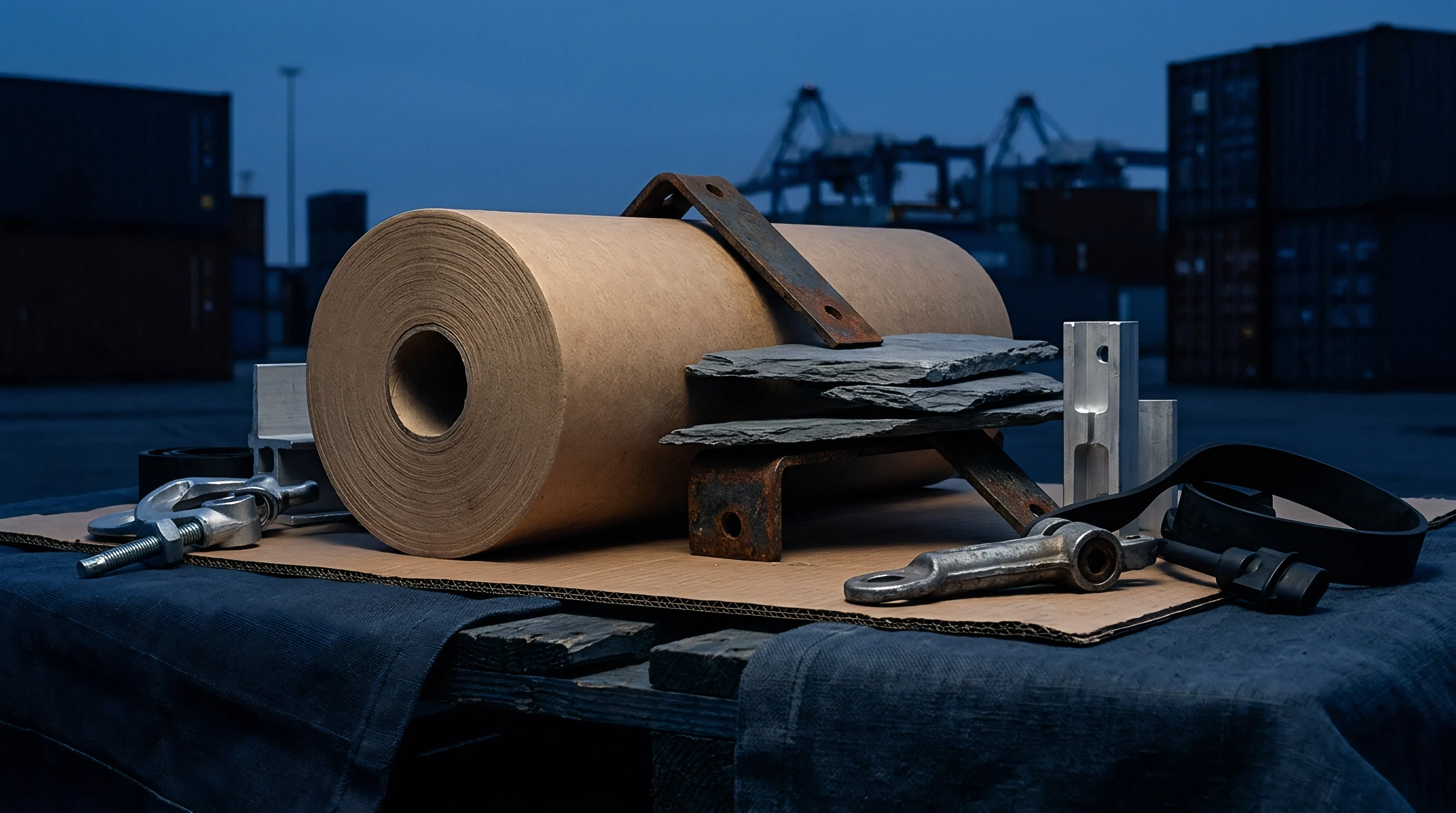
Stowage
Vessel stowage location influences cargo microclimates far more than seasonal transit routes. Below-deck hold stowage keeps container skin temperatures within a narrow band between 15 and 25 degrees Celsius, shielded from diurnal solar heating cycles. On-deck stowage on the top tier of outboard container bays subjects cargo to extreme thermal swings, direct solar radiation exposure, and rapid hull cooling from breaking ocean spray.
Specifying stowage below the waterline remains the primary procedural protection against container sweat.
Dunnage and pallet timber moisture contents introduce significant baseline water loads into shipping containers. A standard wooden pallet weighing 22 kilograms with a 20% wood moisture content contains over 4 kilograms of free water. Eighteen pallets in a single container introduce over 70 kilograms of volatile water that evaporates under tropical temperatures and redistributes across yarn packages during transit.
- Timber Moisture Inspection rejects all wooden pallets and dunnage blocks registering moisture readings above 15% on electrical resistance meters.
- Floor Paper Isolation places impermeable polyethylene-coated kraft barriers between wooden container floorboards and bottom yarn cartons.
- Headspace Distance Buffers maintain a minimum 150 millimetre clearance between top cargo tiers and container roof beams to facilitate air diffusion.
- Thermal Blanket Application covers the top and sides of the cargo block with woven reflective insulating blankets, dampening sudden temperature swings.
Timber drying standards mandate kiln treatment to reach stable baseline conditions prior to container loading. Wet dunnage timber releases moisture continuously throughout transit, overwhelming container desiccant systems within the first seventy-two hours of sailing.
| Stowage Location | Diurnal Temperature Fluctuation (°C) | Peak Skin Temperature (°C) | Relative Humidity Range (%) | Sweat Probability Index |
|---|---|---|---|---|
| Hold Lower Tier Below Waterline | 2 to 4 | 22 | 55 to 65 | Low |
| Hold Upper Tier Above Waterline | 6 to 10 | 32 | 60 to 75 | Moderate |
| On Deck Inboard Bottom Tier | 12 to 18 | 42 | 50 to 85 | Moderate |
| On Deck Outboard Top Tier | 25 to 40 | 65 | 40 to 98 | Severe |
Neglecting pallet moisture verification leads to pervasive mould growth that destroys yarn tensile strength and invalidates fibre origin certifications upon arrival.

Recourse
Cargo damage claims arising from moisture redistribution encounter complex legal allocations under maritime carriage rules. Ocean carriers routinely invoke the inherent vice defense under Article IV Rule 2(m) of the Hague-Visby Rules, arguing that hygroscopic linen fibres contained excess moisture prior to loading. Demonstrating carrier liability demands clear proof of improper stowage, unseaworthy container condition, or failure to maintain hold ventilation schedules where agreed under contract.
A marine insurance surveyor establishes the origin of water damage by testing chloride levels with silver nitrate solutions to distinguish sea water ingress from fresh container sweat.
Pre-shipment moisture verification records establish baseline parameters before bills of lading issue. Documenting yarn moisture content, pallet timber readings, and container seal integrity at the stuffing point creates a clear evidentiary record. Independent inspection certificates detailing moisture levels below standard commercial regains prevent carriers from attributing water damage to inherent cargo vice.
Commercial contracts allocate moisture damage risk through clear incoterm modifications and explicit packaging warranties. Sourcing agreements require suppliers to verify container condition, apply barrier materials, and incorporate data loggers recording temperature and relative humidity at ten-minute intervals throughout transit. The logged data establishes the precise moment and temperature profile of condensation events, pinpointing whether damage occurred during ocean carriage or subsequent terminal dwell.
Standard marine cargo policies containing the Institute Cargo Clauses (A) cover water damage resulting from sweat, provided the insured proves adequate pre-shipment packing under Clause 4.3.