Resolving Residual Pectin Crosslinking Dynamics and Dynamic Drafting Resistance in High Speed Wet Frames
Controlling calcium ion chelation and vat thermal kinetics stabilizes dynamic drafting resistance, reducing end breaks in high speed wet spun flax.

Vat
Hot water in ring spinning troughs softens the non-cellulosic matrix binding long-staple bast slivers. In dew-retted flax, residual pectin is the main adhesive holding elementary fibers together in technical bundles. This pectin consists of polygalacturonic acid chains crosslinked by divalent metal cations ~ mostly calcium and magnesium ~ which form rigid gels inside the middle lamella and keep bundles intact through dry hackling and roving.
Once roving enters the wet spinning bath, heat disrupts hydrogen bonds throughout the polysaccharide matrix, but thermal softening alone cannot break down the pectin network when high cation levels reinforce the ionic bridges.
Polygalacturonic Acid Complexing in Warm Baths
Divalent cations, primarily calcium and magnesium, anchor adjacent homogalacturonan chains within the middle lamella of flax bundles. If bath chemistry does not displace these metal ions, the crosslinked structure prevents complete fiber separation during drafting. Between 60°C and 70°C, non-crosslinked pectin softens quickly to drop matrix shear strength, but calcium-bound domains remain stiff and resist deformation under tension, which can lead to cot lapping from softened unbound material.
When dew-retted stock carries bound calcium above 600 milligrams per kilogram of dry fiber, heat alone leaves the bundle core rigid. Outer filaments slide during drawing while the core holds back, causing erratic velocity changes through the draft zone.
Adding chelating agents to the bath breaks these ionic complexes by competing for the divalent cations. Monosodium phosphate, disodium acid pyrophosphate, and citric acid pull calcium ions from galacturonate chains, turning insoluble calcium pectate into soluble sodium pectate or soluble metal complexes that wash into the bath liquor and lower inter-fiber cohesion. Bath pH directly modulates this chelation efficiency; keeping trough pH between 4.5 and 5.2 maximizes calcium extraction while protecting cellulose against severe acid hydrolysis.
Hard water bath replenishment increases crosslinking density faster than thermal softening can dismantle the pectin gel network.
Thermochemical Softening Kinetics at Speed
Increasing delivery speeds from 120 to 240 metres per minute shortens immersion time in the fluid channel. At 240 metres per minute on a modern flyer or ring wet frame, roving dwell time inside a standard 60-centimetre trough drops to roughly 0.15 seconds. Chemical diffusion into the roving core then becomes the bottleneck for pectin de-crosslinking, as dwell periods under 0.3 seconds prevent liquor from reaching tightly twisted cores, leaving center crosslinks intact while outer layers soften completely.
To offset short dwell times, bath temperatures are raised toward 80°C and surfactant levels are increased. Non-ionic wetting agents bring surface tension below 30 millinewtons per metre, speeding bath absorption into the core. Hard water compounds the problem by introducing free calcium; fresh water makeup with over 50 parts per million calcium hardness requires constant chelation dosing to stop insoluble calcium galacturonate from re-precipitating.
| Trough Temp (°C) | Dwell Time (s) | SAPP Conc (g/L) | Apparent Pectin Viscosity (mPa·s) | Bundle Cohesion Force (cN) |
|---|---|---|---|---|
| 60 | 0.30 | 0.0 | 420 | 18.5 |
| 60 | 0.15 | 0.0 | 580 | 24.2 |
| 75 | 0.15 | 0.0 | 310 | 14.8 |
| 75 | 0.15 | 1.5 | 110 | 6.2 |
| 82 | 0.15 | 2.5 | 65 | 3.8 |
| Method note: Measurements conducted per ISO 2370 modified wet bundle pull-through test on dew-retted long-line flax sliver at 12 tex linear density. | ||||
Elevated water temperature alone is sometimes assumed to substitute for active chemical sequestration when processing heavy dew-retted long staple lots, though heat without chelating agents fails to remove bound cations.
Rheology
Inter-fiber friction across the drafting zone governs roving attenuation in wet spinning. Fiber movement involves both hydrodynamic lubrication from the bath liquor and boundary friction from residual middle-lamella polymers. When crosslinked pectin remains inside the bundle, friction becomes non-linear and produces sharp resistance spikes during draft speed changes, breaking the steady sliding needed across the attenuation zone.
Stick-Slip Instability in Attenuation
Fiber travel between back and front draft rollers alternates between static adhesion and dynamic sliding. Residual pectin crosslinks create sticky spots along the technical bundle. As front rollers pull the leading fiber tips, tension builds without moving the fibers relative to one another, static friction holding filaments together until draft force finally breaks the ionic bonds.
When static adhesion breaks, the bundle releases abruptly, accelerating fibers and causing a sharp drop in resistance. This surge generates stick-slip oscillations. The ratio between peak static draft force and mean dynamic force measures this instability: values above 1.65 signal severe stick-slip action, creating repeating thin spots followed immediately by undrafted fiber slubs.
Bound calcium concentrations exceeding six hundred milligrams per kilogram of dry fibre elevate peak drafting resistance by more than forty percent during wet drawing at two hundred metres per minute.

Defect Mechanisms under Excessive Drag
When frictional resistance exceeds bundle strength, localized draft failure occurs, driving the system outside its stable window and creating characteristic yarn defects.
- Undrafted slub formation occurs when localized calcium-pectin clusters resist roller nip pressure and pass intact through the drafting zone into the yarn core.
- Elementary fiber fragmentation develops when dynamic stick forces exceed the tensile strength of individual ultimate fibers, generating short-fiber lint that fouls flyer guides.
- Drafting wave instability manifests as rhythmic count variations along the yarn axis caused by periodic buildup and collapse of bundle accumulation behind the front roller nip.
- Roller lapping takes place when excessive surface pectin solubilization creates an adhesive film that wraps wet roving around the top rubber cot.
Dynamic drafting resistance curves captured by online load cells show clear force signatures during defect formation. Peak forces during slub release can reach 45 centinewtons per tex, well above the 12 to 18 centinewtons per tex range typical of smooth sliding. These spikes destabilize balloon tension on flyer frames and trigger end breaks at the thread guide.
Poor attenuation control during high-speed wet drawing pushes yarn count variation beyond commercial limits and generates heavy fly across the spinning frame.

Bench
Laboratory testing of non-cellulosic impurities establishes operating thresholds for fine linen yarns, linking chemical composition directly to spinning performance. Measuring total residual pectin and specific divalent cation levels makes it possible to forecast dynamic draft resistance before allocating fiber lots to production.
Bound Cation Quantification Methods
Divalent metal concentrations in extracted fiber are isolated through spectrophotometric analysis and atomic absorption spectrometry. Samples are first washed with ethanol-benzene mixtures to strip surface waxes and lipids, then digested in dilute hydrochloric acid to release bound calcium and magnesium ions from carboxyl binding sites on polygalacturonic acid chains. Inductively Coupled Plasma Optical Emission Spectrometry (ICP-OES) measures these ion levels against dry fiber mass.
Colorimetric assays using m-hydroxydiphenyl determine total uronic acid, allowing calculation of esterification degree and crosslinking density. Samples with total calcium below 450 milligrams per kilogram show few drafting force spikes and process cleanly into fine counts up to Nm 80 and Nm 100. Lots exceeding 750 milligrams per kilogram require aggressive chelation during spinning or pre-treatment package bleaching.
ISO 2062 breaking strength testing invalidates delivery lots where wet drafting force variations produce tenacity standard deviations greater than one point eight centinewtons per tex.
Cohesion and Draft Resistance Testing
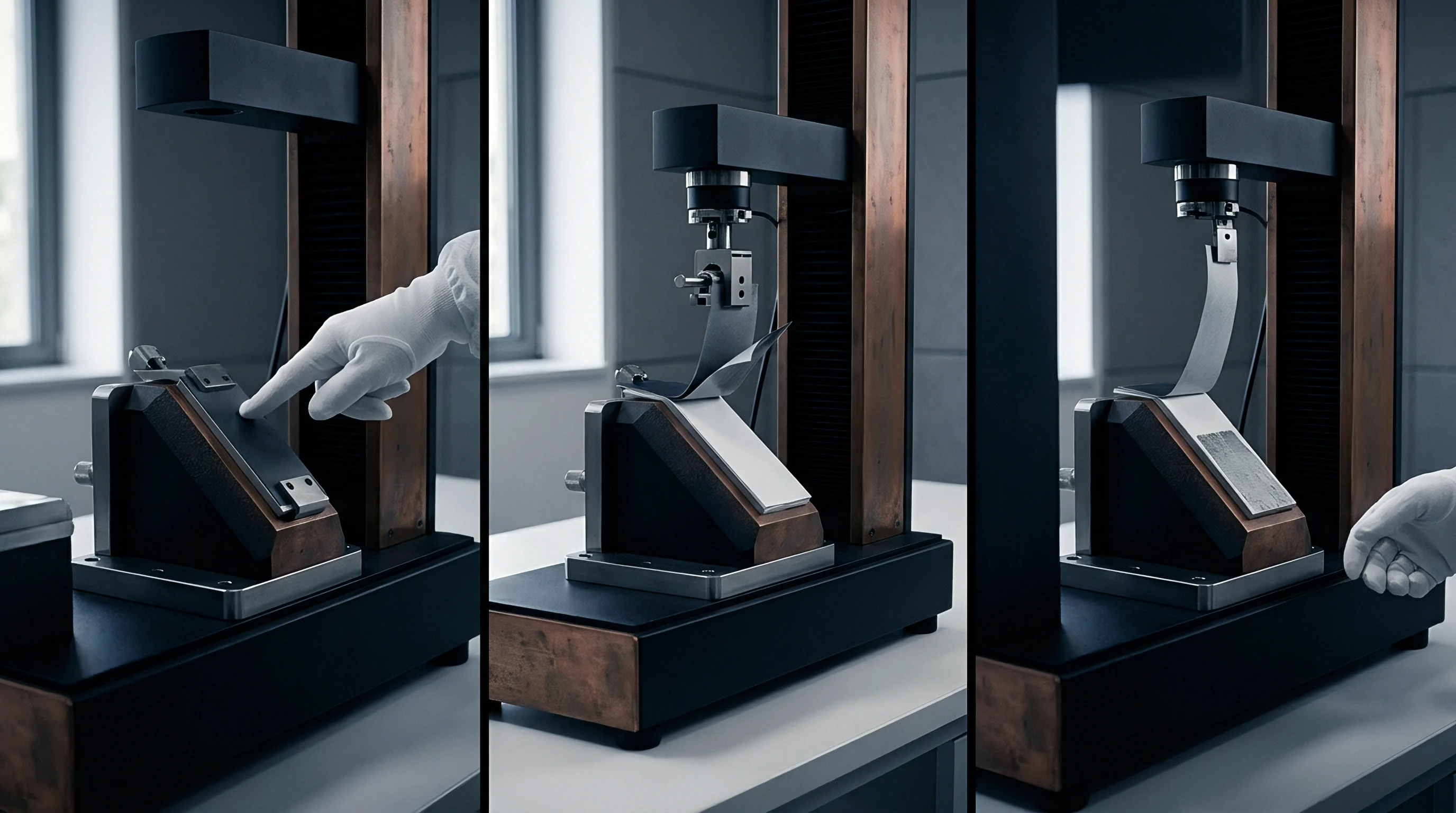
Modified tensile testers measure the force required to pull wet roving bundles apart at controlled speeds. Roving samples pass through a temperature-controlled bath matching frame conditions before entering pneumatic clamps set to standard gauge lengths, where the tester draws the bundle through speed profiles mirroring draft ratios from 10 to 20.
| Target Yarn Count (Nm) | Max Bound Calcium (mg/kg) | Pectin Content (% Mass) | Wet Drafting Peak Force (cN/tex) | Max Lea Count CV (%) |
|---|---|---|---|---|
| 26 | 850 | 3.8 | 22.5 | 7.2 |
| 40 | 650 | 3.1 | 16.8 | 6.1 |
| 60 | 500 | 2.5 | 11.2 | 5.2 |
| 80 | 400 | 2.0 | 7.5 | 4.3 |
| 100 | 320 | 1.6 | 5.1 | 3.8 |
Quality control protocols for incoming raw fiber rely on set chemical thresholds before approving stock for high-speed lines.
- Bound calcium threshold requires values under 450 milligrams per kilogram dry weight for fine counts above Nm 60 as measured by atomic absorption spectrometry.
- Residual pectin mass limits total polygalacturonic acid content to under 2.2 percent of dry bundle mass following solvent extraction.
- Wet draft peak ratio restricts the maximum force to average force ratio below 1.45 during simulated dynamic drafting at 150 metres per minute test speed.
- Intact staple length spread mandates a coefficient of length variation below 28 percent to minimize floating fiber uncontrolled movement during attenuation.
Standard international flax trade terms base lot acceptance for fine wet-spun roving on verified bound calcium below five hundred parts per million and a maximum lea count CV of six percent.
Adjustment
Adjusting frame mechanics offsets the draft resistance caused by residual middle-lamella polymers. Aligning pin field control, nip pressure, and trough chemistry maintains smooth sliding through the draft zone, preventing drafting waves without over-attenuating the sliver.

Does Chelating Trough Chemistry Damage Cellulosic Tenacity?
Exposing bast fibers to acidic sequestering solutions risks hydrolyzing structural alpha-cellulose if bath conditions drift. Acid attacks glucosidic bonds within crystalline cellulose chains, degrading single filament tenacity. Keeping trough liquor buffered between pH 4.8 and 5.2 prevents depolymerization while maintaining active calcium chelation.
Disodium acid pyrophosphate buffers the bath while sequestering divalent ions. Dosing between 1.2 and 2.5 grams per litre yields high ion exchange without altering cellulose chain length. While organic chelators like EDTA complex calcium effectively, residual chelator in waste streams poses environmental disposal challenges; citric acid combined with sodium citrate provides a biodegradable alternative that holds stable complexing capacity up to 80°C.
Fibre bundle slippage converts to destructive ultimate filament fracture whenever dynamic drag forces surpass inter-microfibrillar adhesion thresholds.
Pneumatic Cots and Reach Settings
Top roller nip pressure regulates fiber holdback during high-speed drawing. Spring-loaded or pneumatic cots require careful calibration to prevent slippage on one hand and filament crushing on the other. Synthetic rubber cots with a hardness of 80 to 85 Shore A provide optimal grip on wet flax; softer cots under 75 Shore A deform under load, expanding the contact area and trapping fluid that leads to cot wrapping.
Reach settings ~ the distance from back roller nip to front roller nip ~ must match the mean effective staple length of the hackled flax line. Setting the reach too short crushes long filaments to create short fiber fragments and friction spikes, whereas setting it too wide releases short fibers uncontrolled to cause slubs.
- Purge the wet spinning trough thoroughly with treated soft water containing less than 10 parts per million total dissolved solids.
- Charge the bath with disodium acid pyrophosphate at 2.0 grams per litre and adjust pH to 5.0 using technical grade citric acid.
- Heat the trough liquor to 78°C while maintaining continuous fluid circulation across all spindle positions.
- Set top drafting roller pneumatic pressure to 3.8 bar across all cots using calibrated pressure gauges.
- Adjust reach distance to 72 millimetres for long-line flax slivers with an average staple length of 65 millimetres.
- Verify delivery speed at 220 metres per minute and check balloon tension stability across sample spindles.
Increasing trough fluid circulation speed stabilizes chemical concentration across the roving profile more effectively than raising bath temperature alone.

Valuation
Financial margins in wet linen spinning depend on holding down end-breakage rates while spinning fine metric yarn counts. Dynamic drafting resistance directly influences frame efficiency, labor utilization, and material waste, making pectin control a critical factor in overall fabric economics.

End Breakage Impact on Mill Efficiency
Unplanned spindle stoppages require operators to piece broken ends by hand, consuming labor and producing unrecoverable waste. On a 1000-spindle frame running at 240 metres per minute, an increase in breaks from 15 to 45 per 1000 spindle hours drops overall efficiency from 94 percent to 82 percent.
Piece-rate labor costs rise as operators tend fewer running spindles. Meanwhile, pneumatic suction channels continuously pull roving while a spindle sits idle, turning expensive combed long-line fiber into low-value soft waste that recovers less than 15 percent of original fiber value when recycled.

Landed Metre Cost Sensitivity
Translating waste allowances and frame downtime into fabric production costs highlights the financial impact of drafting drag. Take a 20-tonne production run of Nm 80 dress-weight warp yarn spun from imported long-staple dew-retted flax at $4.80 per kilogram base fiber price. Operating with optimized trough chemistry keeps end breaks at 14 per 1000 spindle hours and soft waste at 3.8 percent.
Poor trough control increases breaks to 42 per 1000 spindle hours, driving waste to 8.5 percent and cutting line yield.
| Operating Regime | End Breakage Rate (Breaks/1k Spindle Hours) | Frame Efficiency (%) | Spinning Waste (%) | Yarn Cost ($/kg) | Landed Fabric Cost ($/m) |
|---|---|---|---|---|---|
| Optimized Sequestered Trough | 14 | 94.2 | 3.8 | 14.20 | 2.12 |
| Standard Thermal Trough | 28 | 88.5 | 5.9 | 16.15 | 2.41 |
| Hard Water Unbuffered Trough | 48 | 79.1 | 9.2 | 19.85 | 2.96 |
| Assumptions: 20-tonne batch, 1000-spindle frame at 240 m/min delivery speed, Nm 80 yarn, 110 g/m² cloth width 1.5 m, base fibre $4.80/kg. | |||||
The resulting yarn price difference of $5.65 per kilogram between optimized and unbuffered regimes translates into a landed cost penalty of $0.84 per linear metre on standard 110 gram per square metre fabric. Investing in active trough chemical control yields direct financial returns through waste reduction and higher frame throughput.
Whether enzyme-assisted pre-treatment during package conditioning can eliminate in-trough chelating chemistry without dulling yarn lustre remains unresolved in commercial mill trials.