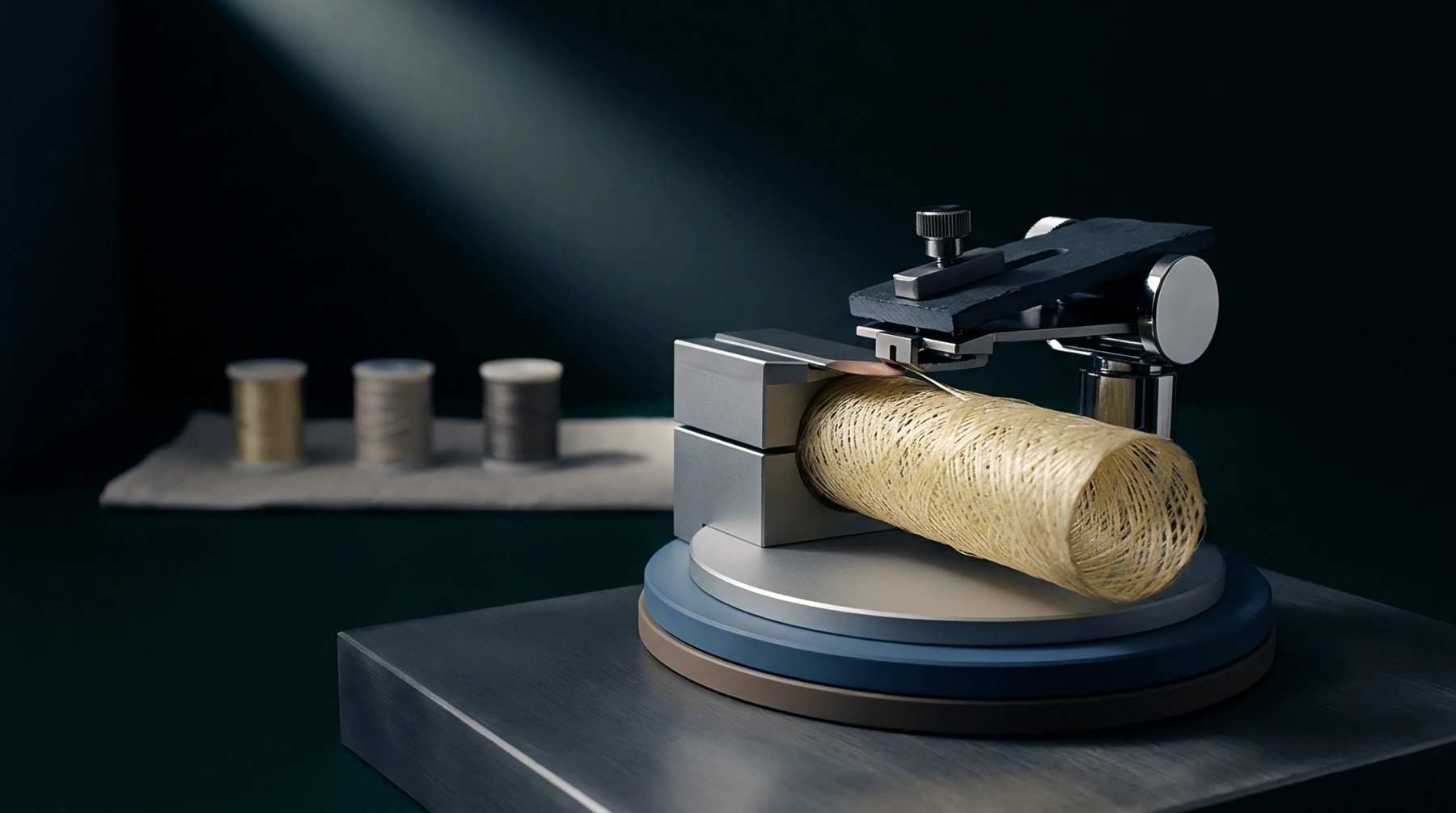
Spinning Limit
Maximum spinning limit defines the finest yarn count that a given batch of raw flax can produce without causing excessive breaks during processing. Determining the yarn count capacity helps mills allocate their raw fiber inventory to the most profitable and efficient production schedules. Fibers with low fineness or high variability have a restricted capacity, limiting them to coarser household fabrics.
This parameter is verified by pilot-scale test spinning before full production begins.
Bundle Separation
Efficient spinning requires the flax bundles to split into extremely fine strands during wet processing. A high yarn count capacity depends on the fibers being able to separate cleanly without breaking. If the bundles do not split well, the resulting yarn will be too thick, which prevents the mill from meeting the fine specifications required for premium garments.
Production Economics
Exceeding the spinning capacity of the raw material leads to a rapid increase in yarn breaks, which halts the spinning frames and reduces overall mill efficiency. For this reason, quality control managers carefully evaluate the yarn count capacity of incoming fiber shipments before committing them to high-speed, automated production lines. Choosing the correct yarn count based on these tests ensures a steady, uninterrupted spinning process and minimizes material waste.
This systematic planning represents a key strategy for maintaining profitability in modern, competitive textile mills. It also allows the sales team to provide accurate lead times and quality guarantees to buyers who demand precise specifications for their woven products.