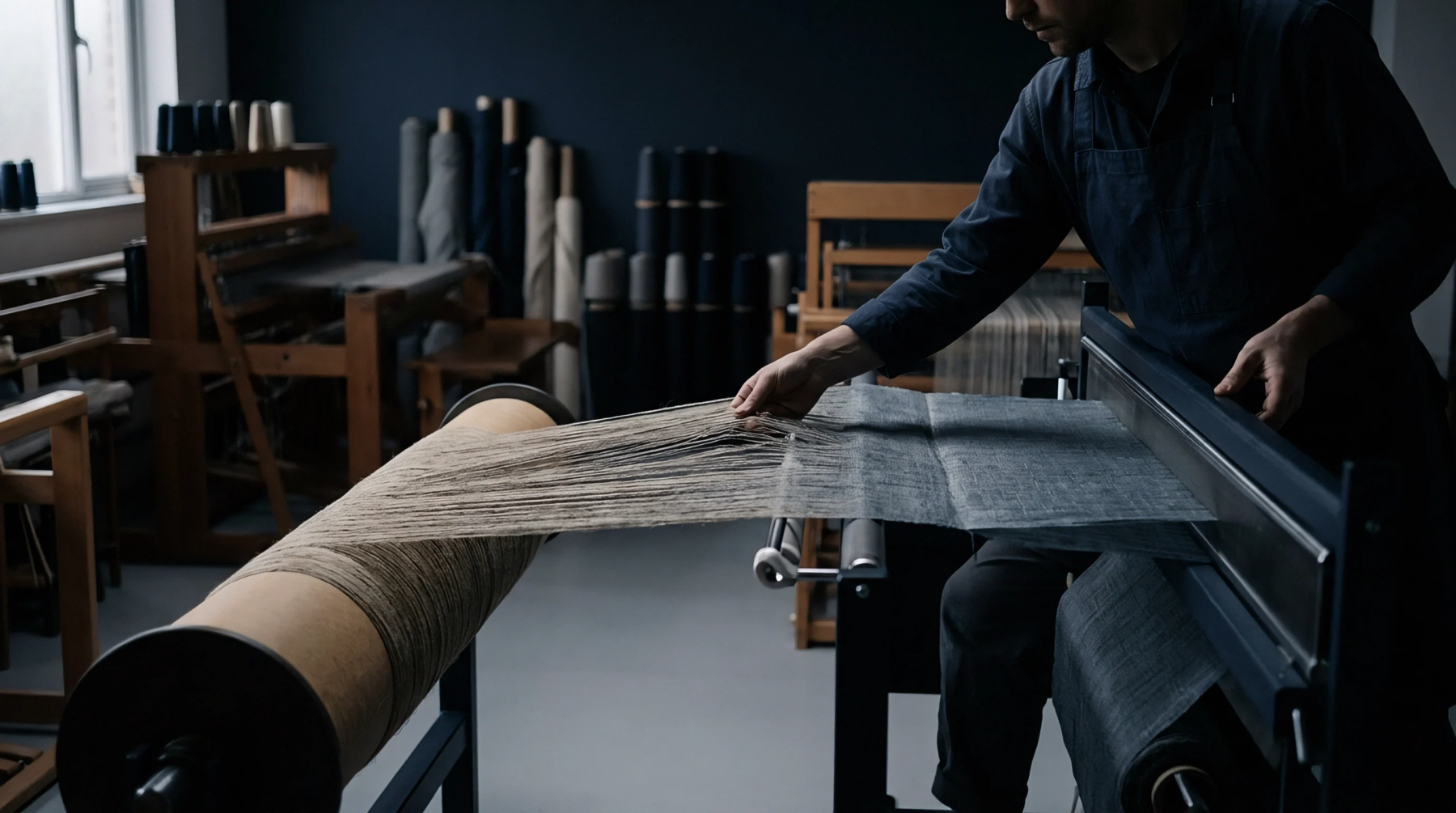
Moisture Retention
Hydration levels within wet roving packages dictate the structural cohesion of flax strands leaving the preparatory drawing frames in Chinese spinning mills. Water content acts as a plasticiser during drafting, suppressing static accumulation while wood pins and metal rollers stretch the bast fibres into parallel arrays. Technicians measure these internal liquid fractions using gravimetric oven drying at specified temperatures before dispatching the cylindrical bobbins to wet spinning frames.
Ambient humidity in mill production halls influences the evaporation rate of the applied emulsion, so supervisors record relative humidity percentages alongside mass figures on daily shift logs. Specifications differ between internal mill control targets and contractual purchasing agreements, because processors tolerate broader moisture variances than export clients purchasing finished yarns.
Fiber Tension
Drawing force applied during bobbin winding determines the packing density of wet roving packages on the creel. Excessive winding velocity stretches the exterior layers while leaving core filaments slack, producing irregular linear density down the length of the sliver. Operators calculate this drafting tension by dividing the linear mass output by the feed speed, adjusting the mechanical friction brakes on the creel spindles accordingly.
Uneven tension forces water out of the compressed layers, pooling liquid at the lower flange and leaving upper strata dry enough to snap under drafting loads.
Drafting Performance
Strand regularity during subsequent wet spinning depends directly on the uniform consistency maintained across wet roving packages. Dry patches within the fibrous mass cause fiber breakage at the drafting zone, while overly saturated sections slip past the fluted rollers without proper attenuation. Quality controllers evaluate this behavior by testing yarn tenacity and breaking elongation on randomized samples pulled from the spinning frames.
Acceptance thresholds vary according to final end use, distinguishing between coarse technical threads and fine apparel yarns destined for European weaving houses. Final yarn quality depends entirely on the stability of the moisture distribution established during preparatory winding.