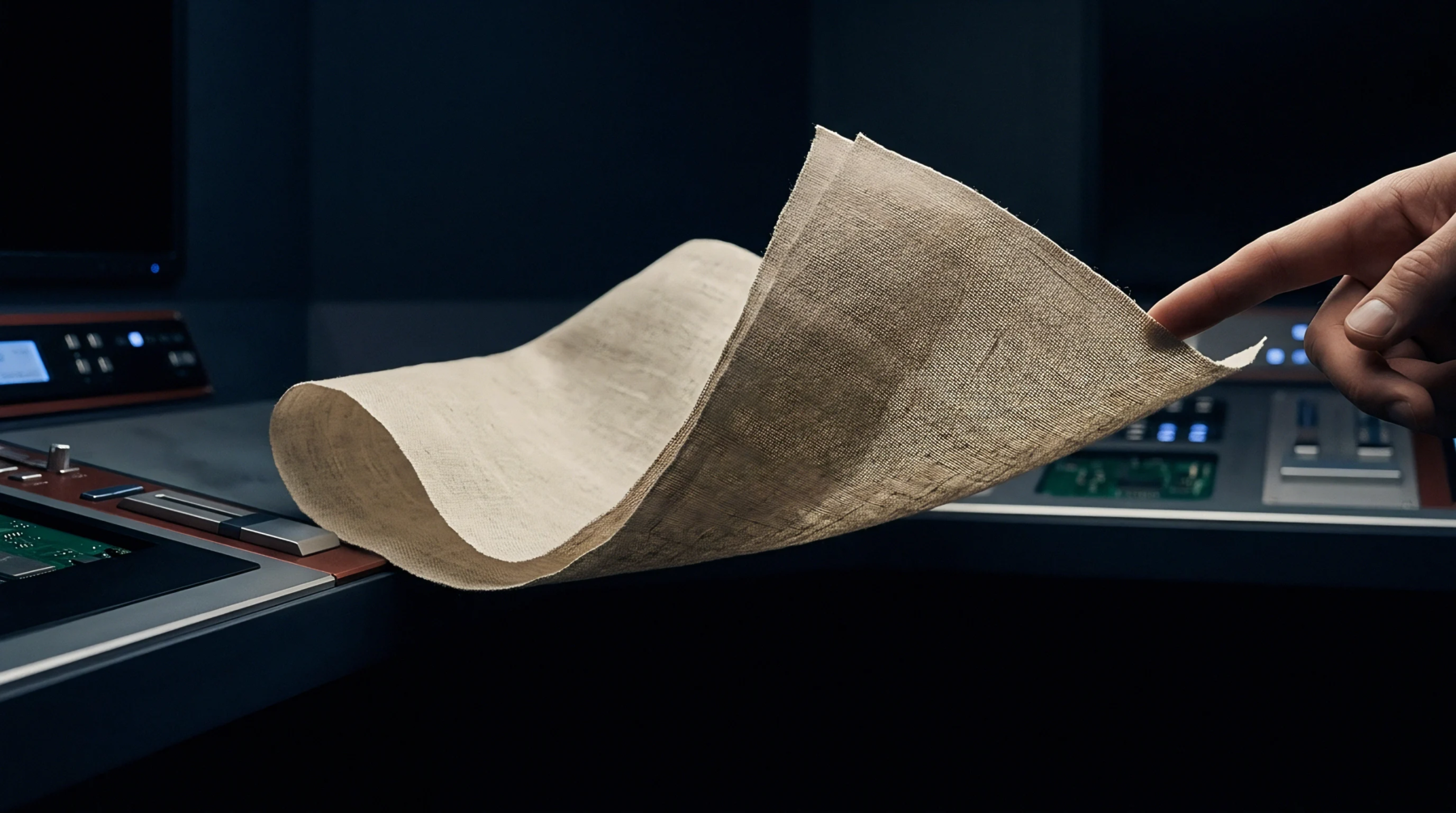
Loom Interruption
Automated loom shedding termination halts mechanical weaving when an individual longitudinal yarn breaks or slacks below threshold tension. In modern weaving sheds, warp stoppage triggers when an electrical circuit closes as a metallic drop wire falls onto an insulated contact bar upon yarn failure. The event pauses the loom motion before the beat-up cycle can press broken ends into the fabric fell, preventing severe structural cloth defects.
The mechanism governs running loom efficiency and fabric defect prevention, having no role in offline yarn preparation.
Weaving Efficiency
Weave room monitoring systems record each warp stoppage to calculate machine efficiency, operator workload, and overall shed productivity. Flax warp yarns generate higher stoppage frequencies than synthetic or continuous filament yarns because of natural slubs, hard knots, and localized pectin non-uniformities. When a break occurs, the weaver identifies the dropped wire, locates the broken end behind the harness, ties a knot, and draws the yarn through the correct heddle eye and reed dent.
Loom monitoring software logs the stoppage timestamp, duration, and loom number onto the shift efficiency dashboard.
Dropper Detection
Sizing quality and yarn preparation directly influence the frequency of warp stoppage events per hundred thousand picks. Poorly sized linen warps shed excessive dust and loose fibrils, causing neighbouring ends to cling together and snap during shed formation. Quality engineers track daily stoppage logs to determine if high break rates stem from weak yarn lots, incorrect warp pretensioning, or dry weave room humidity.
Excessive stops produce start marks and irregular pick density in the raw linen cloth, degrading the fabric from export grade to second quality. Minimizing yarn interruptions remains the primary benchmark for assessing yarn quality and weaving shed profitability in commercial linen manufacturing.