Dimensional Specification
The lateral distance measured across a finished textile roll between inner selvage boundaries establishes the effective surface available for pattern layout and commercial cutting. In finished linen fabric production, usable cloth width excludes pin marks and edge distortion introduced during finishing tenters. The dimension determines garment yield during apparel cutting operations and dictates cutting room efficiency for home textile manufacturers.
Any encroachment of processing holes or slack edge tension into this span renders that portion defective.
Processing Variance
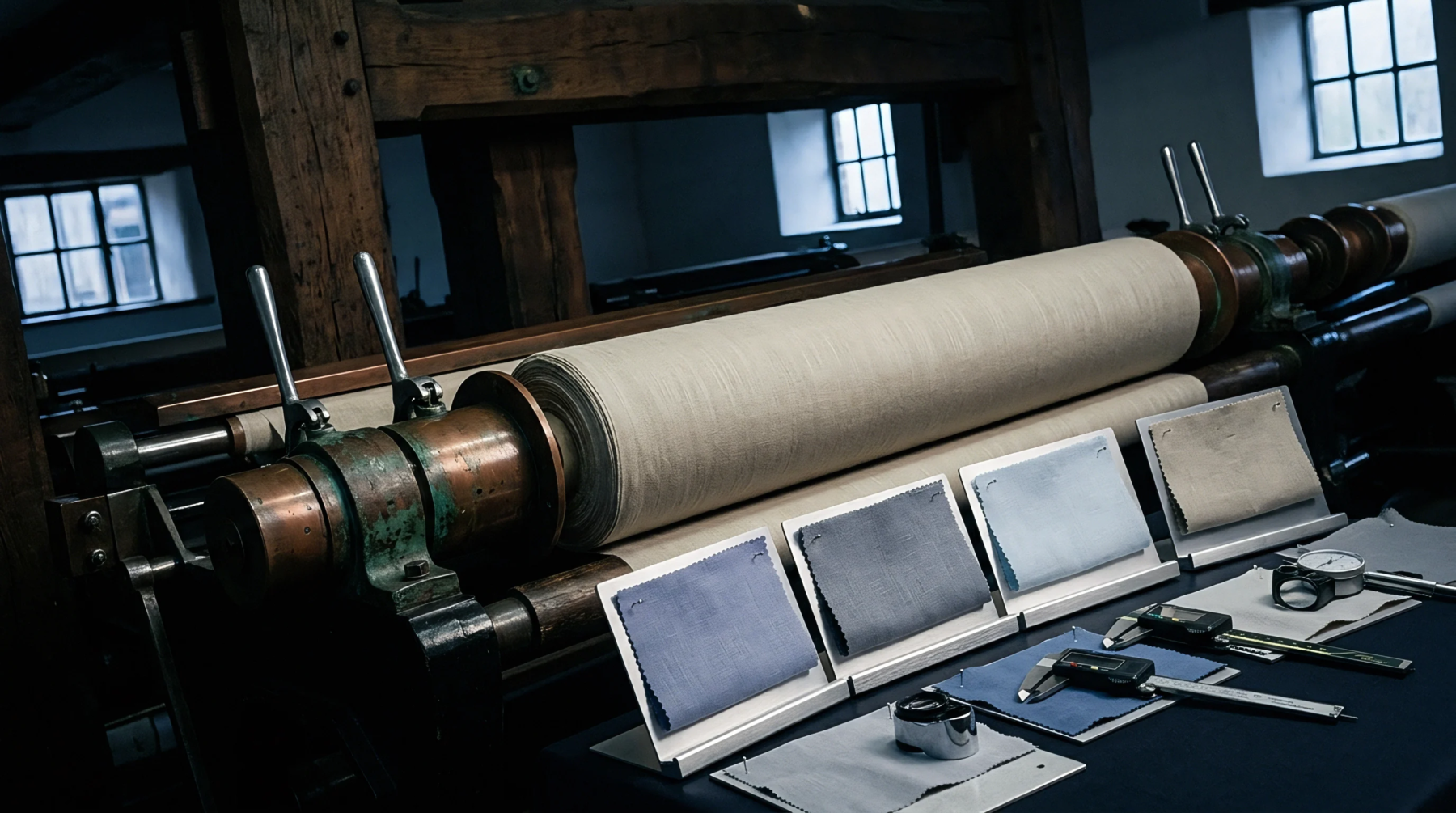
Differential shrinkage and mechanical cross-stretching throughout wet processing alter transverse fabric dimensions continuously. Scouring and bleaching cause flax yarns to swell and crimp, inducing substantial lateral contraction that varies from the loom reed space to final inspection. Chinese finishing mills run stabilized tenter frames with edge gumming or pin chains to pull the wet cloth out to targeted dimensions, continuously verifying width using optical laser sensors.
Mill laboratory reports record cross-roll measurements at the head and tail of every finished roll to detect width taper. If tension control falters during sanforizing or decatizing, usable cloth width fluctuates across roll lengths, creating cutting room mismatch errors.
Commercial Guarantee
Export sales contracts and technical data sheets specify minimum guaranteed width tolerances alongside allowable negative deviations. Garment manufacturers mandate strict adherence to agreed cuttable widths, often allowing zero negative tolerance because automated cutting markers rely on fixed dimensions. Inspection protocols require inspectors to measure usable width every fifty metres, recording failing sections on commercial packing slips.
Usable cloth width defines the true economic yield of every finished linen shipment.