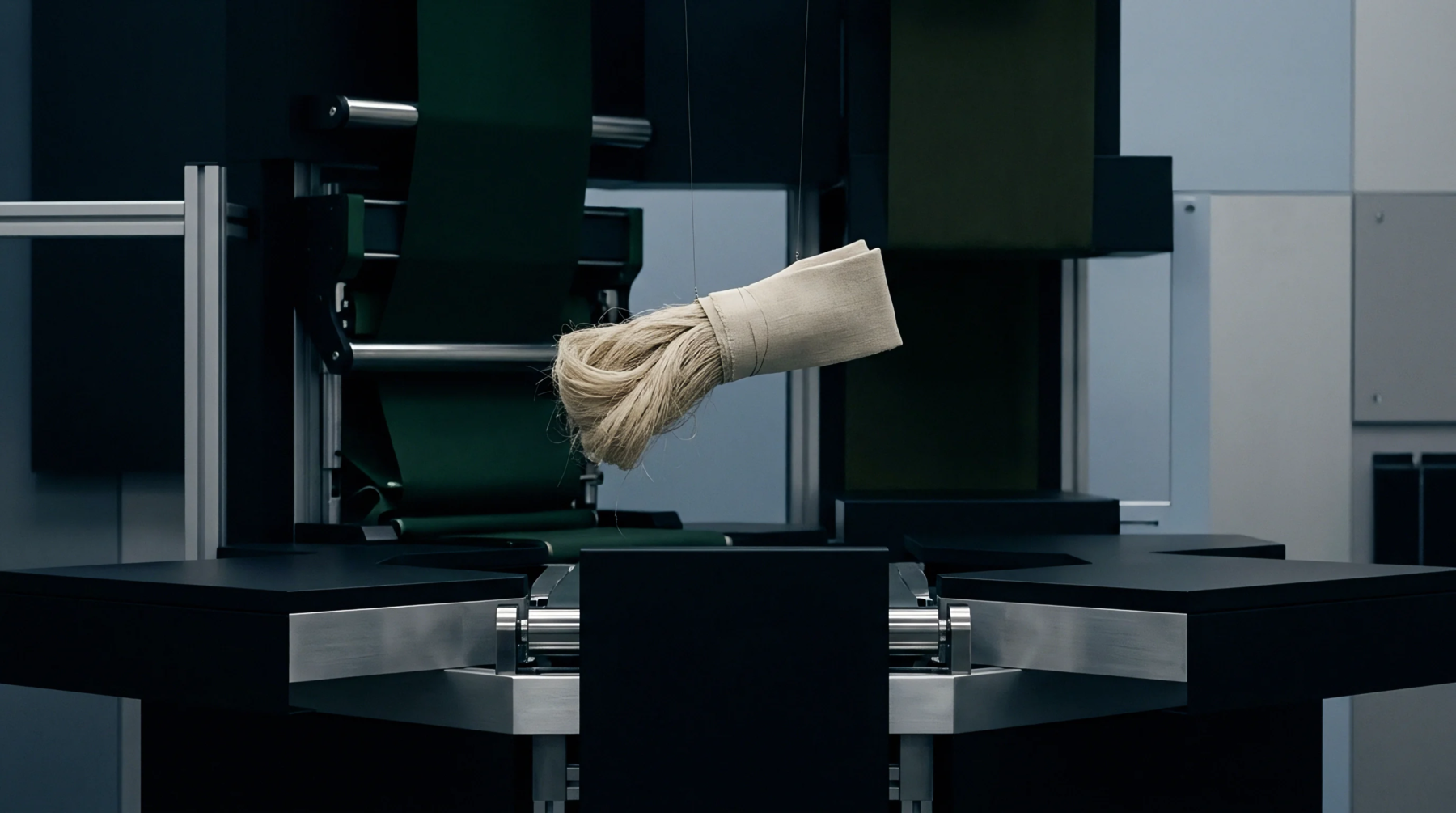
Dynamic Tension
Fiber draw instability defines the periodic fluctuation in mechanical load across flax roving during the wet spinning stage of yarn production. Sudden variations in draft force cause uneven elongation along the delicate bast strands before they meet the twist ring. Mill technicians record these recurring force spikes in the production batch log to monitor drafting zone performance.
Drawing frames must maintain steady pull against the resistance of wet pectin bonds holding the ultimate cells together. Excessive speed fluctuations break the wet ribbon while insufficient drag produces thick slubs in the final linen yarn.
Mechanical Tolerance
Yarn quality control distinguishes internal fiber grade limits from external fabric grade specifications required by overseas buyers. Raw flax classification measures cellulose purity and lignin content within the dry stalk before retting begins. Finished linen inspection evaluates tensile strength and surface regularity against agreed commercial standards rather than mill internal targets.
Operators adjust mechanical dampers when load variations exceed the allowable five percent threshold noted in the quality assurance schedule. Laboratory technicians verify breaking load consistency on random bobbin samples pulled from each spinning frame before packing bales for export.
Warp Stress
Weaving preparation shifts the mechanical focus from individual yarn elongation to collective warp sheet behavior on the loom beam. Loom operators monitor force variations across parallel linen ends during sizing and beaming operations to prevent filament breakage in the shed. Sizing agents coat the dry yarn surface to resist abrasion from the swinging reed and heddle frames.
Excess draft tension during sizing creates brittle zones that snap under the rapid acceleration of the shuttle drive. Proper moisture conditioning inside the weaving shed stabilizes the natural stiffness of flax fibers and dampens cyclic load fluctuations during high speed cloth production.