Force Variance
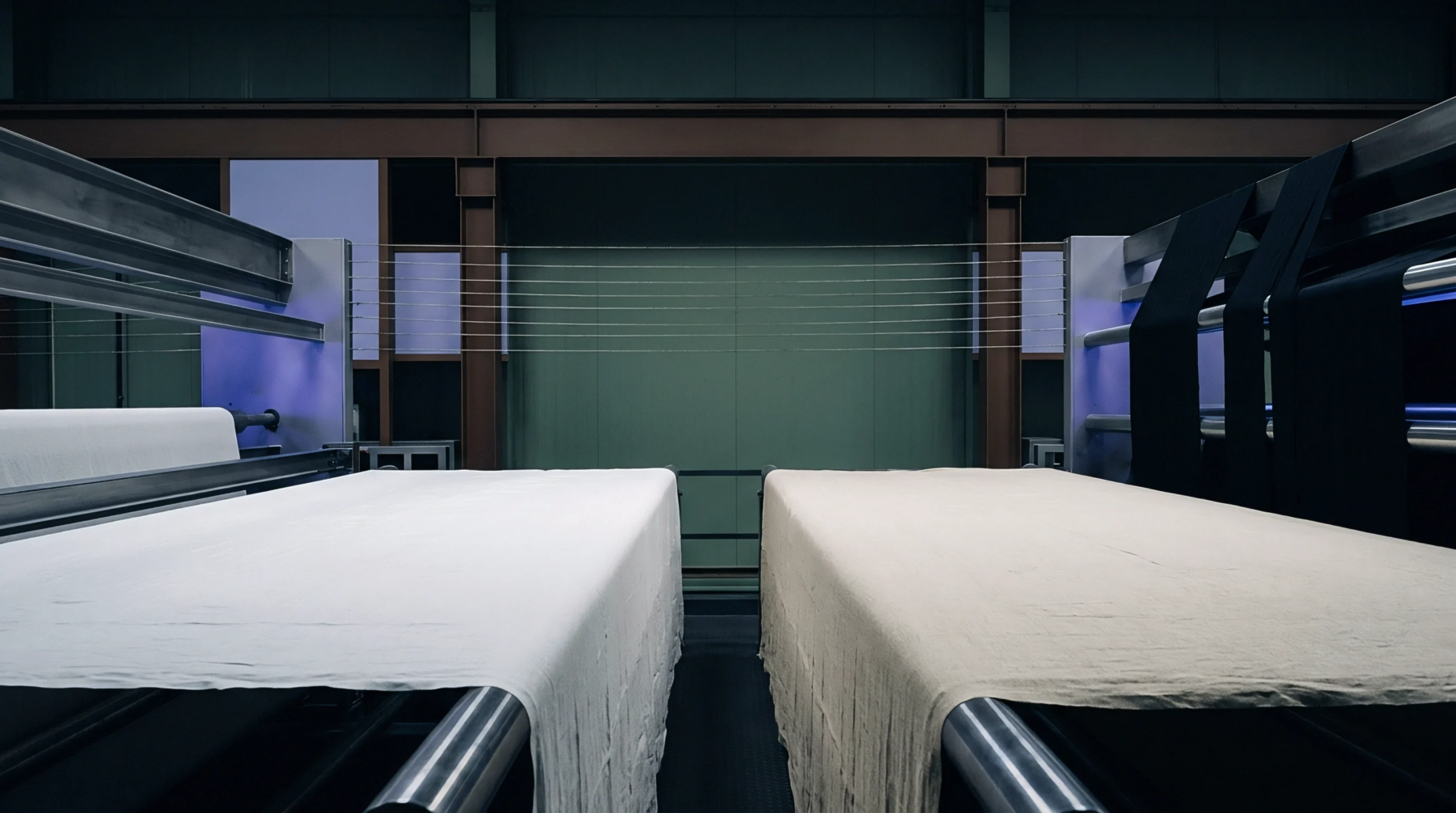
The difference in mechanical tension between different warp yarns or across different areas of the warp sheet during weaving can cause structural unevenness in the woven fabric. A high tension differential leads to puckering, variable density, or yarn breakage because some flax yarns are stretched tighter than others. Maintaining uniform tension is necessary to produce high-quality linen with an even hand and appearance.
When the variance is minimized, the finished fabric exhibits a stable structure that resists skewing during subsequent laundry processes.
Weaving Impact
Unequal force across the warp sheet during the shedding cycle puts excessive stress on individual linen yarns, which are naturally less elastic than cotton. This stress can cause the tighter yarns to snap, leading to loom stoppages and defects in the woven fabric. Minimizing these differences ensures that the loom can run at higher speeds with fewer interruptions.
Tension Control
Modern warping and weaving machines use tension sensors and adjustable braking systems to control yarn tension in real time. Adjustments are made automatically to compensate for changes in beam diameter or winding speed. These control systems maintain the tension differences within a very narrow range to guarantee a flat and stable linen fabric.