Sizing Pressure
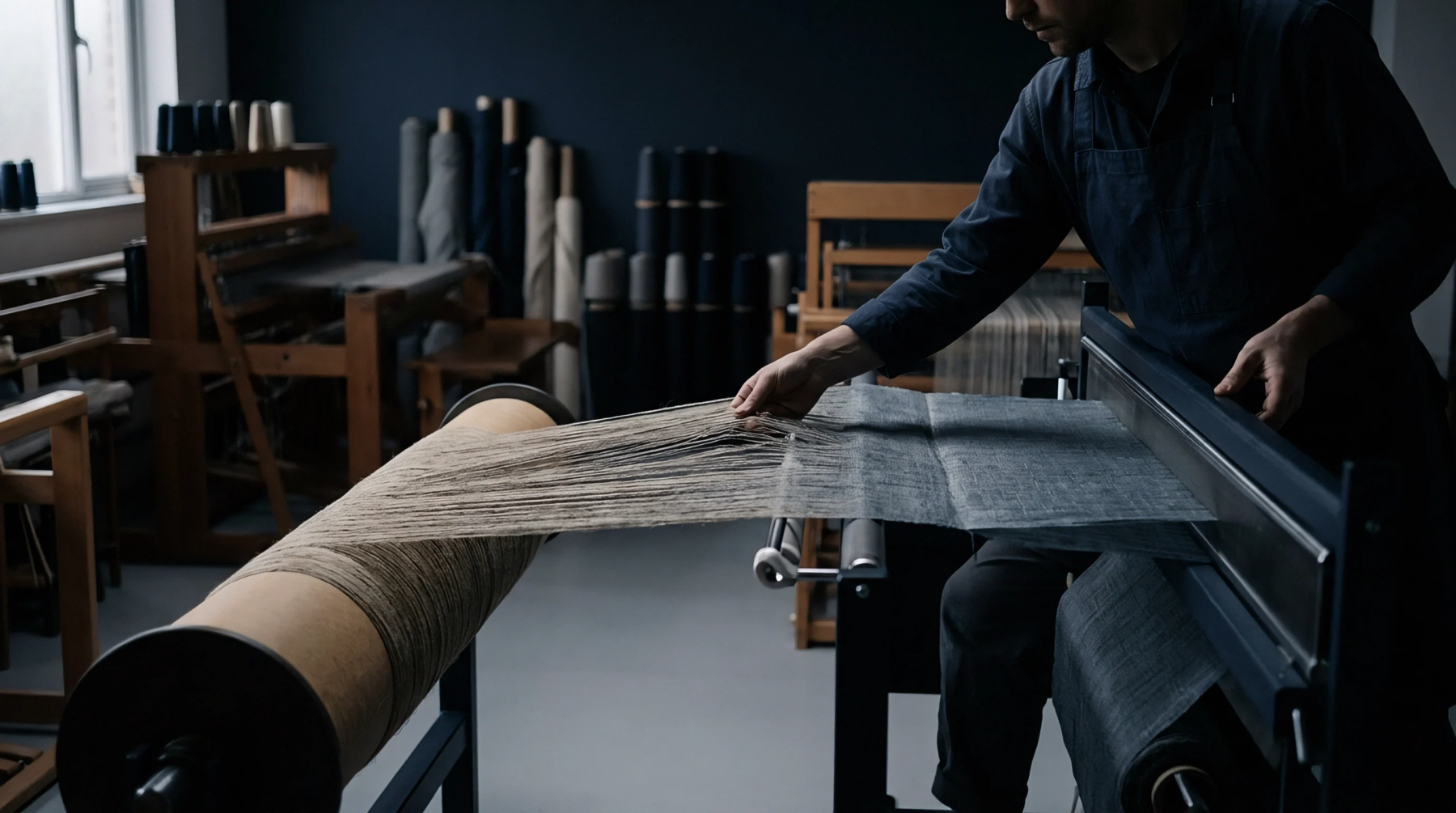
Pneumatic force applied against the wet warp sheet during finishing determines how deeply starch liquor penetrates flax yarn before the loom consumes the batch. Mechanical load regulation governs this stage, ensuring sizing machines deposit consistent weight across high-density linen fabrics. Hydraulic actuators control the nip force between heavy rollers, preventing excess liquor accumulation that causes yarn adhesion defects later in the weaving shed.
Mill operators record these parameters in daily production logs alongside ambient humidity metrics to maintain batch uniformity. Variations in roller compression alter dry pick-up percentages, which directly affect warp tensile strength during subsequent shedding cycles.
Shear Mechanics
Roller deformation dictates how liquor transfers from the trough to the interior of the flax fibres. Rubber-covered squeeze rolls flatten slightly under heavy loads, creating a contact zone where hydraulic pressure forces liquid past the cuticle layer of the plant cells. Uneven cylinder deflection across wider frames produces dry streaks on the outer edges of the warp beam, leading to warp breakage during high-speed insertion.
Technicians calibrate the pneumatic cylinders weekly to counteract thermal expansion and rubber wear, preserving uniform nip geometry across long production runs.
Quality Verification
Laboratory personnel test random warp samples against buyer specifications to confirm sizing efficacy before releasing beams to the weaving floor. Tensile testing machines measure breaking load improvements, while ash content analysis quantifies dry sizing weight per unit length of yarn. Acceptance thresholds differ between domestic apparel contracts and industrial canvas orders, requiring distinct pressure profiles during the initial sizing operation.
Proper mechanical calibration prevents premature starch flaking during shuttle passage, protecting the structural integrity of finished woven goods.