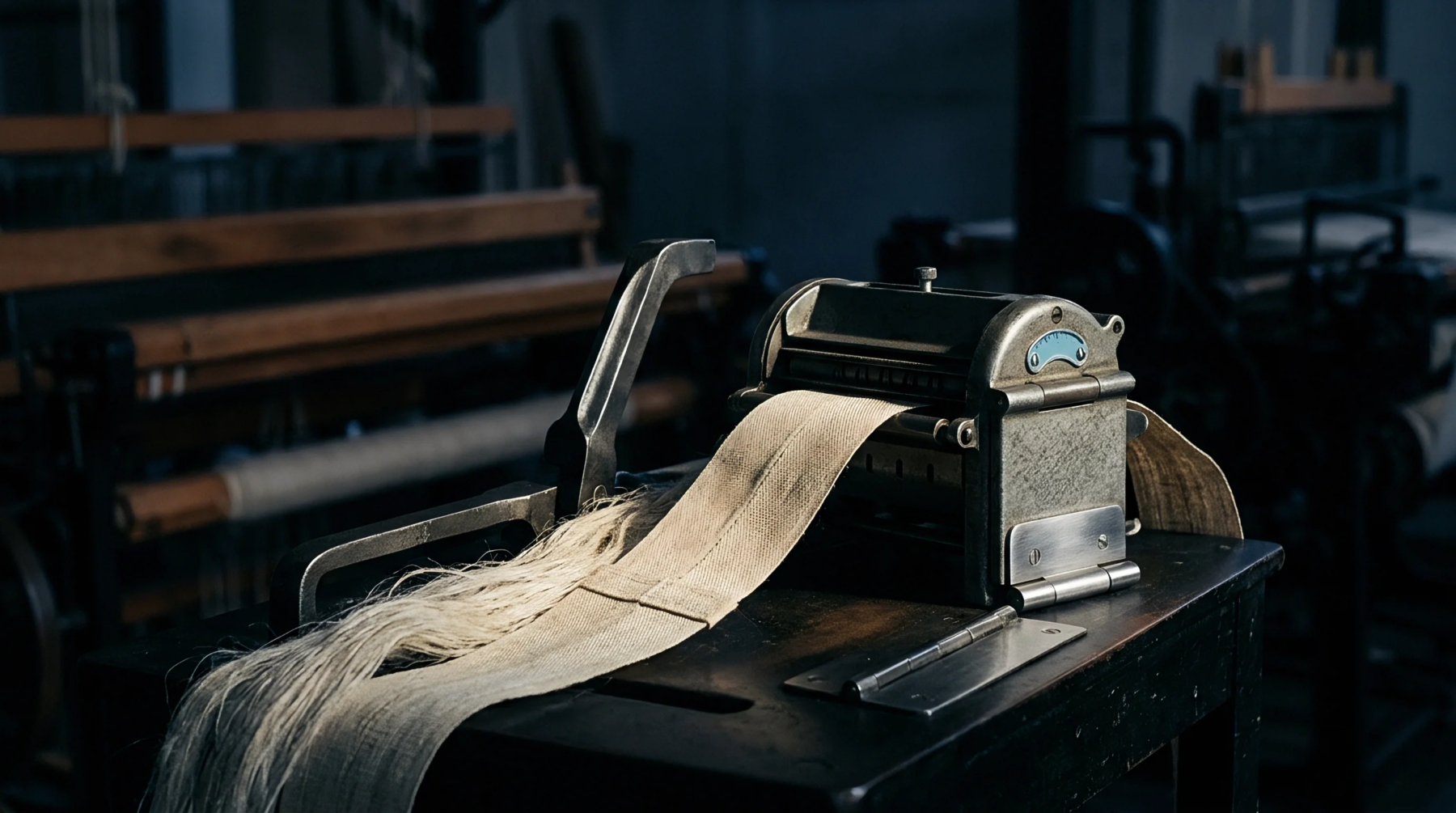
Weave Equilibrium
Ratio between the number of threads per centimetre and the longitudinal force applied during the weaving process dictates the hand and appearance of the fabric. Maintaining the correct sett density warp tension prevents the yarn from sagging during the beat-up or snapping under excessive load. This balance is critical for producing heavy linen cloth with a uniform surface texture.
Tension Variation
Changes in the pick rate or the yarn count require an immediate recalibration of the electronic let-off system. If the warp is pulled too tightly against a high-density reed, the fibers may suffer abrasion that leads to pilling in the finished garment. Conversely, a loose warp in a high-density sett allows the threads to migrate, which creates unsightly streaks in the cloth.
Skilled operators adjust the settings based on the humidity of the shed, as flax fibers react quickly to changes in air moisture by expanding or contracting.
Process Limit
Monitoring continues until the entire beam is woven out and the cloth is removed from the take-up roller. The tension settings recorded during a successful run are kept in the loom book to ensure that future batches of the same quality remain identical. This rigorous tracking stops once the fabric enters the wet finishing stage.