Shed Geometry
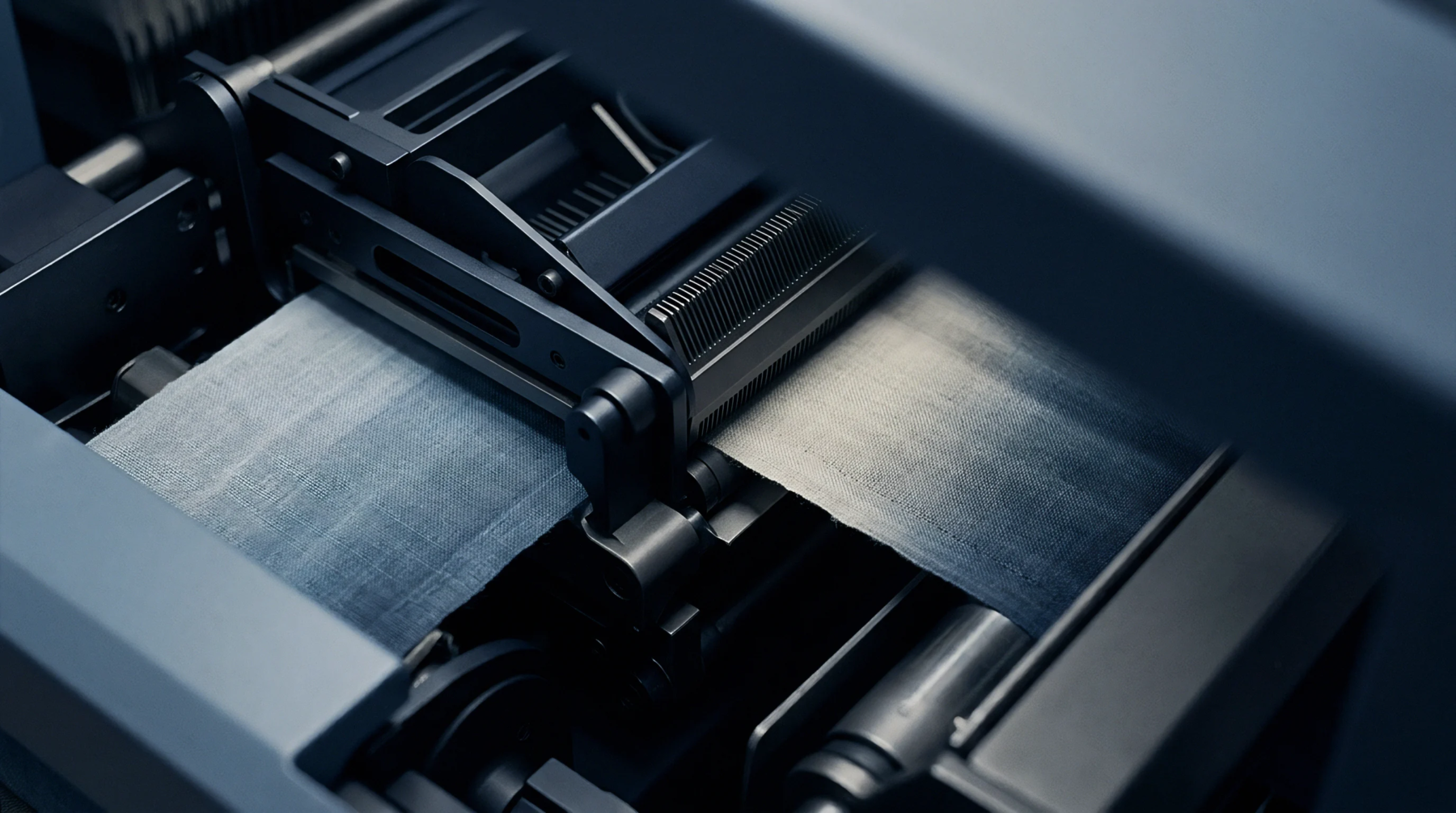
Loom harness separation maintained under elevated warp pull counteracts inter-yarn cling and promotes clear shuttleless insertion through dense flax warps. Rapier and air-jet machines apply high tension shedding to separate the rigid, hairy ends characteristic of dry-spun and coarse wet-spun linen yarns. Increasing the baseline static warp tension keeps heddle openings clean by forcing entangling surface hairs to snap or shear apart as harness frames cross.
Because flax fibres display low ultimate elongation before rupture, running elevated warp tension narrows the operating window between clear shed formation and catastrophic yarn failure. Mill setup specialists establish precise tension values on the digital let-off display to accommodate specific fabric cover factors.
Interference Clearance
High fabric setts with heavy reed density cause adjacent flax ends to snag through mechanical hairiness and superficial pectin scales. When machine setters configure high tension shedding, the increased transverse separation force cleanly breaks fibre bridges, preventing weft insertions from clipping untangled warp yarns. The technique requires precise coordination with beam let-off regulators and whip roll springs to avoid stretching the inextensible flax fibres beyond their yield point.
Excessive tension generates micro-fractures in yarn structure, manifesting as end breakages at the drop wires or lint buildup around the reed dents. Loom monitoring systems record shed tension profiles in centinewtons, logging warp stop frequencies per shift on production lot logs. Greige cloth inspectors reject rolls showing reed friction marks caused by excessive shedding force.
Structural Strain
Sustained warp loading alters the internal geometry of the interlacing points, shifting crimp distribution across warp and weft directions. Utilizing high tension shedding increases warp yarn flattening at the beat-up line, resulting in higher fabric cover and denser pickage per centimetre. If the warp tension exceeds standard specifications, the finished linen fabric suffers from high residual relaxation shrinkage during continuous wet finishing and scour processing.
Quality managers audit loom settings using tension meters, confirming that operational levels do not violate the tensile limits established in buyer contracts. Proper tension management prevents mechanical fatigue in dry-spun linen warps.