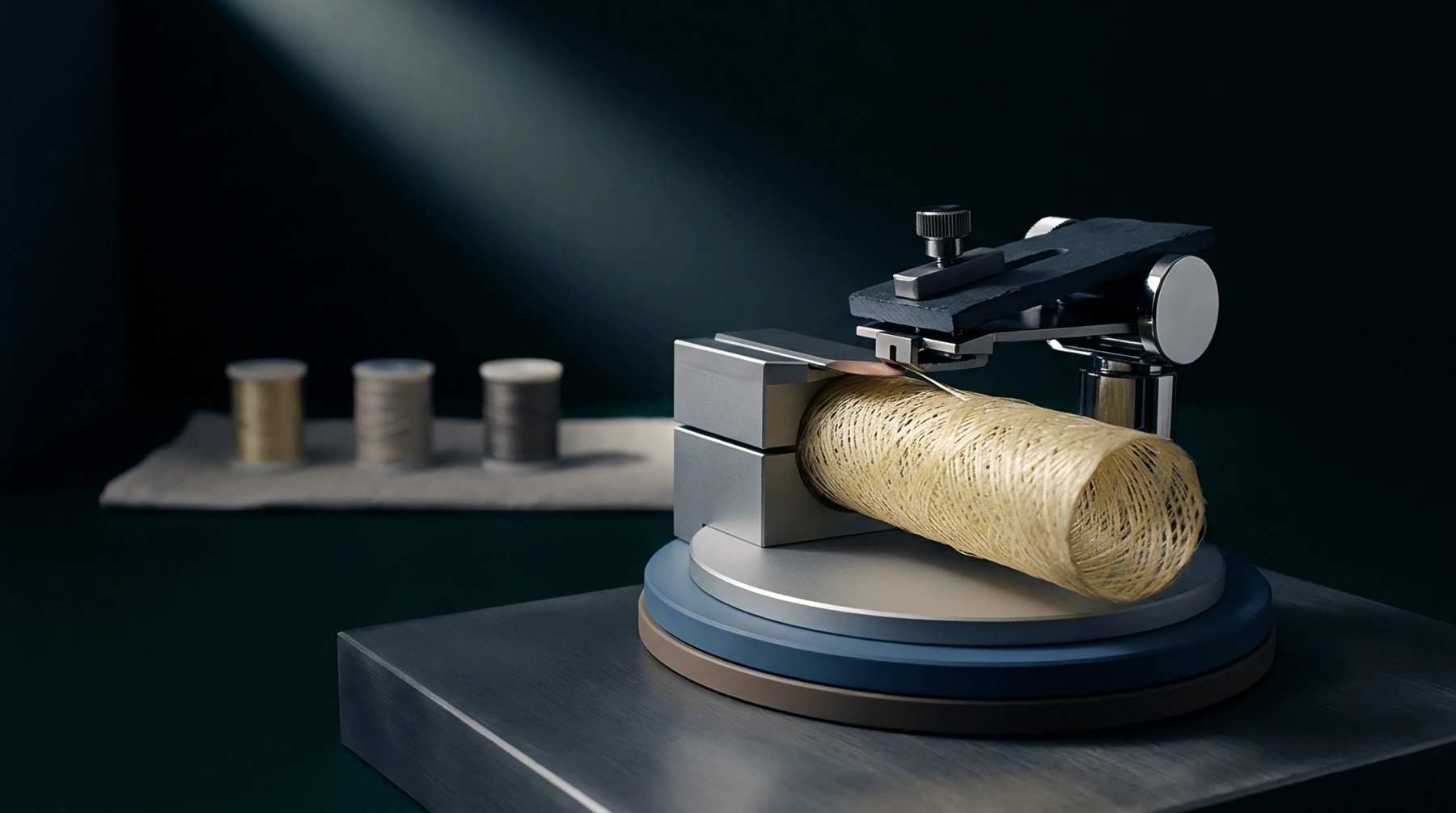
Industrial Process
Specialised fabric production involves the interlacing of high-strength yarns to create textiles capable of withstanding heavy mechanical loads. The practice of high tenacity linen weaving utilizes flax fibres that have been selected for superior breaking strength and low elongation. These materials are processed using reinforced loom components to handle the increased stress of the operation.
Finished goods typically serve industrial applications where durability is the primary requirement.
Material Requirement
Yarn selection determines the success of the weaving run. In high tenacity linen weaving, the spinner provides lots with a specific yarn count and a measured tenacity value. The weaving mill must then ensure that the warp sizing provides enough protection against abrasion without making the yarn too brittle for the shedding cycle.
Low hairiness is also required to prevent entanglement between adjacent ends in the reed. Careful handling of these high-strength strands prevents the degradation of the fibre structure during the warping and beaming stages.
Mechanical Adjustment
Machine settings must be optimized to prevent fibre breakage under tension. During high tenacity linen weaving, the loom operates at a lower speed than standard production to reduce the impact of the beat-up force. Temples are adjusted to maintain fabric width and prevent the selvedges from pulling inward.
This specialized process ends when the mechanical limits of the rapier or projectile system are reached. Production stops before the yarn tension exceeds the structural integrity of the machine frames or the reed.