Weave Specification
Structural layout in textile production describes the simple interlacing pattern of warp and weft yarns. For light to medium household linens, flax plain construction represents the standard arrangement where each warp yarn passes alternately over and under each fill yarn. This balanced structure provides maximum stability and yarn security in the finished cloth.
Loom Configuration
Setting up the loom for this simple design requires two shafts to raise and lower alternating warp ends. In a standard flax plain construction, the warp density must be matched by the filling density to achieve a balanced square grid. Technicians adjust the tension to prevent yarn breakage during shedding.
This precise balancing reduces the occurrence of cloth defects during the loom run.
Fabric Performance
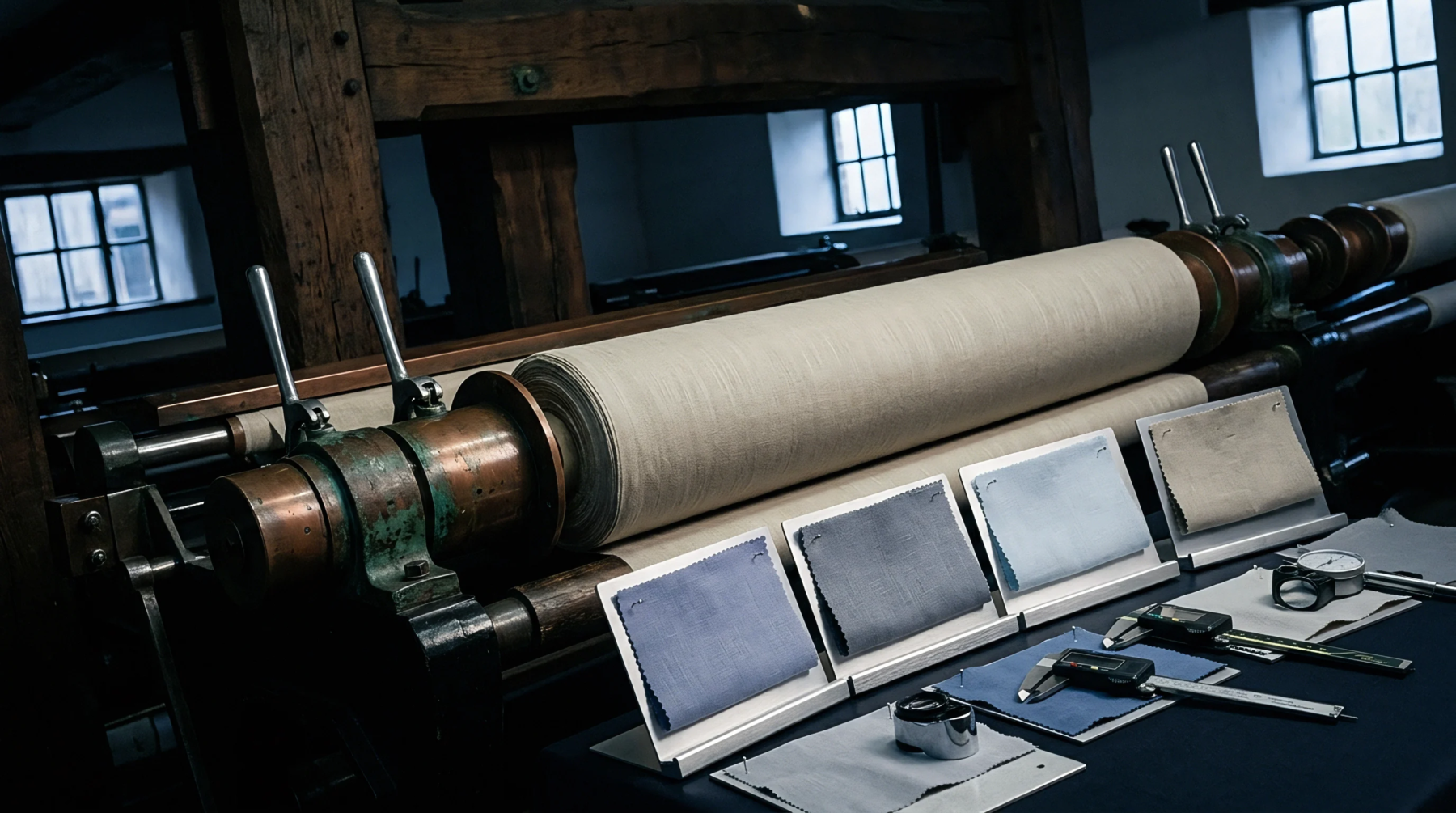
Finished plain fabrics provide superior breathability and durability compared to complex twills. The flax plain construction allows the natural stiffness of flax fibres to support the open structure of the fabric, making it ideal for summer clothing. Quality inspectors at the finishing mill check the yarn count per centimetre against the buyer’s specification before the roll is packed for export.
This verification prevents costly claims from garment manufacturers who require specific fabric density for their cutting patterns.