Tensile Resistance
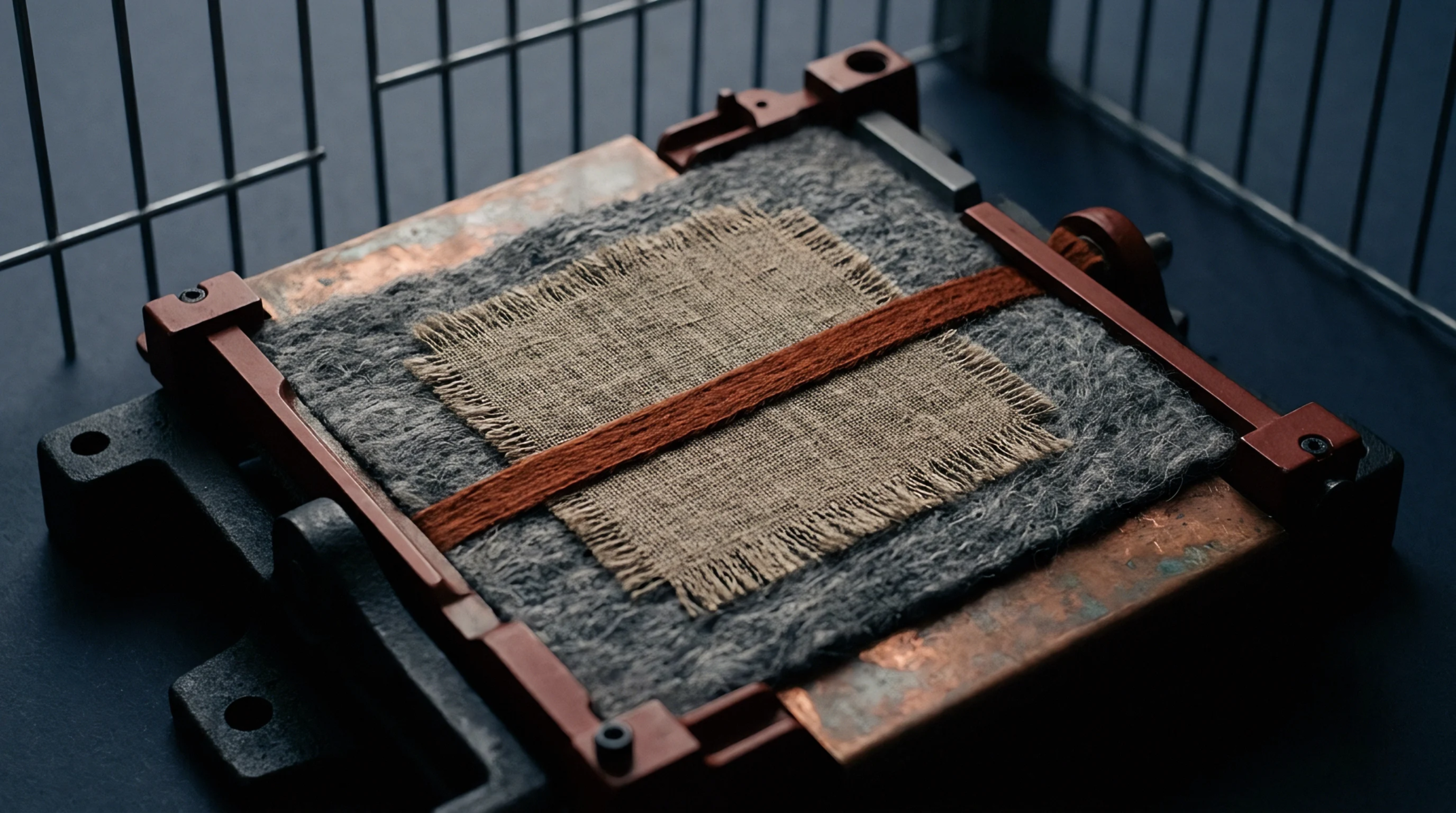
Flax fibre bundle testing measures the breaking load of parallel plant material extracted from harvested stems during the preparation stage in Chinese spinning mills. Raw flax stalks undergo retting and mechanical scutching before technicians clamp discrete groups of technical fibres into jaw fixtures on a constant rate of extension machine. Applied tension increases steadily until rupture occurs, producing a numerical force value recorded on the laboratory technical sheet.
Mill supervisors compare this breaking load against internal quality thresholds to determine whether a batch possesses sufficient strength for subsequent drafting operations.
Breaking Length
Mechanical resistance calculations convert the peak force obtained during jaw separation into a normalized parameter expressing the distance a vertical hanging strand would travel before snapping under its own mass. This derived length provides an objective baseline that distinguishes raw material suitability independently of linear density variations across different harvest regions. Technicians compute the ratio by dividing breaking force by total linear mass, yielding a standardized index utilized during yarn contract negotiations.
Higher index values indicate superior cellulose crystallinity and proper pectin removal during the retting phase, whereas low measurements signal over-retted material prone to processing failures on high speed drawing frames.
Acceptance Threshold
Commercial transactions between primary producers and spinning mills depend upon specific contractual minimums outlined in the official technical annex accompanying each shipment. Export documentation records these average breaking lengths to establish payment tiers and verify compliance with regional processing specifications. Buyers reject raw lots failing to meet the agreed numerical threshold because weak plant structures create excessive downtime and irregular yarn profiles during commercial ring spinning operations.