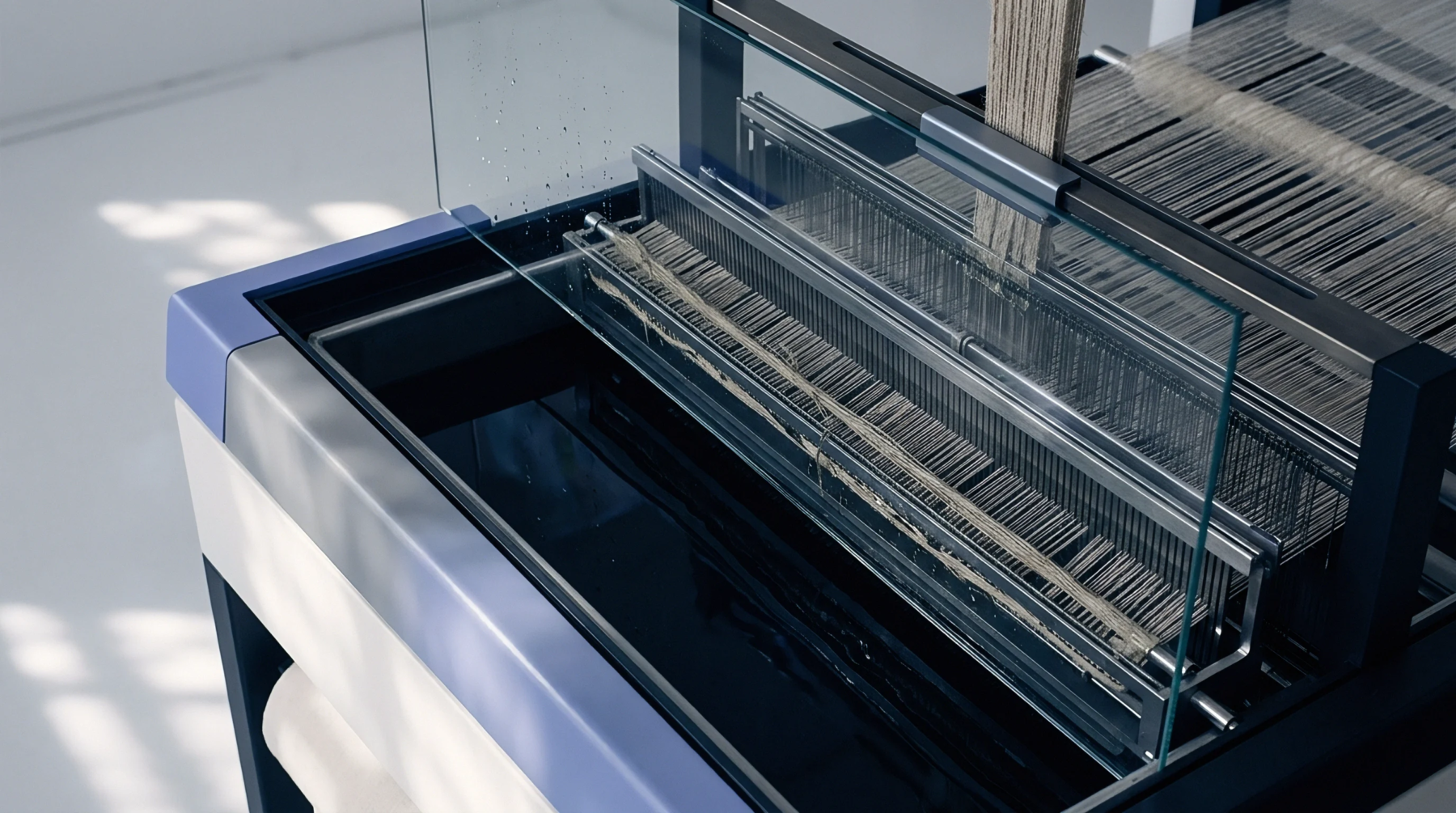
Yarn Monitoring
Weaving efficiency depends on the immediate detection of warp yarn breaks to prevent fabric defects and double threads on the loom beam. The occurrence of drop wire shorting provides the electrical signal needed to stop the weaving machine the instant a thread loses tension. This automated system ensures that high-speed projectile and rapier looms do not run with missing warp yarn.
Electrical Mechanism
The system operates by suspending a thin metal blade, called a drop wire, on each individual warp thread above an electrified bar. When a thread snaps, the wire falls under its own weight and contacts the bare metal electrode below it. This drop wire shorting closes a low-voltage electrical circuit that triggers the electronic brake on the main drive motor of the loom.
By isolating the broken thread immediately, the mechanism prevents the tangled warp ends from wrapping around adjacent yarns. The weaver can then locate the fallen wire, tie the broken ends with a weaver’s knot, and reset the loom without leaving a noticeable defect in the linen fabric.
Loom Stop
Accumulated lint and humidity in Chinese weaving mills can interfere with this sensor system. If starch size or flax dust accumulates on the electrode bar, the drop wire shorting fails to occur, allowing the loom to continue running with a broken thread and creating a line of missing warp. Regular compressed air cleaning and moisture monitoring are required to keep the electrical contact surface clean.