Designing Harness Tie Configurations for Symmetrical Damask Fabric Constructions
Symmetrical damask ties halve jacquard hook requirements by mirroring motifs across a central axis, demanding strict binding offsets to prevent double floats.


Board
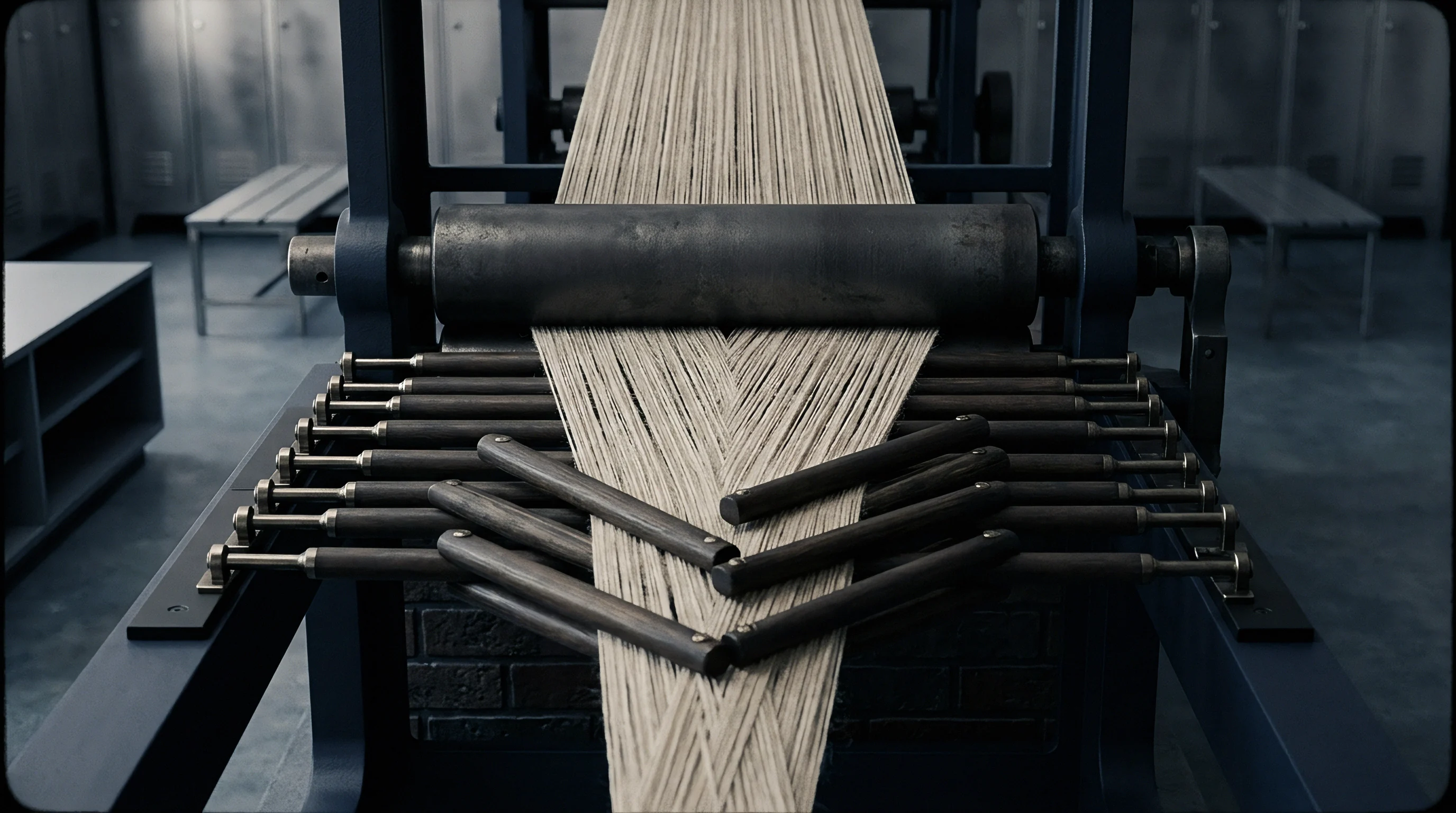
Direct mechanical coupling between the jacquard machine and the warp line begins at the drilled perforated plate suspended above the shed. Planar positioning of every guide hole determines the vertical trajectory of each linen end as it enters the drop wires and reed dents. In symmetrical damask production, the arrangement divides across a central longitudinal axis where the left and right sectors mirror each other exactly.
A point tie relies on this spatial division to halve the hook capacity required for a full tablecloth width. Hook numbers ascend from the selvedge toward the center, then descend in reversed sequence toward the opposite selvedge. When the perforations depart from the reed denting sequence by more than three degrees of angular deflection, lateral friction increases exponentially.
Loom speeds drop rapidly.
Drilling Geometry for Symmetrical Reflection
Perforation grids follow either straight or staggered row layouts across the depth of the plate. Staggered arrays prevent adjacent linen singles from rubbing during rapid shedding cycles, maintaining clear yarn separation across eight, twelve, or sixteen rows. In symmetrical tablecloth layouts, the center line of the perforation plate matches the exact center dent of the profile reed on a rapier machine.
Drilling counts per square centimeter correspond strictly to the finished warp count divided by the contraction percentage of wet-spun flax yarns during scouring and bleaching.
Under a forty-pick insertion rate, linen singles sustain yarn-on-yarn friction exceeding twelve centinewtons when the angular splay passes seven degrees.
Lateral divergence between the upper guide plate and the reed creates unequal lateral pull on the outer heald eyes. When the outer ends enter the reed at an angle, the friction cuts through yarn lubricants, generating localized lint accumulation and yarn clinging.
Loom Center Alignment and Cord Splay
Machine centerline offsets generate asymmetric tension profiles across supposedly identical mirror-image motifs. The central mirror point requires zero angular deflection, positioning the corresponding guide perforations directly above the central reed dents. Divergence increases progressively toward the selvages, reaching maximum displacement at the extreme left and right borders of the reed bed.
Heald eyes positioned at the selvage edge endure high mechanical displacement forces, requiring calibrated counterweights or high-modulus return springs to prevent delayed shed closure.
- Excessive cord divergence induces asymmetric tension differentials exceeding fifteen percent across mirrored motif halves, causing structural bias in adjacent satin blocks.
- Hole bore roughness abrades twined synthetic coupling cords within three hundred operating hours, resulting in uneven shed floors and skipped pick insertions.
- Uncompensated center gap creates visible warp density thinning along the pattern turnover line, ruining cloth surface uniformity under flat lighting.
- Guide plate deflection under the aggregate tension of eight thousand ends distorts the central shed line, producing untensioned yarn loops during rapier insertion.
Friction cuts linen filaments.
Miscalculating the horizontal distance between the guide perforations and the heald eyes creates severe warp striping along the outer edges that forces the rejection of entire bleached rolls at secondary finishing inspection.


Symmetry
Motif construction for traditional damask relies on reversible satin grounds paired with opposite-phase satin figures. In five-end satin arrangements, four-to-one warp-float interlacements define the pattern ground, while one-to-four weft-float interlacements form the reflective damask figure. Symmetrical point arrangements repeat motifs across a central axis without doubling the jacquard hook investment.
Reversal mechanics must preserve clean binding sequences along the exact line of turnover. Two adjacent warp ends lifting identically on consecutive picks produce a double float, destroying the structural integrity and sharp contrast of the damask outline.
A point repeat halves the machine hook investment while fixing the cloth into mirror-image geometry.
What Governs Center Point Reflection Stability?
Structural stability across the turnover axis depends on the precise disposition of the pivot end. If a design reverses across a single warp end, that end functions as the stationary axis for both the left and right repeats. In five-end satin, reversing on a single end disrupts the regular step number of two, causing a local three-float or an unsightly plain-interlaced line down the center of the tablecloth.
Reversing between two distinct ends preserves regular five-end satin progression, provided the draughtsman adjusts the point paper binding points manually. The point paper plan offsets the binding points by two picks across the turnover line to prevent adjacent warp ends from tracking together.
Turnover points double thread density.
Satin ground counters warp crimp.
| Cloth Specification | Finished Sett (ends/cm) | Pattern Width (cm) | Jacquard Hooks Utilized | Effective Motif Width (cm) | Shed Capacity Ratio |
|---|---|---|---|---|---|
| Fine Table Linen 8-End Satin | 38.0 | 160.0 | 3040 | 160.0 | 2.0 to 1.0 |
| Contract Damask 5-End Satin | 28.0 | 140.0 | 1960 | 140.0 | 2.0 to 1.0 |
| Bespoke Banquet 8-End Satin | 42.0 | 220.0 | 4620 | 220.0 | 2.0 to 1.0 |
| Institutional Linen 5-End Satin | 24.0 | 130.0 | 1560 | 130.0 | 2.0 to 1.0 |

Binding Point Preservation across Turnover Ends
Float integrity across turnover boundaries demands strict adherence to float-length boundaries. In five-end satin, floats span four ends or picks; an uncorrected turnover draught expands this float to five or six ends, lowering abrasion resistance during commercial laundering. Drafts designed with eight-end satin tolerate turnover transitions more flexibly, because the step number of three or five provides adequate spacing between adjacent binding points.
When the motif boundary intersects the reflective turnover line at an acute angle, the binding marks must step continuously without forming twill lines along the reflection seam.
Hook capacity dictates pattern width.
Whether modern electronic shedding engines have rendered mechanical point ties entirely obsolete in export-oriented linen mills remains an open commercial debate among equipment planners.

Cording
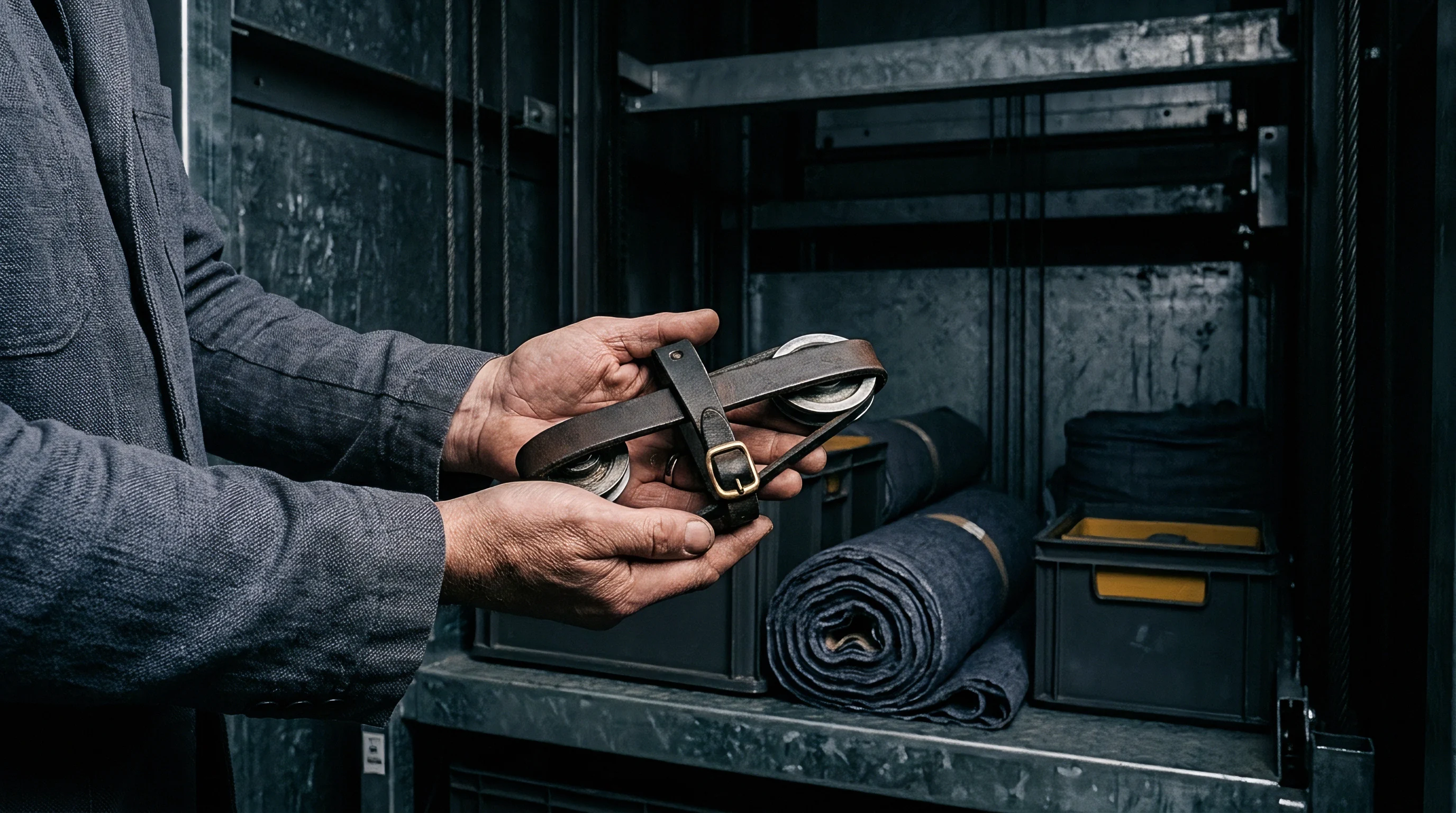
Vertical connection strings link the upper jacquard hooks directly to the heald eyes and bottom pull-down assemblies. Braided synthetic twines with high-tenacity polyester or aramid cores eliminate environmental elongation caused by humid shed environments. In wet-spun linen weaving, atmospheric humidity must remain between sixty-five and seventy-five percent to maintain flax yarn pliability.
Cotton or unsealed polyamide strings absorb ambient moisture, lengthening unevenly across the machine width and distorting shed geometry over thirty days of continuous loom operation. Calibrated tensioning across every cord string maintains uniform shed lift height from front to back rows.
Neck cords abrade brass eyes.

Spring Undershed Return against Lingo Weights
Downward restoring force in modern high-speed rapier machines relies on individual helical return springs rather than traditional deadweight lead lingos. Lingos swinging beneath high-speed looms introduce harmonic oscillations that distort the lower shed line at three hundred picks per minute. Helical springs, enclosed in protective tubes to exclude linen fly, provide stable downward return force up to thirty-five newtons per end.
In symmetrical layouts, the central healds experience purely vertical travel, whereas the lateral healds encounter significant diagonal vectors. Spring stiffness must match this angular variation, utilizing progressive spring rates at the selvage borders to compensate for mechanical friction at the perforation guides.
Spring tension counters shedding drag.
Lead weights pull healds down.
- Verify dead-weight or spring tare calibration across twenty random border healds before drawing the warp beam into the drop wires.
- Inspect mail eye aperture diameters using optical gauges to verify clearance against slub profiles common in wet-spun linen singles.
- Run slow-motion turnover cycles to observe potential heald flutter or delayed descent along the central reflection axis.
- Audit shed clearance angles using a protractor gauge at the rapier entry zone to eliminate pick insertion collisions.

Linen Singles Abrasion at the Mail Eye
Abrasive wear on flax fibers accelerates dramatically when the mail eye angle does not match the warp yarn path. Case-hardened steel eyes with nickel-chrome plating prevent yarn grooving under the constant passage of firm, low-elasticity linen singles. Because flax fibers possess negligible natural elongation (typically two to three percent before rupture), any shed timing error creates immediate peaks in end-break frequency.
Symmetrical setups concentrate abrasion heavily along the turnover boundary, where yarn ends flex at sharp opposing angles during alternate pick cycles.
Synthetic cording arrays running in controlled humidity chambers demonstrate less than zero point two percent elongation across one thousand operating hours.
The technician claimed that the repeated warp end breaks along the centerline were caused exclusively by dry linen yarn lots rather than unequal vertical cord pull.

Pitch
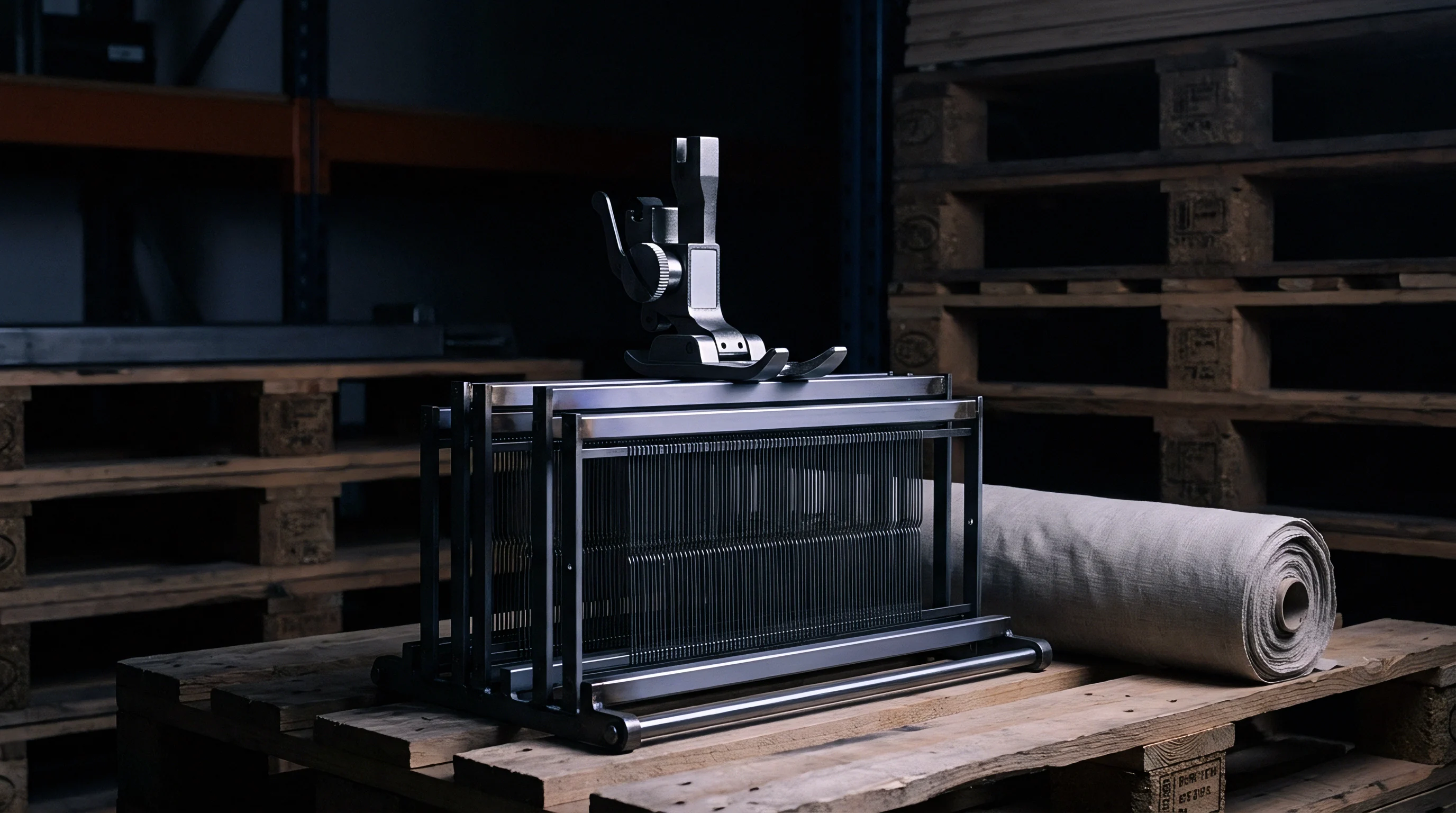
Spatial correlation between perforation spacing and the reed dent pitch determines the working life of the shedding elements. When the density of holes in the guide plate deviates significantly from the warp density in the reed, individual cords enter the upper shed line at acute angles. Angular deflection causes the strings to rub heavily against the internal edges of the perforations.
Over continuous operation, this abrasion cuts through outer protective braiding, exposing internal structural fibers to premature fatigue failure.
Reed dents pinch adjacent yarns.
Angular Deflection Limits across Wide Goods
Calculating the maximum permissible deflection angle demands balancing the distance between the guide plate and the cloth fell with the total reed width. Wide banquet table linens measuring over two hundred centimeters in finished width generate extreme angles at the lateral selvages unless the guide plate is elevated significantly above the machine frame. Raising the plate increases total string length, multiplying overall elastic elongation during the lifting stroke.
The maximum operational splay angle between the vertical centerline and the outermost string must not exceed nine degrees in high-speed linen operations.
Static charges collect yarn fly.
A contract delivery specification that excludes four-point greige inspection reports permits the supplier to ship cloth with visible turnover lines without commercial penalty.
Should Point Paper Adjust for Reed Angle?
Structural adjustments in the point paper counteract visual distortion caused by diagonal string deflection. As lateral strings pull inward toward the central guide plate, the effective vertical lift height of the outermost healds decreases slightly. A lower shed height reduces the clarity of the shed opening, causing the rapier heads to strike the upper warp sheet intermittently.
Designers compensate for this geometric drop by programming earlier shed timing or by increasing the stroke amplification on the lateral hooks of the machine head.
- Total reed spread exceeds guide plate width by no more than twenty-two percent, limiting excessive lateral string friction during high-speed shed changes.
- Loom centerline coordinates align perfectly between the warp beam flanges, drop wire banks, reed bed, and perforated guide plate.
- Heald length selection accommodates maximum shed opening requirements without forcing the return springs into coil bind at full hook lift.
- Ambient shed relative humidity remains pinned within three percent of target limits, preventing sudden tension shifts across hydrophilic linen warp sheets.
Mispicks destroy table linen value.
ASTM D5430 four-point inspection grading protocols penalize repeated central turnover faults as major four-point defects, causing entire cloth rolls to fail export delivery standards when lateral deflection exceeds mechanical thresholds.

Allocation
Capital budgeting for linen damask manufacturing balances the initial investment in machine hooks against ongoing operational flexibility. A straight tie configuration grants complete design freedom across the entire cloth width, allowing asymmetrical motifs, multi-figure panel repeats, and unrestricted border placements. Point tie layouts restrict the design envelope strictly to mirror-image arrangements centered on the table layout.
However, point configurations halve the required jacquard hook capacity, enabling mills to produce wide luxury table linens on compact machines with substantially lower capital expenditure.
Mill floors magnify thermal drift.
Fixed beams punish slack ends.

Hook Capacity Capital against Shed Versatility
Economic justification for point ties centers on machine procurement and installation costs. An electronic jacquard machine equipped with six thousand hooks carries an equipment price tag roughly forty percent higher than a three-thousand-hook machine of identical build quality. In high-density damask table linen measuring forty ends per centimeter across a two-hundred-centimeter reed width, a straight tie configuration demands eight thousand individual hooks.
A point tie configuration delivers the identical two-hundred-centimeter patterned width using four thousand hooks. The cost savings extend beyond the machine head into reduced weight loads on the shed superstructure, lower power consumption, and shorter setup times during initial harness installation.
Overnight stops create starting marks.
Finished Metre Economics on Symmetrical Warps
Production scheduling and warp beam utilization define long-term profitability in damask weaving. Setting up a dedicated point tie arrangement locks a production loom into symmetrical product categories such as square napkins, rectangular tablecloths, and mirrored runners. Converting a point tie setup back into a straight tie requires extensive downtime, complete replacement of the perforation plate, and days of re-threading individual heald cords.
Mill managers must evaluate whether their order book contains sufficient long-term banquet linen volume to amortize the setup investment across hundreds of thousands of running meters.
| Setup Configuration | Hook Count | Running Speed (picks/min) | Loom Operating Efficiency (%) | Output (metres/hour) | Loom Cost (EUR/metre) |
|---|---|---|---|---|---|
| Straight Tie Full Width | 6144 | 280 | 76.5 | 22.4 | 2.85 |
| Symmetrical Point Tie | 3072 | 340 | 84.2 | 29.8 | 1.92 |
| Hybrid Point and Border | 4096 | 310 | 81.0 | 26.2 | 2.28 |
| Dual-Repeat Symmetrical | 2688 | 360 | 86.5 | 32.5 | 1.68 |
| Data calculated on forty-picks-per-centimeter wet-spun linen damask running on negative rapier machines under standard sixty-five percent relative humidity conditions. | |||||
Weaving efficiency gains under symmetrical configurations stem directly from reduced mechanical inertia within the machine head. Driving three thousand hooks rather than six thousand reduces the mass of the knife blocks and lifting grates, allowing the rapier loom to run at higher picks per minute without exceeding bearing vibration thresholds. When processing high-value wet-spun linen yarns, every increment of running stability translates directly into lower warp break frequencies and higher first-quality cloth yields on the inspection perch.
A warp committed to a symmetrical point tie repays its setup cost only when the pattern run outlasts the beam.