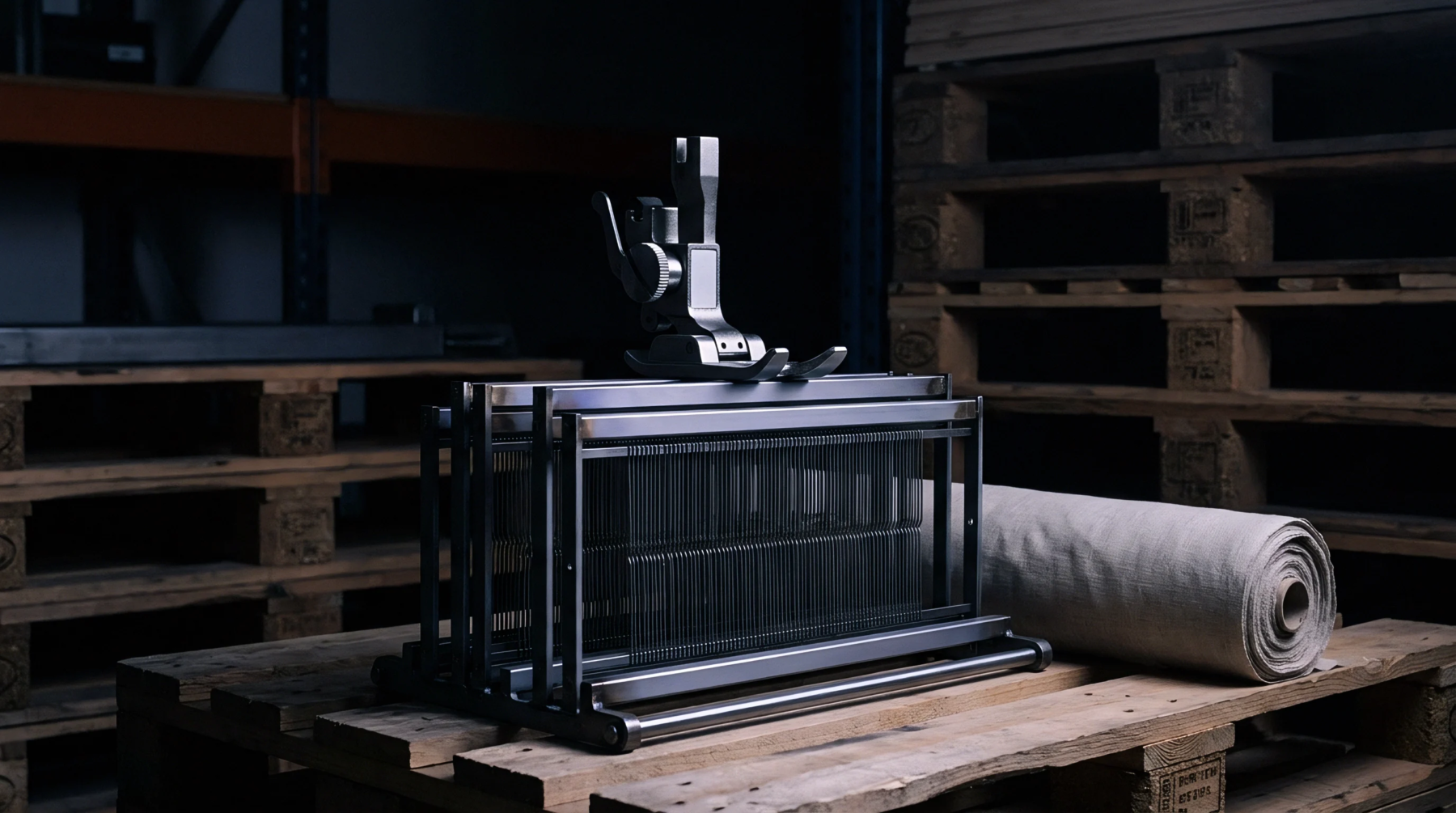
Symmetrical Setup
Symmetrical arrangement of jacquard harness cords from the center of the comber board generates mirrored patterns across the width of the woven fabric. This specific configuration, called the point tie, halves the number of hooks required to produce a full-width symmetrical motif. Mill designers select this layout when weaving linen with repeating medallions or mirrored floral borders.
Cord Distribution
Threading the harness cords in a reverse sequence from the midpoint ensures that left-hand and right-hand sides of the fabric are produced identically. The point tie routes the first half of the warp ends in a standard straight progression, while the second half is threaded in the reverse order. This routing reduces the complexity of pattern programming because a single design card controls both sides of the symmetrical figure.
Because flax yarn has low stretch, the harness tension must be balanced at the reversing point to prevent tension lines in the finished linen cloth.
Fabric Structure
Loom efficiency increases because fewer jacquard hooks are needed to control a large, repeating design. If the point tie is aligned incorrectly, the symmetry of the fabric is lost, and the roll must be classified as seconds. Technical managers document the tie scheme on the pattern draft sheets before threading the loom.