Standard Commercial Weight Calculations in Raw Bast Fibre Trade Contracts
Commercial weight calculations convert raw bast fibre gross mass to invoiced pay-weight using official moisture regain allowances and clean dry yield tests.


Mass
Raw bast fibres absorb and desorb atmospheric water vapor until reaching equilibrium with ambient air. Because natural humidity fluctuates across harvesting regions, shipping routes, and warehouse environments, direct port scale weights offer an unreliable commercial basis for financial settlement. Trade contracts resolve this variance by establishing commercial mass ~ an invoiced weight calculated from the fibre’s dry mass plus an agreed official moisture regain allowance.
Commercial regain standards convert variable physical shipments into uniform monetary units. ISO 6741-1 governs commercial mass determinations for textile fibre consignments, setting standard regain values by plant genus. Flax, hemp, ramie, jute, and kenaf possess distinct cellular structures and chemical compositions that dictate equilibrium regain under standard laboratory conditions of sixty-five percent relative humidity and twenty degrees Celsius.

Official Regain Definitions and Commercial Mass Equations
International contracts for raw flax, hemp, ramie, and jute express traded volume in commercial weight rather than physical scale weight measured at port. Converting delivered gross scale mass into invoiced commercial mass relies on two primary variables: measured moisture content at sampling and the official commercial moisture regain percentage specified by trade rules or contractual standards.
The standard equation for calculating the commercial mass of a raw bast fibre lot converts measured gross or net scale mass directly through the ratio of official to actual moisture content:
Commercial Mass = Delivered Scale Mass x ((100 + Official Regain Percentage) / (100 + Measured Moisture Regain Percentage))
When contract specifications require clean dry yield adjustments, oven-dry mass serves as the baseline reference point. Laboratory oven drying removes all vaporizable moisture, leaving dry fibre mass as the primary anchor for transaction settlement:
Invoiced Commercial Weight = Oven-Dry Mass x (1 + (Official Regain Percentage / 100))
The official regain percentage assigned to raw bast fibres varies across international trade bodies and material standards. Standard commercial regain allowances recognized in cross-border raw bast fibre trade contracts are detailed below.
| Bast Fibre Category | Official Commercial Regain (%) | Oven-Dry Mass Factor | Standard Regain Range (%) | Governing Trade Standard |
|---|---|---|---|---|
| Scutched Long Flax | 12.00 | 1.1200 | 11.50 – 12.50 | ISO 6741-1 / CELC Standard |
| Flax Tow and Short Fibre | 12.50 | 1.1250 | 12.00 – 13.00 | ISO 6741-1 / CELC Standard |
| Raw Hemp Fibre | 12.00 | 1.1200 | 11.00 – 13.00 | ISO 6741-1 / EIHA Rules |
| Degummed Ramie Strands | 11.00 | 1.1100 | 10.00 – 11.50 | GB/T 20793 / ISO 6741-1 |
| Raw Jute Bales | 13.75 | 1.1375 | 13.00 – 15.00 | IJMA Rules / ISO 6741-1 |
| Kenaf Raw Fibre | 13.75 | 1.1375 | 12.50 – 14.50 | ISO 6741-1 / Commercial Practice |
At 65 percent relative humidity and 20 degrees Celsius, unspun raw flax fibre reaches equilibrium at twelve percent moisture regain.

Worked Calculation for Commercial Mass Adjustment
Assume a merchant receives a forty-tonne consignment of long flax fibre delivered with a measured moisture content of sixteen percent. The purchase contract specifies a baseline quantity of 40,000 kilograms at the official flax moisture regain rate of 12.0 percent.
Step one calculates the absolute oven-dry mass contained within the delivered shipment:
Oven-Dry Mass = Delivered Scale Mass x (100 / (100 + Measured Moisture Percentage))
Oven-Dry Mass = 40,000 kg x (100 / (100 + 16.0)) = 40,000 kg x 0.862069 = 34,482.76 kg
Step two converts the calculated oven-dry mass into the contractually allowable commercial mass using the official 12.0 percent regain factor:
Invoiced Commercial Weight = 34,482.76 kg x (1 + (12.0 / 100)) = 34,482.76 kg x 1.120 = 38,620.69 kg
The physical shipment arrived weighing 40,000 kilograms on the weighbridge due to excess entrained atmospheric water. The recalculated payable commercial weight equals 38,620.69 kilograms, allowing the buyer to deduct 1,379.31 kilograms from gross invoice mass. Standard contract clause 14.2 in international flax agreements specifies that invoice mass equals oven-dry mass multiplied by one plus official regain divided by one hundred.

Impurity
Raw plant stalks carry non-cellulosic constituents including pectins, waxes, residual shive, and applied batching lubricants that alter clean fibre yield. Commercial transactions based solely on gross weight and moisture regain reward suppliers who ship poorly processed or heavily lubricated bast bundles. Trade contracts address non-fibrous foreign matter by defining standard extraction allowances that adjust invoiced mass down to a clean dry yield baseline.
Non-cellulosic extracts represent physical weight that provides zero spinning value to textile mills. In raw jute trading, processing mills apply water-and-oil batching emulsions to soften stiff bark ribbons before carding. If a jute bale contains six percent applied oil while contract rules limit batching oil content to two percent, the excess four percent represents unearned material mass.
Chemical solvent extraction testing isolates hydrophobic wax and oil components from pure lignocellulosic cell walls.

Solvent Extraction Testing and Non-Fibrous Mass Corrections
Standard scoured yield determinations rely on Soxhlet extraction using dichloromethane or petroleum ether to remove hydrophobic surface compounds. ISO 1833-1 procedures establish extraction protocols for separating non-fibrous matter from raw plant bundles. When non-fibrous extractive content exceeds contractual limits, trade agreements enforce a direct mass reduction against invoice weight.
The composite commercial mass formula incorporates both the moisture regain factor and the non-fibrous extraction adjustment factor:
Adjusted Commercial Mass = Delivered Gross Mass x ((100 – Measured Non-Fibrous Extract Percentage) / (100 – Allowable Non-Fibrous Percentage)) x ((100 + Official Regain Percentage) / (100 + Measured Moisture Regain Percentage))
Key mechanisms that drive unexpected weight reductions during non-fibrous extractive analysis include:
- Unextracted Batching Oil Retention Mineral and vegetable oil additives applied during mechanical carding remain bound to bast bark ribbons, increasing delivered scale weight without adding usable cellulose.
- Residual Cortical Pectin Accumulation Incomplete biological or chemical retting leaves insoluble pectic gums glued to outer fibre walls, adding dead weight that dissolves during industrial bleaching.
- Entrained Woody Shive Particles Broken stem core fragments trapped inside scutched fibre bundles register as raw mass during weighbridge intake but fall out as waste dust in carding machinery.
- Soluble Inorganic Ash Content Soil particles and mineral dirt clinging to unwashed field-retted straw inflate physical scale weight while accelerating wear on textile drafting rollers.

Quantifying Extractive Reductions in Raw Jute Bales
Processing raw jute into coarse yarn requires applying mineral oil emulsions to soften coarse plant strands during carding. Standard international trading contracts established by the Indian Jute Mills Association and international fiber trade bodies enforce a maximum allowable batching oil content of 2.0 percent by weight on an oven-dry basis.
A baseline batching oil allowance of two percent for raw jute rests on traditional batching emulsion formulas, increasing to four percent when spinners apply heavy mineral oil blends for low-grade fibre processing. When laboratory testing of core samples reveals an actual solvent extractable oil content of 5.5 percent, the contract mandates an immediate recalculation of invoice weight.
| Bast Fibre Category | Standard Non-Fibrous Limit (%) | Solvent Test Standard | Extractive Excess Penalty Threshold | Invoiced Mass Impact Formula |
|---|---|---|---|---|
| Scutched Flax Long | 1.50 | ISO 1833-1 (Dichloromethane) | Above 2.00% extractables | Direct 1:1 weight reduction |
| Raw Hemp Tow | 2.50 | ISO 1833-1 (Petroleum Ether) | Above 3.00% extractables | 1:1 deduction plus test fee |
| Unbleached Ramie Gums | 25.00 | GB/T 5889 (Chemical Degumming) | Above 26.00% residual gum | Proportional yield discount |
| Batch-Oiled Jute Bales | 2.00 | ISO 3074 (Solvent Extraction) | Above 2.00% oil content | Direct weight reduction from dry mass |
| Methods note: Extractive values represent oven-dry solvent extraction percentages confirmed across three independent core draws per twenty-tonne lot. | ||||
Contractual omission of batching oil solvent-extraction allowances transfers a three percent weight surcharge directly to the yarn spinner.
Consider a 20,000 kilogram lot of raw jute delivered at 13.75 percent moisture regain containing 5.5 percent batching oil. The allowed batching oil limit equals 2.0 percent. The non-fibrous correction factor equals (100 – 5.5) / (100 – 2.0), which evaluates to 94.5 / 98.0, or 0.964286.
Multiplying the baseline weight of 20,000 kilograms by 0.964286 yields a corrected commercial pay-mass of 19,285.72 kilograms. Neglecting non-fibrous extractive deductions inflates raw material costs by up to four percent while causing severe foaming during subsequent wet processing.


Sampling
Determining accurate moisture content requires test specimens that represent the true physical state of an entire multi-tonne shipment. Core extraction techniques isolate internal bale conditions without unbinding compressed units. ISO 6741-2 outlines multi-stage extraction rules for cross-border fibre shipments, dictating specimen draws across top, middle, and bottom package zones.
Package density inside compressed bast fibre bales, reaching up to 400 kilograms per cubic meter, impedes environmental air exchange. Outer bale zones absorb or lose ambient water rapidly, creating significant moisture variations across single packages. Testing outer layers alone skews calculated commercial mass, resulting in substantial financial errors on high-volume transactions.

When Does Core Moisture Diverge from Outer Regain?
Atmospheric exposure creates steep moisture gradients between the external layers of compressed bast fibre packages and their inner centers. During ocean transit, relative humidity variations in ship holds cause outer fibre strands to gain or lose water content while core layers maintain their harvest origin equilibrium.
The official twelve percent moisture regain factor for long flax fibre rests on ISO 6741-1 environmental baseline testing at sixty-five percent relative humidity, moving upward by zero point fifteen percent for every one percent increase in ambient air humidity above seventy percent. Extracting core specimens with motorized hollow tube drills penetrating at least 400 millimeters into compressed bale faces prevents environmental edge bias.
A standardized laboratory core extraction and moisture analysis protocol operates according to the sequence detailed below.
- Extract core specimens from at least ten percent of randomly selected bales in the consignment using a motorized rotary core drill.
- Transfer each core specimen immediately into a pre-weighed airtight glass container to prevent moisture exchange with ambient air.
- Weigh the sealed container on a calibrated analytical balance with a precision of zero point zero one grams to record gross wet mass.
- Place the unsealed specimen container inside a ventilated convection oven held at one hundred five degrees Celsius until mass remains constant across two consecutive weighings.
- Calculate moisture regain percentage by dividing total mass loss by final dry specimen mass and multiplying by one hundred.

Standard Oven-Drying Protocols under ISO 6741
Vented forced-convection drying ovens set at one hundred five degrees Celsius evaporate free moisture from extracted fibre specimens until reaching constant weight. ISO 6741-2 mandates drying temperature limits between 103 and 105 degrees Celsius. Exceeding 108 degrees Celsius initiates thermal degradation of structural hemicellulose and pectins, driving off bound volatile organics that register false moisture loss.
Container desiccant water absorption rates during transpacific ocean transit range between ten and thirty percent of total desiccant mass depending on seasonal hold temperatures, an uncertain figure that forces buyers to specify origin-port weighbridge certificates as the sole contract basis. Weighing specimen containers hot induces buoyancy errors caused by internal convection currents. Standard lab procedures require cooling sealed containers inside a silica gel desiccator down to twenty degrees Celsius before recording final dry mass balances.
Weight loss during ocean transport frequently stems from outer bale drying rather than inaccurate initial weighbridge readings.

Transit
Ocean shipping containers encounter thermal cycling and humidity shifts that alter payload weight between export loading and destination discharge. Cross-border trade contracts must allocate risk for environmental mass variations using INCOTERMS delivery designations and verified weighbridge intake tickets.
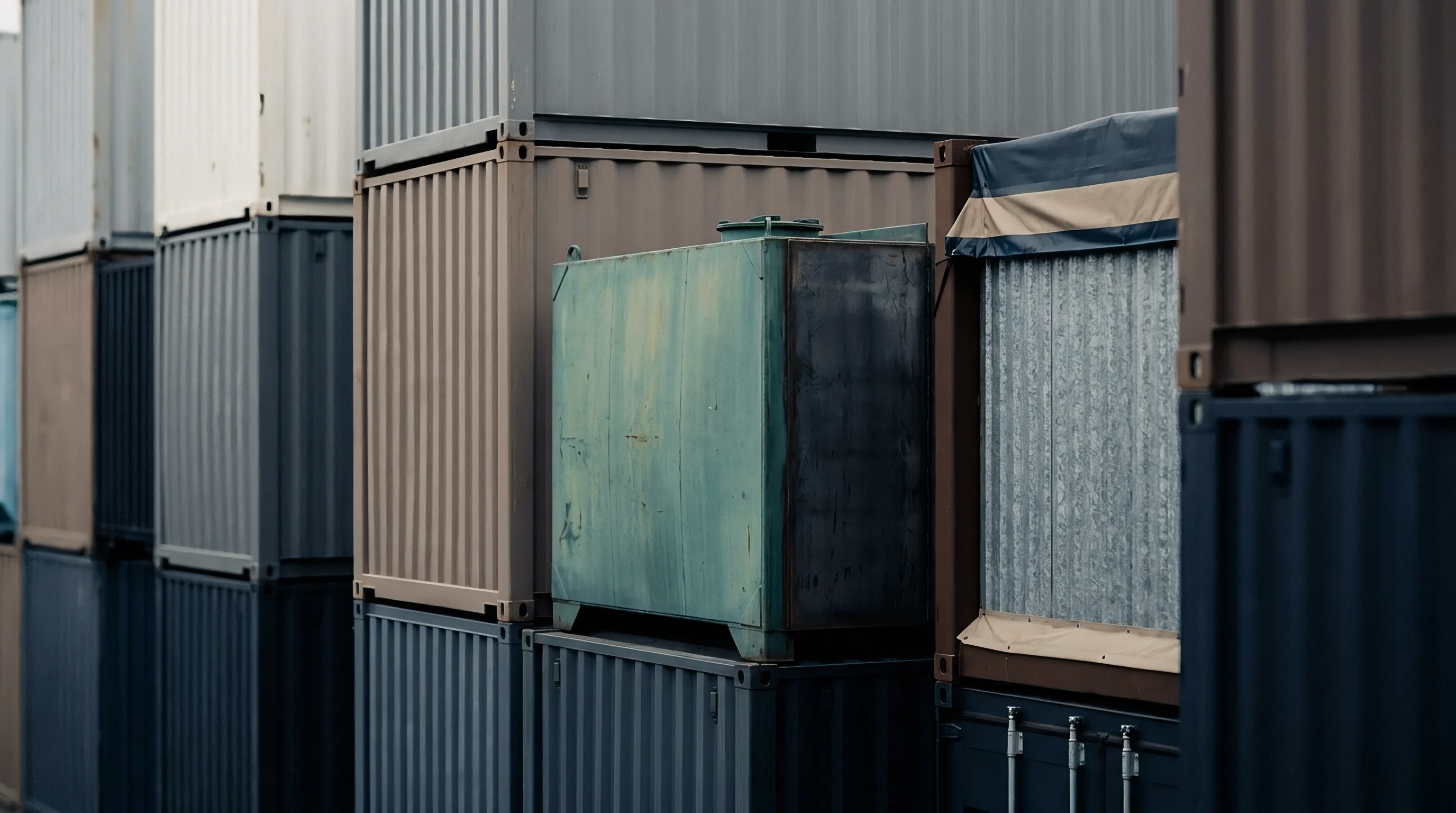
Tare mass discrepancies introduce significant error into commercial weight reconciliation. Ocean container door plates list nominal tare weights that often differ from physical empty scales due to floor repair, marine grime, or structural modifications.

Hygroscopic Hysteresis and Container Microclimates
Bast fibres desorb water along a different thermodynamic pathway than they absorb moisture, creating weight discrepancies during climatic changes. Atmospheric moisture adsorption yields lower equilibrium moisture content than desorption at identical relative humidity levels. This hysteresis loop means bast fibre loaded at fourteen percent moisture content in a humid export port retains higher moisture levels during transit than fibre exposed to rising humidity en route.
Maritime freight vessels traversing equator passages experience internal container temperatures exceeding fifty degrees Celsius, driving moisture out of top bale layers into container roof headspace where it condenses as liquid water droplets. This rain effect causes surface layer rewetting while central core mass remains dry. Destination weighbridge scales register net shipment weight, but internal moisture variation skews point-of-lay sampling unless complete core profiles are taken.
The standard decision framework for evaluating transit weight verification and container tare accuracy is structured below.
- Calibrated Dual Weighbridge Verification Export scale tickets matched against import terminal weighbridge logs confirm gross vehicle mass prior to unsealing container doors.
- Hermetic Container Desiccant Deployment Saturated desiccant packs weighed post-transit reveal the volume of water vapor extracted from bast fibre bales during maritime transport.
- Tare Weight Stencil Audit Direct weighing of empty ocean containers immediately after bale discharge overrides door-plate stenciled tare estimates on contract settlements.
- Destination Seal Integrity Inspection Unbroken ISO 17712 high-security bolt seals verify that physical fibre volume remained untampered between export dispatch and port intake.
Weighbridge tickets stamped at the export terminal override bills of lading whenever container seals remain intact across ocean transit.
Tare Weight Verification at Port Weighbridges
Discrepancies in weighed container mass frequently originate from incorrect tare values printed on ocean container door frames. Standard steel dry-van containers exhibit tare fluctuations of fifty to two hundred kilograms over multi-year service lives.
Contractual settlement clauses state whether delivered weight or shipped weight governs payment terms. Under Cost, Insurance, and Freight (CIF) terms, export terminal weighbridge receipts stamped prior to loading form the primary commercial basis, provided container seals arrive intact at destination. Under Delivered Duty Paid (DDP) terms, destination weighbridge scales paired with joint core sampling govern final commercial invoice adjustments.
The exact rate at which desiccants deplete inside sealed containers under tropical humidity conditions remains an open operational question for long-distance maritime shipments.

Clause
Commercial trade agreements define the precise mathematical steps, tolerance thresholds, and laboratory standards used to adjust invoice totals. Drafting precise commercial weight provisions prevents costly arbitration when delivered moisture levels diverge from baseline assumptions.
Contract drafting standardizes laboratory methodology, names accredited testing agencies, and sets clear variance margins. Agreements specify allowable moisture deviation bands before triggering financial penalties or contract re-pricing.

Dispute Settlement Mechanisms and Weight Tolerances
When buyer and seller weighbridge measurements differ by more than zero point five percent, official re-testing by an accredited laboratory governs the final invoice. Contracts specify neutral arbitrating laboratories operating under ISO 17025 accreditation to conduct final core sampling and oven-dry mass determinations.
Standard tolerance thresholds establish a neutral zone where minor atmospheric variations do not alter invoice amounts. If measured moisture content falls within plus or minus zero point five percent of contract specifications, physical delivered weight equals commercial pay-weight. When moisture deviations exceed zero point five percent, full commercial mass recalculation applies retroactively across the entire consignment volume.
| Moisture Variance Band | Commercial Weight Adjustment Mechanism | Laboratory Audit Requirement | Financial Settlement Action |
|---|---|---|---|
| Within +/- 0.50% of Contract Regain | Zero adjustment; scale weight paid as invoiced | Standard lot intake verification | Invoice paid at baseline contract rate |
| +0.51% to +2.00% Excess Moisture | Proportional mass reduction via official regain equation | Single joint core test draw | Deduction applied to final landed invoice |
| Above +2.01% Excess Moisture | Full dry yield recalculation plus handling fee penalty | Dual accredited laboratory re-test | Invoice credit note issued; seller pays testing |
| Below -0.51% Deficit Moisture | Seller credited for dry mass surplus up to capped limit | Verified oven-dry mass audit | Invoice adjusted upward to true commercial mass |
Customs valuation disputes over imported raw ramie routinely center on whether delivered weight or commercial invoice mass forms the tariff base.
Standard Contract Formulas for Final Invoice Settlement
International trading rules issued by bast fibre associations provide unified formulas that convert raw weighbridge tickets into commercial mass. Incorporating explicit calculation rules directly into purchase dockets ensures transparent financial adjustments across international currency pairs and customs entries.
Final payable amounts combine agreed unit pricing with recalculated commercial mass, incorporating both moisture regain adjustments and solvent extraction deductions:
Final Payable Invoice Amount = (Agreed Base Rate per kg) x Scale Mass x ((100 – Measured Non-Fibrous Extract %) / (100 – Contract Non-Fibrous %)) x ((100 + Official Regain %) / (100 + Measured Moisture %))
Specifying governing standard references alongside exact moisture conversion equations eliminates ambiguity during cross-border bank documentary draws. Settling weight disputes at the origin port prevents costly secondary testing and administrative friction after goods enter buyer warehouses.