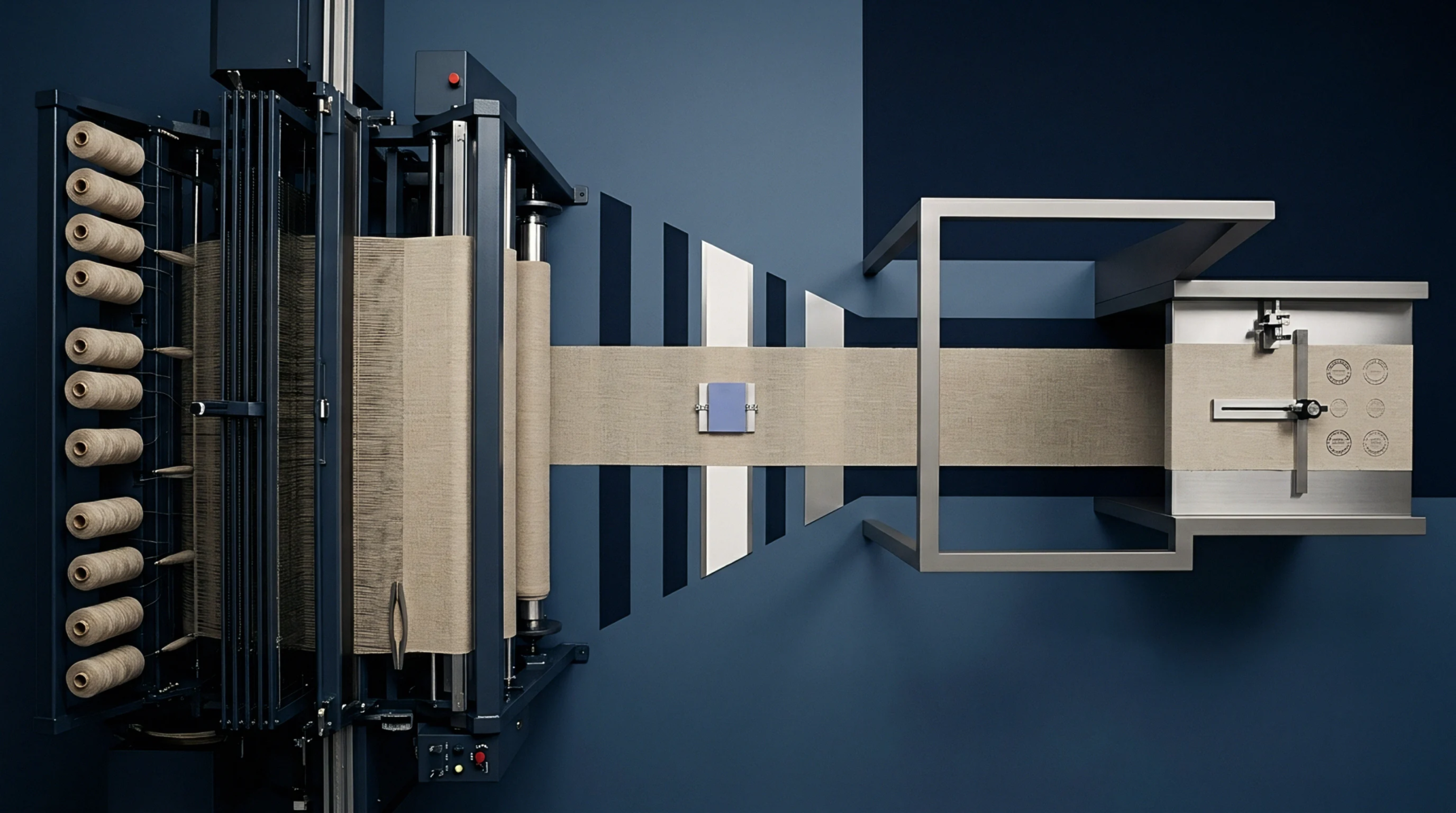
Tension Control
Mechanical adjustment systems on industrial weaving looms dynamically regulate the tension applied to warp yarns during the shedding cycle. Weaving mills use whip roll easing to decrease the peak stress experienced by linen warp yarns when the heald frames open the shed. This reduction in tension prevents yarn breakages, which is especially important for linen because flax fibers have very low elasticity compared to cotton or synthetic fibers.
Mechanical Mechanism
The easing motion is driven by a cam or eccentric linkage coordinated with the crankshaft of the loom, which moves the whip roll slightly toward the heald frames as the shed opens. This movement temporarily shortens the warp path, compensating for the increased yarn length required to form the upper and lower sheets of the shed. Loom tuners adjust the timing and displacement of the easing motion based on the yarn count and the weave pattern, recording the settings in the loom setup sheets.
When the timing is correct, the warp tension remains nearly constant throughout the entire rotation of the loom, minimizing the risk of yarn fatigue.
Structural Boundary
While this mechanism is highly effective for reducing mechanical stress on the warp yarn, it cannot prevent breakages that stem from poorly spliced yarn or severe slubs. It is a system designed to manage normal process tensions rather than to correct raw material defects.