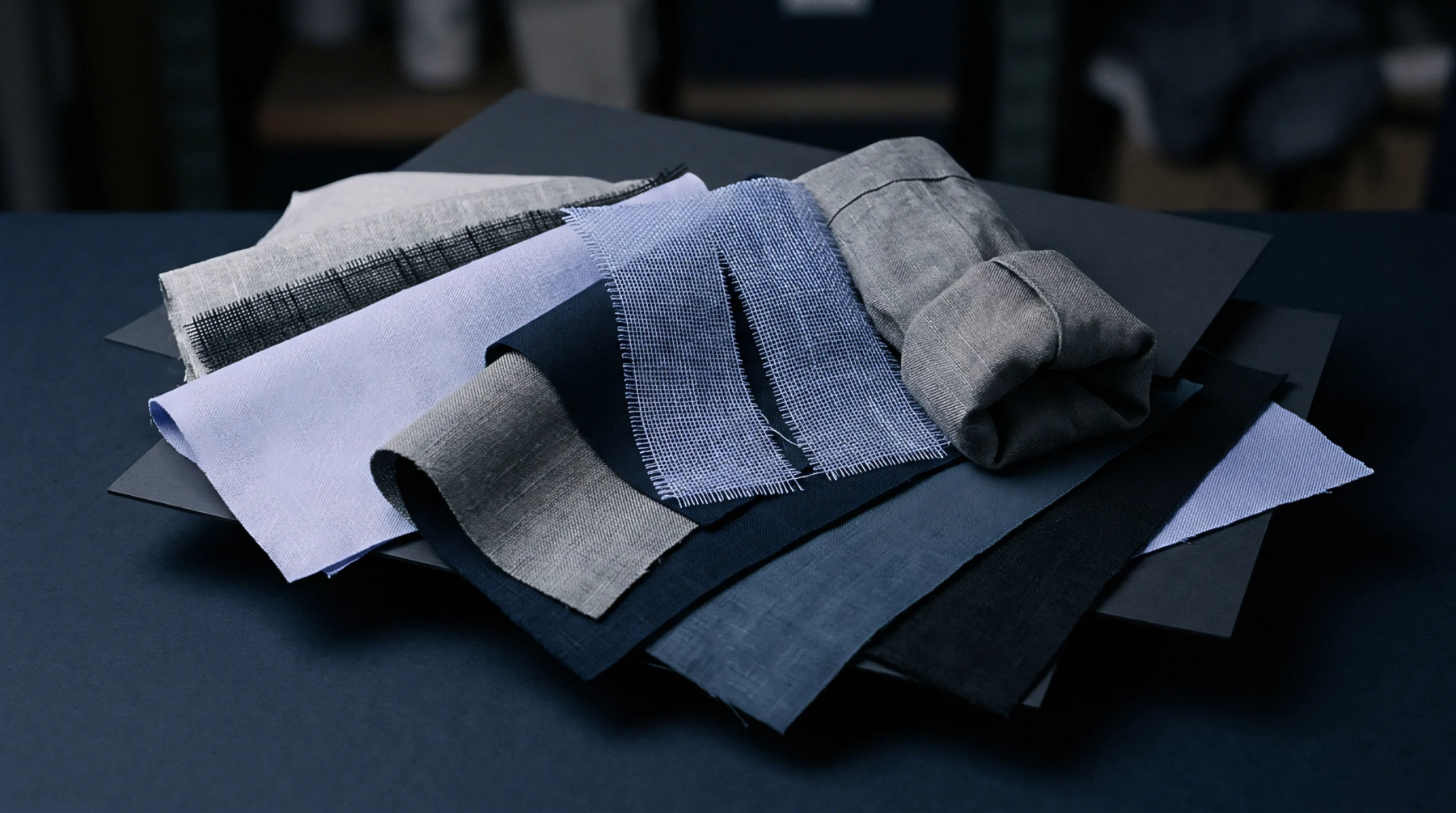
Dimensional Shrinkage
Physical dimensional changes occur when dry textile structures absorb liquid water and undergo rapid longitudinal shortening. In flax processing, wet contraction describes the immediate reduction in yarn or fabric length upon initial immersion in aqueous baths. Water absorption causes radial expansion of individual flax fibres, which forces the helical fibril structure to untwist and shorten axially.
This rapid dimensional shift occurs prior to any thermal or mechanical relaxation effects during wet processing.
Swelling Mechanism
Water molecules penetrate the hydrophilic cellulose crystalline matrix and amorphous pectin layers, forcing individual cellular walls outward. As fibre diameter increases by up to twenty percent, yarn cross-sections swell, increasing thread diameter and driving up yarn crimp geometry within woven structures. In dense linen fabrics, this lateral swelling exerts high internal pressure, pulling warp and weft pick intersections closer together and causing macro-scale fabric shrinkage.
Machine tension must adapt during initial wet bath entry to prevent excessive tension build-up and roller shaft damage.
Mill Control
Uncontrolled contraction during continuous scouring or bleaching creates crease marks and selvedge tearing. Finishing plants utilize tension-regulated drive rollers and expander bars to manage fabric width loss upon wet entry. Measurement of wet contraction establishes baseline shrinkage parameters for sanforizing and preshrinking process design.