Force Oscillation
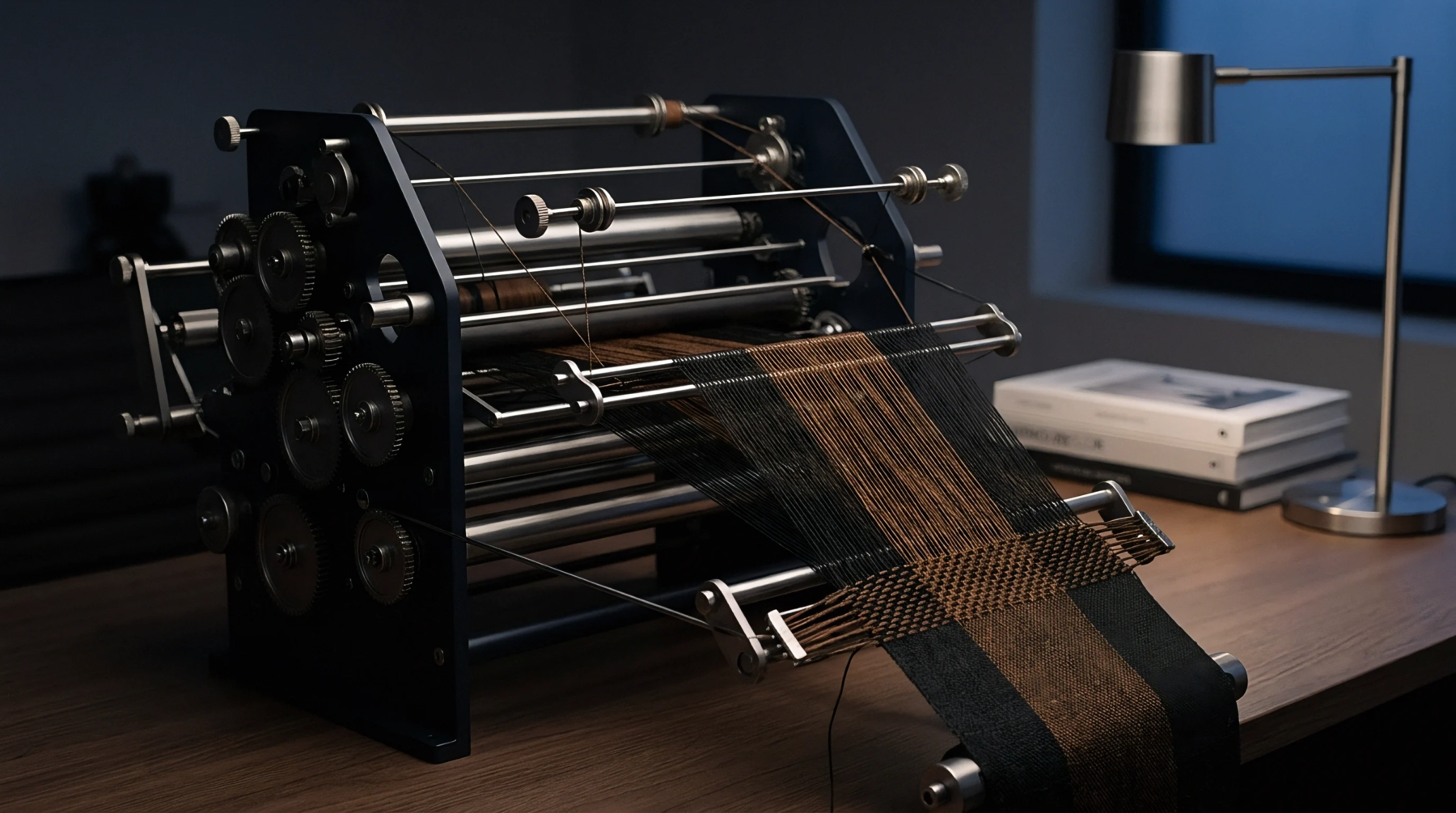
Oscillation of mechanical force moving through a horizontal yarn during its insertion into the warp shed reveals the impact of feeder timing and friction. Weft tension wave describes the fluctuations in tension that occur as the yarn accelerates from a stationary position to high velocity. These waves originate at the yarn feeder and travel toward the pick-up point, bouncing off any obstacles along the path.
Understanding these patterns is necessary for preventing the yarn from snapping during the most intense part of the weaving cycle.
Signal Analysis
Digital tension meters record the force profile at high sampling rates to visualize the wave as a graph of grams over milliseconds. The first peak in the weft tension wave typically occurs when the gripper engages the yarn and begins its journey across the shed. Secondary peaks appear when the yarn passes through the guides or when the loom shed closes.
Mill engineers analyze these waveforms to adjust the braking force on the yarn feeders, ensuring that the tension stays within a safe range. Smooth waves with minimal peaks characterize a well tuned weaving process.
Fabric Quality
Tension fluctuations can cause uneven selvedges or wavy patterns in the finished linen cloth. Consistent wave profiles ensure a uniform appearance in the final product.