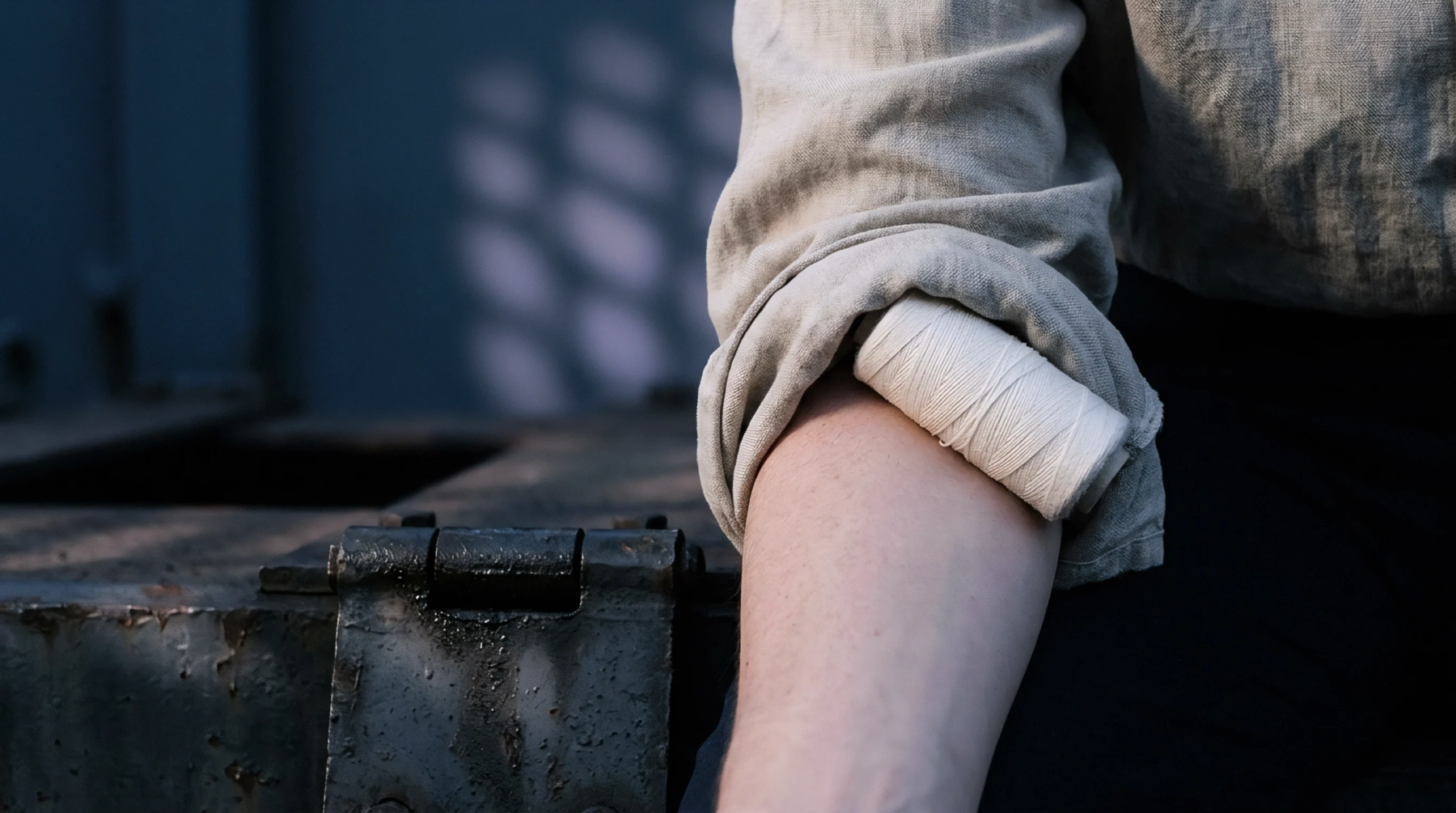
Yarn Rupture
Mechanical tension and cyclic stress during the shedding process can exceed the tensile strength of an individual lengthwise yarn, causing it to snap. This failure is defined as a warp end break, which immediately triggers the loom stop motion to prevent defective fabric from being woven. In linen weaving, such ruptures are common because of the low elasticity of flax yarn.
Abrasion Factor
Continuous friction against the reed and adjacent yarns weakens the warp threads during each shed change. A warp end break occurs when thick spots or slubs in the wet-spun flax yarn get trapped in the heddle eye. These trapped yarn sections are subjected to high tension, which leads to failure.
When the warp yarn has been properly sized, the starch coating reduces this abrasive wear, decreasing the rate of yarn failure. In addition, using a later crossing angle reduces the time the warp is held under high tension, which protects the yarn from fatigue.
Prevention Strategy
Optimizing humidity levels in the weave room keeps the flax fibres pliable and less prone to breaking under tension. Reducing the rate of warp end break incidents involves maintaining a relative humidity of seventy percent and using high-quality wet-spun yarns. Proper warp preparation ensures high weaving efficiency and fewer fabric defects.