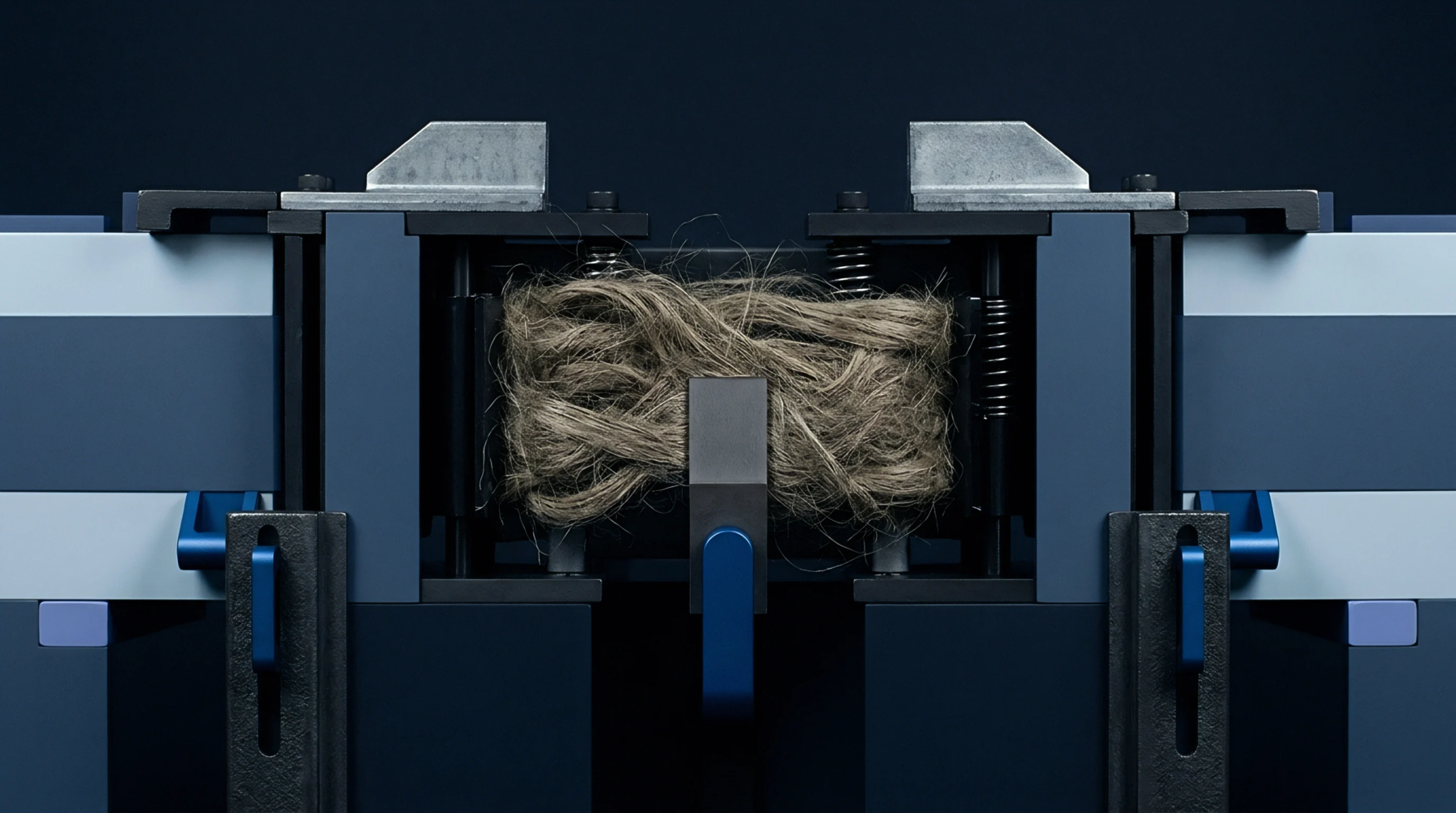
Impurity Measurement
Quantitative assessments of the woody fragments remaining in the flax fiber after scutching determine the cleanliness of the raw material. Shive content count is a critical metric for spinners, as these rigid particles do not take up dye and create weak points in the yarn. A high count indicates poor retting or inefficient cleaning during the initial processing stages.
Laboratory technicians use manual or optical methods to calculate the weight or number of these impurities in a standard sample.
Spinning Operation
Presence of these woody bits interferes with the drafting process and causes frequent end-breaks on the spinning frame. During the conversion of sliver to yarn, shive content count influences the setting of the cleaners and filters on the machinery. Modern cards and combers are designed to remove a large percentage of these particles, but excessive levels can overwhelm the waste-removal systems.
This results in contaminated yarn that fetches a lower price in the market. Frequent cleaning of the drafting rollers is necessary when processing low-grade flax with high shive levels. The goal is to reach a level of purity that meets the requirements for fine garment-grade linen.
Grade Classification
Flax batches are assigned a quality grade based partly on this measurement to guide the purchasing decisions of the mill.