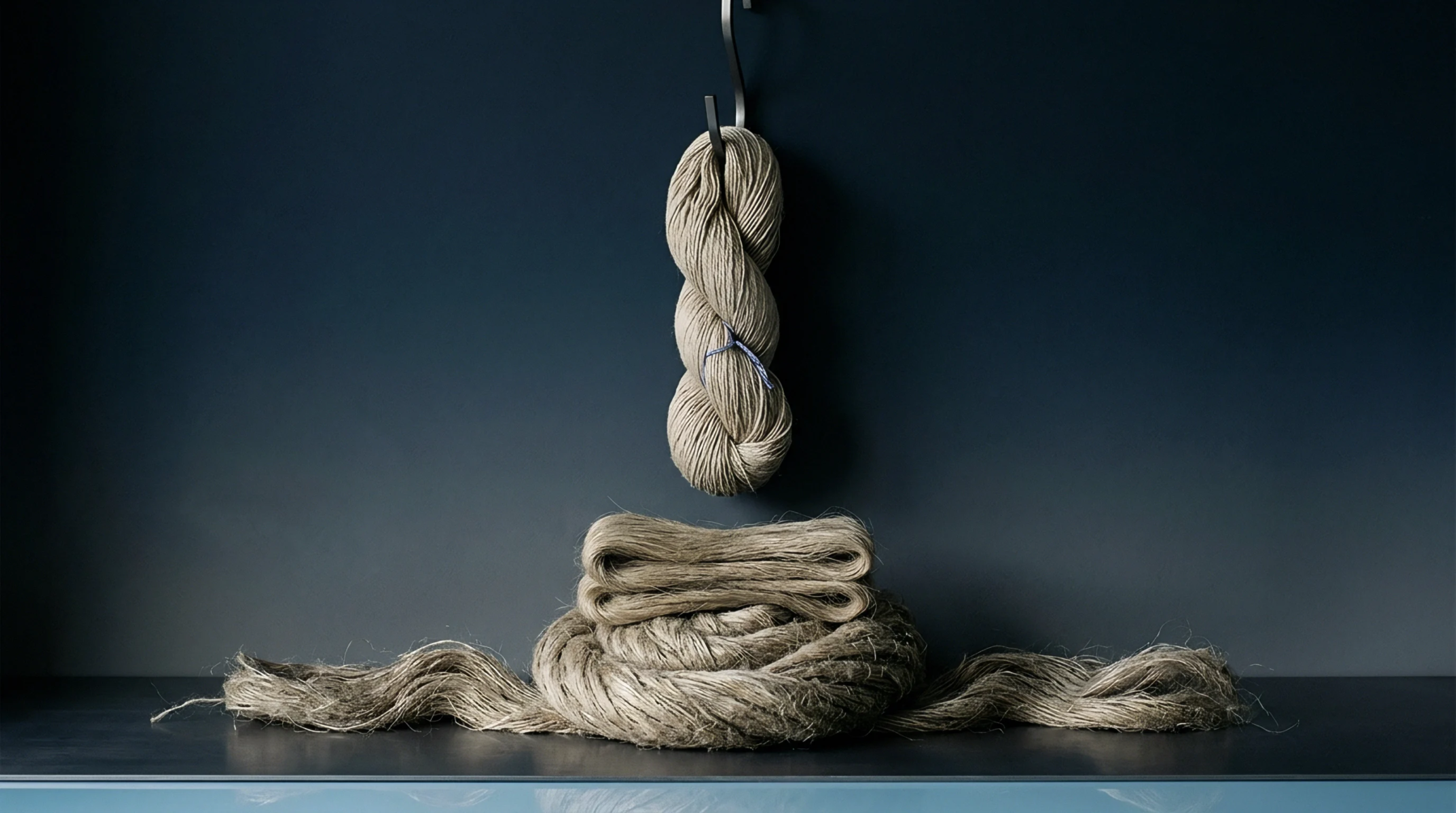
Purification Treatment
Pre-spinning chemical treatments remove residual pectins, hemicelluloses, and waxes from assembled flax roving. This preparatory process, known as roving boil-off, utilizes hot water containing mild alkalis or wetting agents to soften the non-cellulosic matrix. It ensures that the individual fibres can slide smoothly past one another during subsequent wet spinning operations.
Without this treatment, the roving remains too stiff to be drawn into fine, uniform yarns.
Spinning Preparation
The treatment takes place by circulating the hot cleaning solution through the perforated packages of roving under controlled pressure. Proper roving boil-off softens the pectin binder, which permits the high-speed drafting rollers to stretch the fiber bundle into a very fine strand. It also increases the absorbency of the linen yarn, allowing dyes to penetrate more evenly.
Treatment Assessment
Monitoring the loss of mass after this treatment indicates the efficiency of the cleaning process and the amount of impurities removed. If the roving boil-off is too aggressive, the cellulose itself begins to degrade, which reduces the strength of the spun yarn. Conversely, insufficient treatment leaves sticky pectin residues that clog the spinning nozzles and cause frequent yarn breakages.
Finding the correct treatment duration and chemical concentration is essential for producing high-strength yarns with consistent linear density. Therefore, the mill’s laboratory conducts regular titration tests to maintain optimal alkaline concentrations in the boiling vats.