Surface Audit
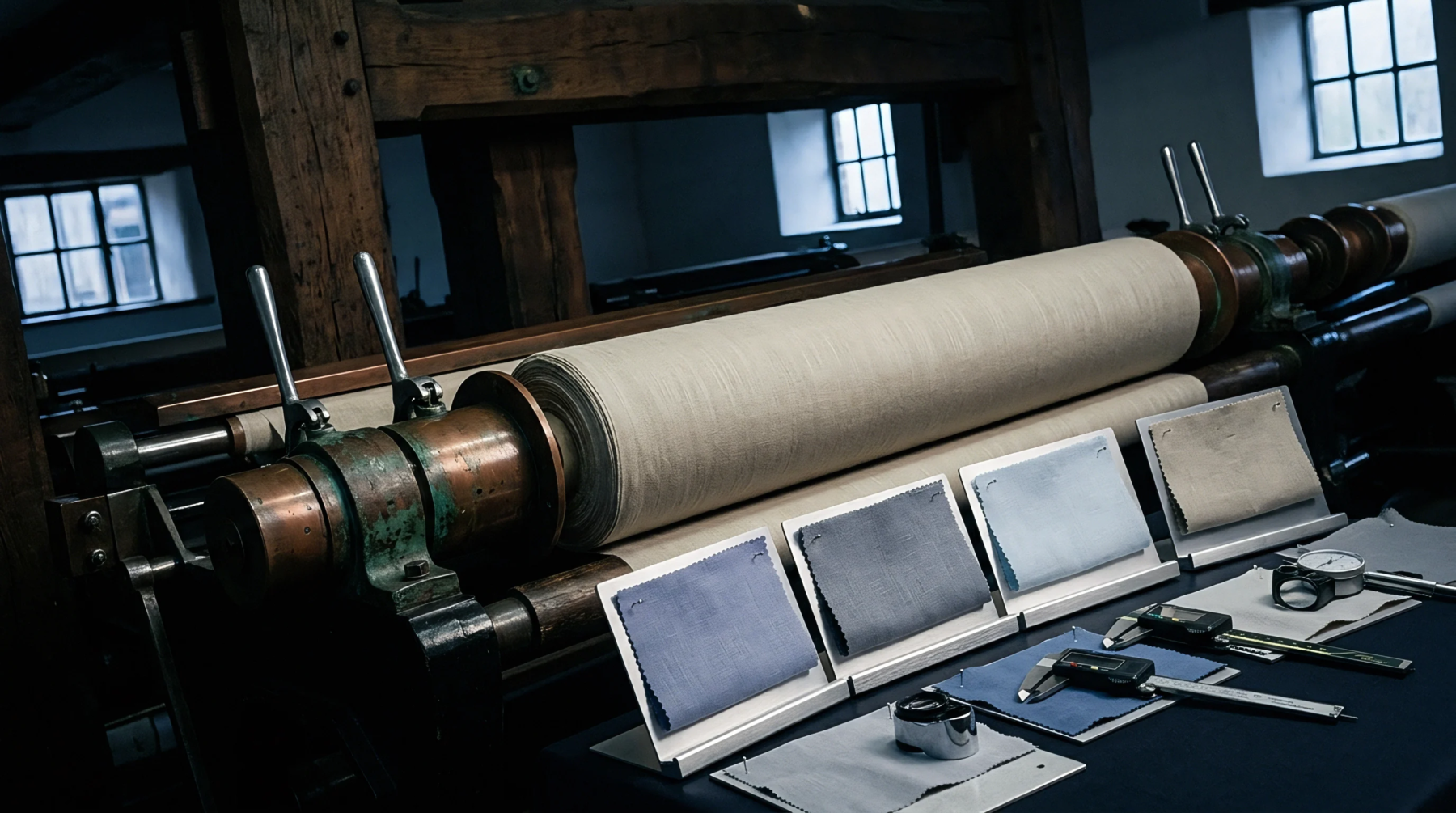
Fabric examination operates as the primary quality gate during the final stages of the linen manufacturing process, directly evaluating woven grey goods before wet finishing and export packaging. Perch inspection requires operators to pass illuminated cloth across a slanted viewing table at a controlled speed to record structural defects, slubs, and broken ends. The assessment separates marketable yardage from downgraded material according to strict contractual tolerances established between the textile mill and the commercial buyer.
Grade Differentiation
Internal mill standards emphasize production efficiency and operator speed, whereas buyer acceptance criteria enforce strict defect point limits per linear meter. Raw flax fibre evaluations focus on length, fineness, and trash content before spinning, while perch inspection targets the woven fabric surface for yarn irregularities and reed marks. Mill technicians utilize standardized grading sheets to document every observed fault, ensuring accountability before goods move toward bleaching, dyeing, or mechanical softening.
Documentation Protocol
Final export clearance depends upon the completion of a detailed inspection report that accompanies each commercial batch through transit. The physical document records total linear meters examined, fault frequencies per roll, and the final classification assigned to the shipment. Mill management reviews these audit logs weekly to identify recurring loom malfunctions and adjust warp tension accordingly.