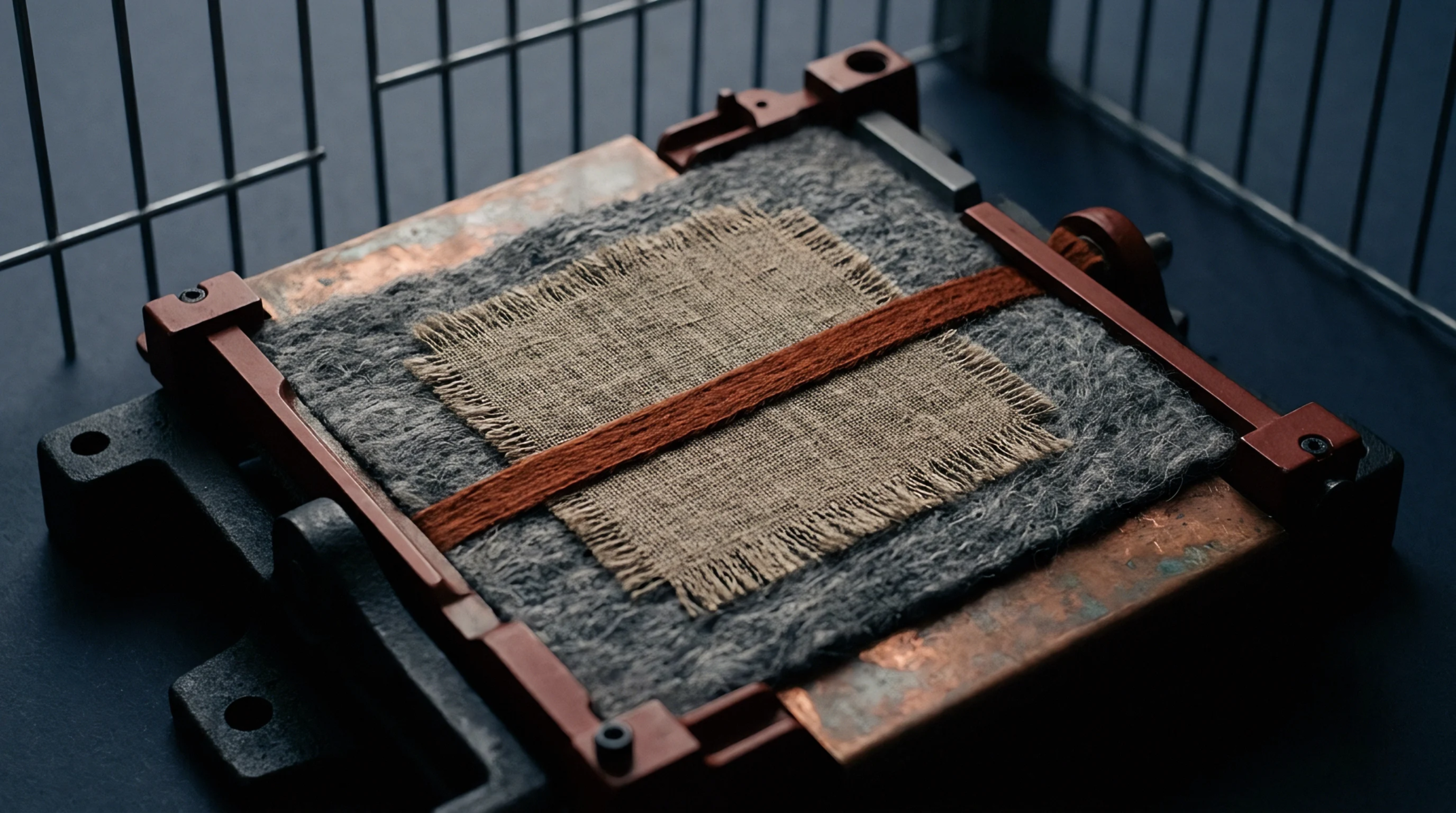
Clamp Movement
Frictional displacement within the clamping device of a tensile testing instrument alters the measured elongation of a sample. Under high tension, jaw slippage mechanics refers to the gradual movement of flax fiber bundles or yarn out of the holding jaws during a strength test. This displacement introduces a systematic error that artificially inflates the recorded extension of the specimen.
Laboratory technicians must choose appropriate jaw surfaces to grip the flax firmly. Correct grip pressure prevents the material from sliding without crushing the delicate fibers at the edge of the clamp.
Error Identification
Analysis of the force-extension curve reveals abnormal plateaus or sudden drops when the sample moves inside the grip. High-resolution cameras or displacement sensors monitor the boundary line of the clamp to detect even minute movements of the flax. Rubber or leather jaw liners are commonly used to increase friction without cutting the fibers.
Testing Accuracy
Prevention of this error ensures that the measured tensile modulus corresponds to the true elastic properties of the linen yarn. When slipping occurs, the calculated strain is incorrect and may lead to the false rejection of a high-quality yarn batch. Correct clamp settings are essential for reliable textile certification.