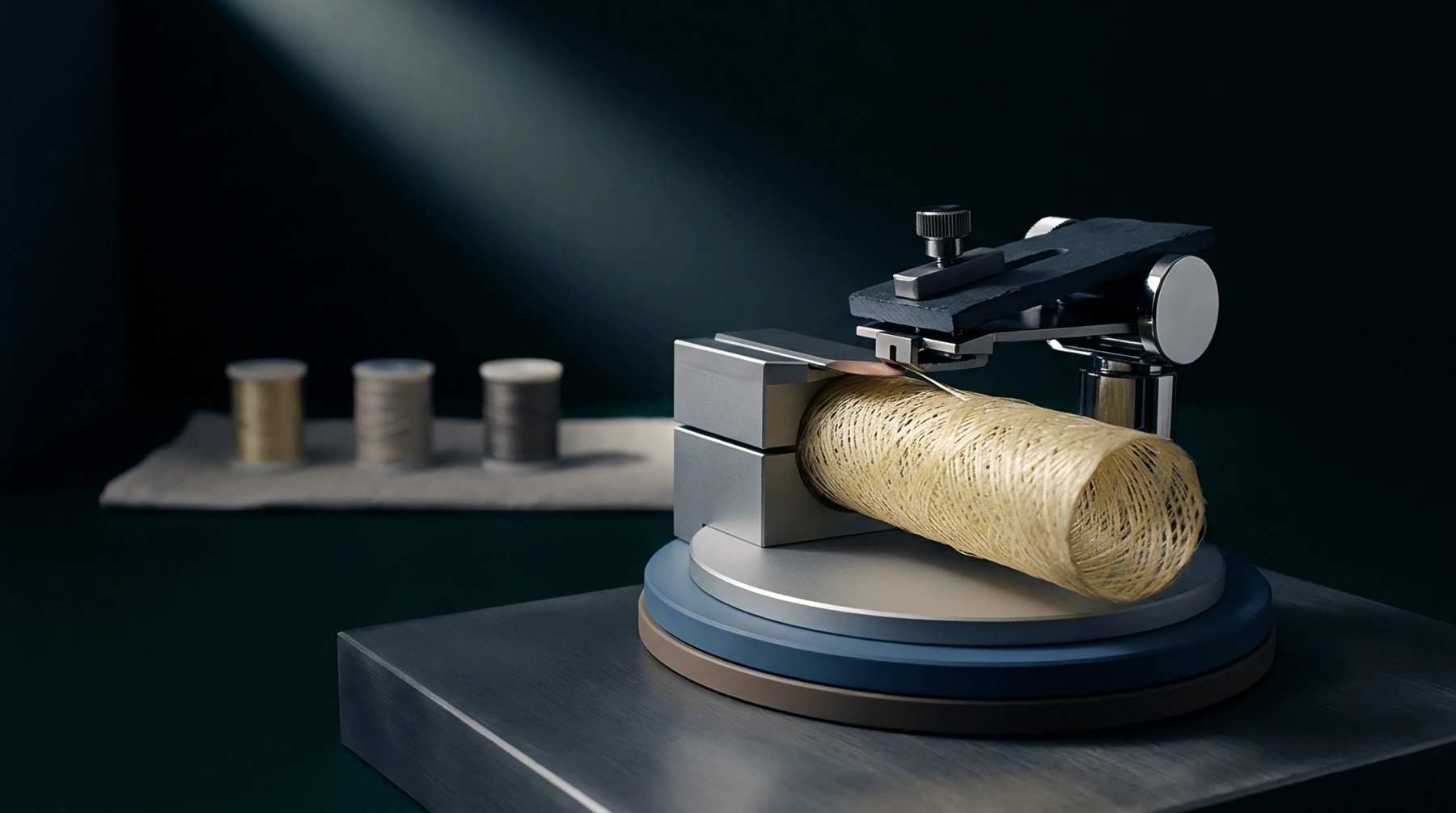
High Stiffening Material
Technical textile grade flax fibers exhibiting extreme initial tensile stiffness deliver superior resistance to mechanical deformation under longitudinal stress. Advanced composite manufacturers select high modulus linen to reinforce bio-based structural panels and automotive components. Long flax fibers extracted through precise retting and gentle scutching preserve uninterrupted crystalline cellulose chains.
Tensile testing instruments record Young’s modulus values exceeding twenty gigapascals for premium long-staple linen strands.
Structural Behaviour
Highly aligned cellulose microfibrils embedded in a natural lignin matrix give the fiber its characteristic longitudinal rigidity. Processing high modulus linen requires gentle wet-spinning parameters to preserve internal fiber alignment without creating micro-cracks. Low elongation values mean these specialized flax yarns absorb minimal energy before reaching ultimate tensile strength.
Textile plants utilize specialized low-friction yarn guides to prevent surface abrasion on high-rigidity warp threads. Matrix adhesion tests confirm that modified linen fibers bond effectively with epoxy and polyester resin systems. Precise twist insertion rates preserve structural stiffness during yarn manufacturing operations.
Application Limit
Environmental humidity shifts alter mechanical stiffness in natural bast fiber composites if surface sealant coatings fail. Production specification sheets for high modulus linen declare maximum operating temperature limits to prevent thermal degradation of natural cell structures. Batch inspection certificates verify tensile modulus performance through standardized pull testing methods.
Quality assurance protocols reject yarn lots that exhibit modulus variation above acceptable industrial thresholds.