Waste Accumulation
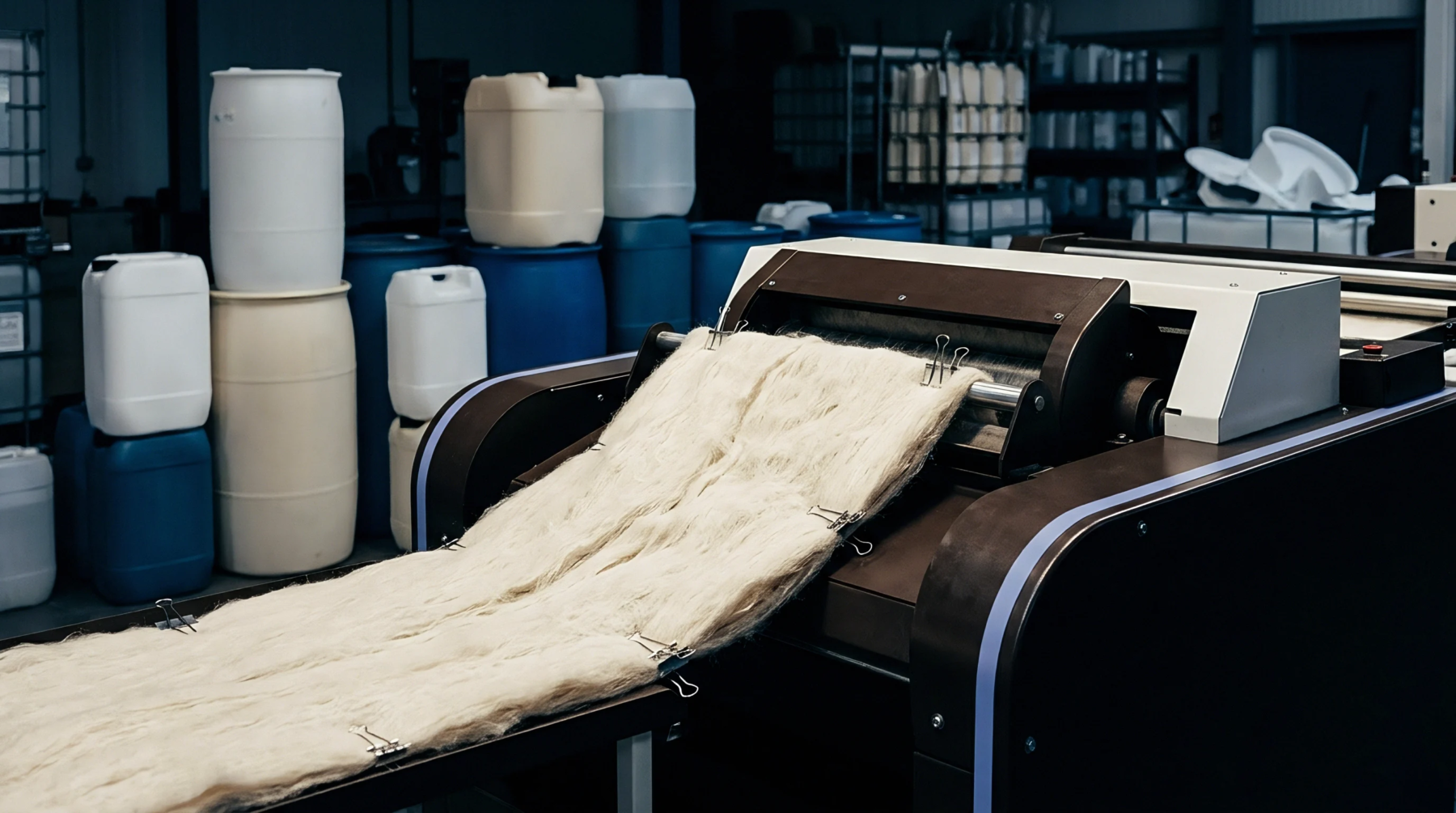
Residue pulled from linen hackling machines represents hackling comb waste, a secondary material comprising short flax fibres and tangled tow left behind during the straightening process. Chinese mills track this yield on the daily shift register before it moves to carding preparations for coarser yarn spinning. Shorter staple lengths define this accumulation, distinguishing the tangled mass from the parallelised line fibre pulled straight for high-grade weaving.
Operators measure the percentage of this residue against total feed weight to maintain batch consistency across spinning lines. Mill supervisors separate this byproduct from the higher-grade sliver to prevent contamination in subsequent drawing frames.
Processing Yield
Mechanical sorting separates usable tow from unusable dust within the gathered residue. Workers feed the collected mass through cleaning cylinders to extract woody shive fragments trapped during initial scutching. Sorting efficiency determines whether the recovered material enters blended yarn production or lower-grade twine manufacturing.
Mills record recovery rates in the production ledger to calculate total raw material utilisation. Poor machine settings increase the proportion of broken filaments, lowering the commercial value of the recovered tow.
Export Specification
International buyers purchase compressed bales of this sorted material under strict tariff classifications for non-woven textile applications. Quality inspectors verify moisture content and cleanliness against export contracts before loading containers at the mill gate. Specifications outline maximum allowable foreign matter limits, protecting the buyer from paying for excessive shive or mineral dust.
Documentation accompanying the shipment states exact bale weights and fibre length distributions for customs clearance. Final transactions depend on laboratory certificates confirming the material meets industrial spinning tolerances for coarse textiles.