Surface Irregularity
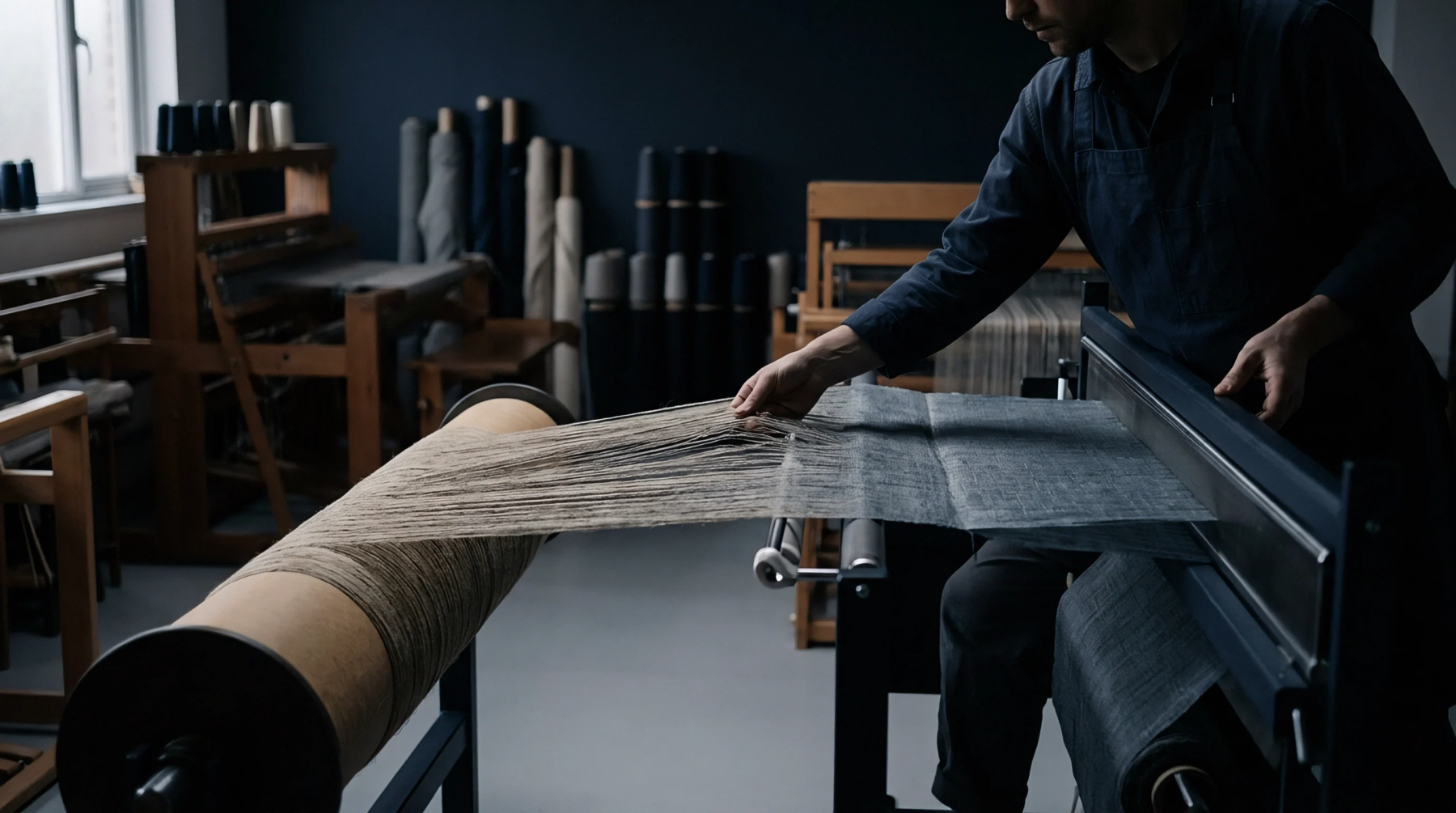
Accumulated clusters of short fibres that attach to the main body of a yarn during mechanical processing appear as small entangled spheres. While spinning or weaving linen, fuzzballs form when abrasion pulls loose elements from the flax bundle and rolls them into distinct pills. These faults diminish the visual consistency of the grey cloth.
Friction Source
Mechanical contact between the yarn and the loom components like the reed or heald wires generates the static and heat necessary for entanglements. Because flax fibres lack the natural elasticity of wool, the presence of fuzzballs often indicates inadequate sizing or excessive dryness in the weaving shed. The technician must adjust the humidity to increase the suppleness of the warp.
Reducing the speed of the machine can also lower the rate of shedding. Adjustments to the tension rollers help minimize the mechanical stress on the outer filaments.
Fabric Quality
Bleaching and dyeing processes highlight these surface defects because the dense core of the cluster absorbs chemicals differently than the surrounding threads. A fabric heavily populated with fuzzballs fails the inspection for premium apparel grades. Singeing remains the primary method for removing these protrusions before the cloth moves to the printing stage.