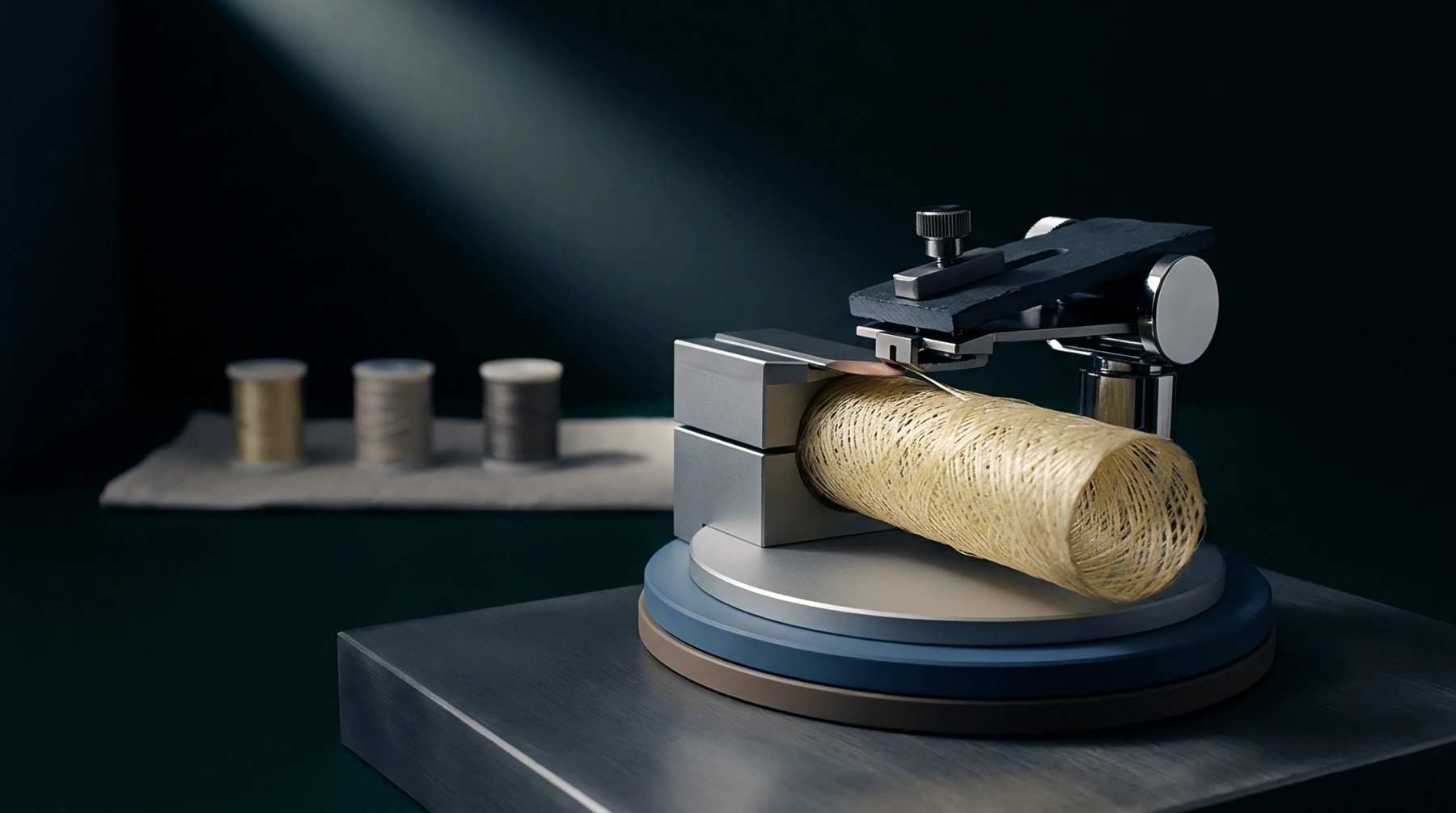
Parallel Alignment
Alignment of flax fibres during the preparation stage ensures that the material achieves uniform orientation before entering the drafting frame. Fiber parallelism combing represents a mechanical process where needles or pins strip away short, entangled portions to produce a linear strand. This practice governs the quality of the sliver by removing neps and non-fibrous debris that impede later spinning steps.
Manufacturers rely on this metric to define the consistency of the input material, as the degree of orientation directly influences the strength and evenness of the yarn produced in subsequent stages.
Performance Metric
Measurement of the sliver uniformity occurs after the machine completes the passage. Analysts evaluate the ratio of aligned material against the residual waste extracted from the mass, ensuring that the batch meets the internal specifications of the mill. High variance in the alignment density forces adjustments to the pin density of the machinery or a reduction in the feed rate to improve output.
Documented reports from this stage verify that the flax adheres to the required density before moving to the rove formation.
Operational Boundary
Limits of this procedure appear when the moisture content of the fibre drops below the point where the machinery causes excessive breakage of the long line. Excessive friction during the alignment of the strands induces static build-up, which ruins the physical integrity of the bundle. Proper humidity levels allow the pins to penetrate the mass without tearing the individual strands, which maintains the length distribution across the finished product.
Proper application of these parameters prevents the loss of yield and secures the structural reliability of the linen output.