Statistical Dispersion
Numerical dispersion of strength measurements within a group of clamped fibers indicates the uniformity of a raw material batch. For quality assessment in flax mills, fiber bundle failure CoV represents the percentage ratio of the standard deviation of breaking force to its mean value. Highly uniform bundles yield a lower coefficient, showing that the individual fibers break at similar loads.
Variation in fiber maturity and retting quality causes the distribution of strength to widen. This statistical spread acts as a quality indicator because a high value alerts spinners to potential unevenness in the final yarn.
Laboratory Test
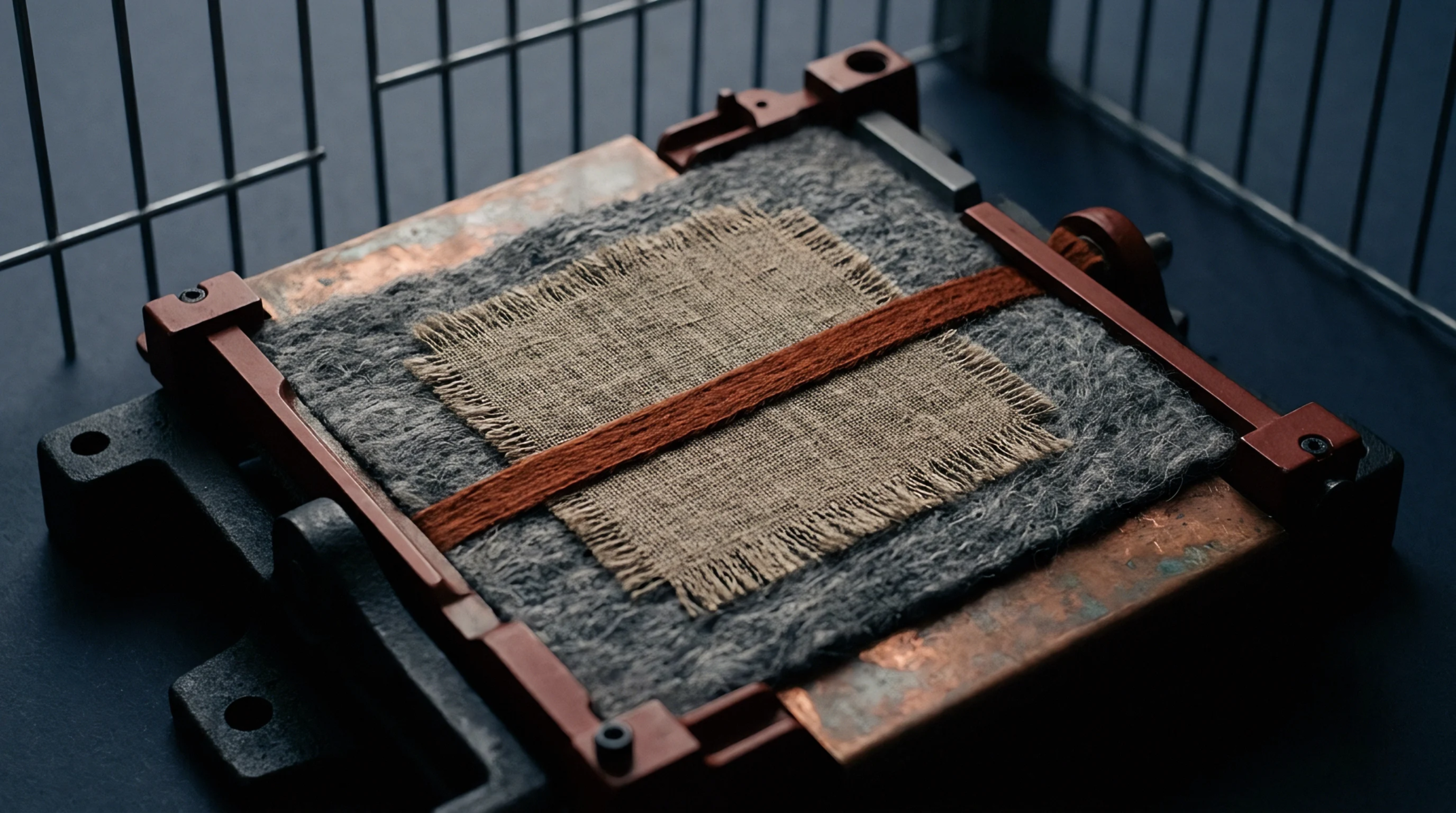
Testing procedures employ a multi-fiber clamp system to measure the collective breaking force of a sample sliver. High-precision instruments record the peak load and the rate of elongation as the bundle is stretched to its limit. Individual fiber breaks are recorded electronically to compile the spread of failure points.
Moisture levels in the test room must be stabilized to prevent dry fibers from snapping prematurely.
Spinning Performance
Low variation in bundle strength ensures consistent behavior during drawing and drafting. When the coefficient is high, the sudden breakage of weaker fiber groups during wet spinning causes thin spots and yarn breaks. Processing speeds must be reduced for batches with wide strength variations to avoid excessive machine downtime.