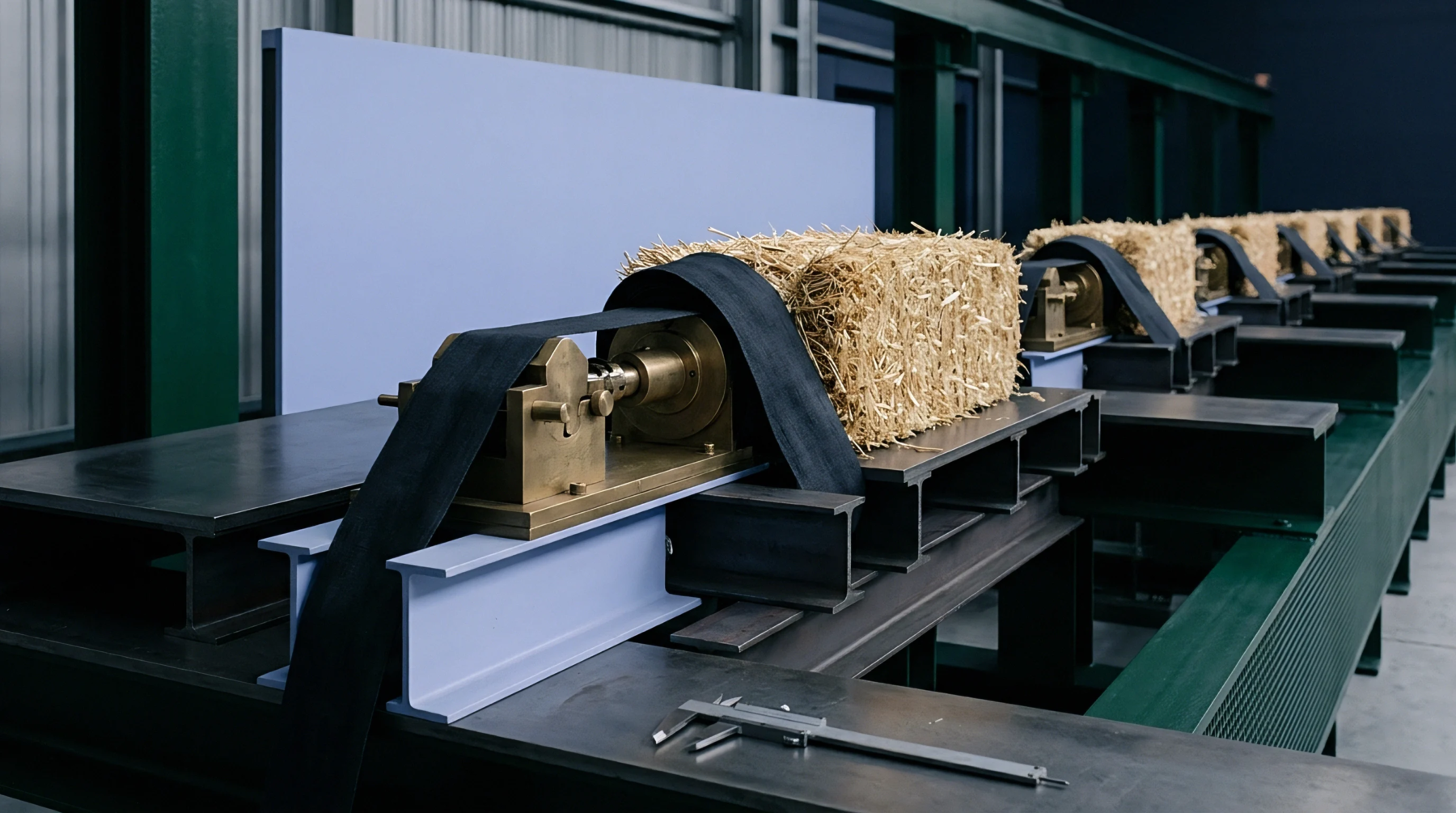
Clamp Calibration
Hydraulic pressure applied during the sizing phase of linen finishing establishes final warp tension stability across the dried web. Mechanical force measured as dresser clamp pressure dictates how firmly lateral jaws grip moving fabric edges before heat cylinders polymerize sizing starches. Exact hydraulic thresholds prevent excessive warp elongation while wet flax yarns pass through drying cylinders in the finishing department.
Operator logs record applied force against ambient humidity readings to verify mechanical repeatability across successive production shifts.
Tension Variance
Excessive lateral gripping force compresses individual flax fibers beyond recovery limits and distorts natural yarn geometry within woven sheets. Insufficient mechanical resistance allows transverse shrinkage during high temperature drying cycles and produces uneven product widths across the exported roll. Factory auditors evaluate hydraulic gauge accuracy during monthly calibration audits mandated by European textile export compliance protocols.
Technical documentation specifies exact operational tolerances for pneumatic regulators that govern hydraulic fluid delivery to movable clamping jaws.
Export Compliance
Finished linen bolts undergo rigorous dimensional stability testing before packaging departments issue final certificates of conformity for overseas buyers. Laboratory technicians verify that recorded clamping forces remained within acceptable contractual ranges throughout the entire wet finishing sequence. Mill management relies on continuous pressure logs to defend against claims concerning width variation or yarn distortion reported by foreign garment manufacturers.
Final quality verification certificates list average hydraulic operating parameters alongside breaking strength data to satisfy international trade standards for premium flax textiles.