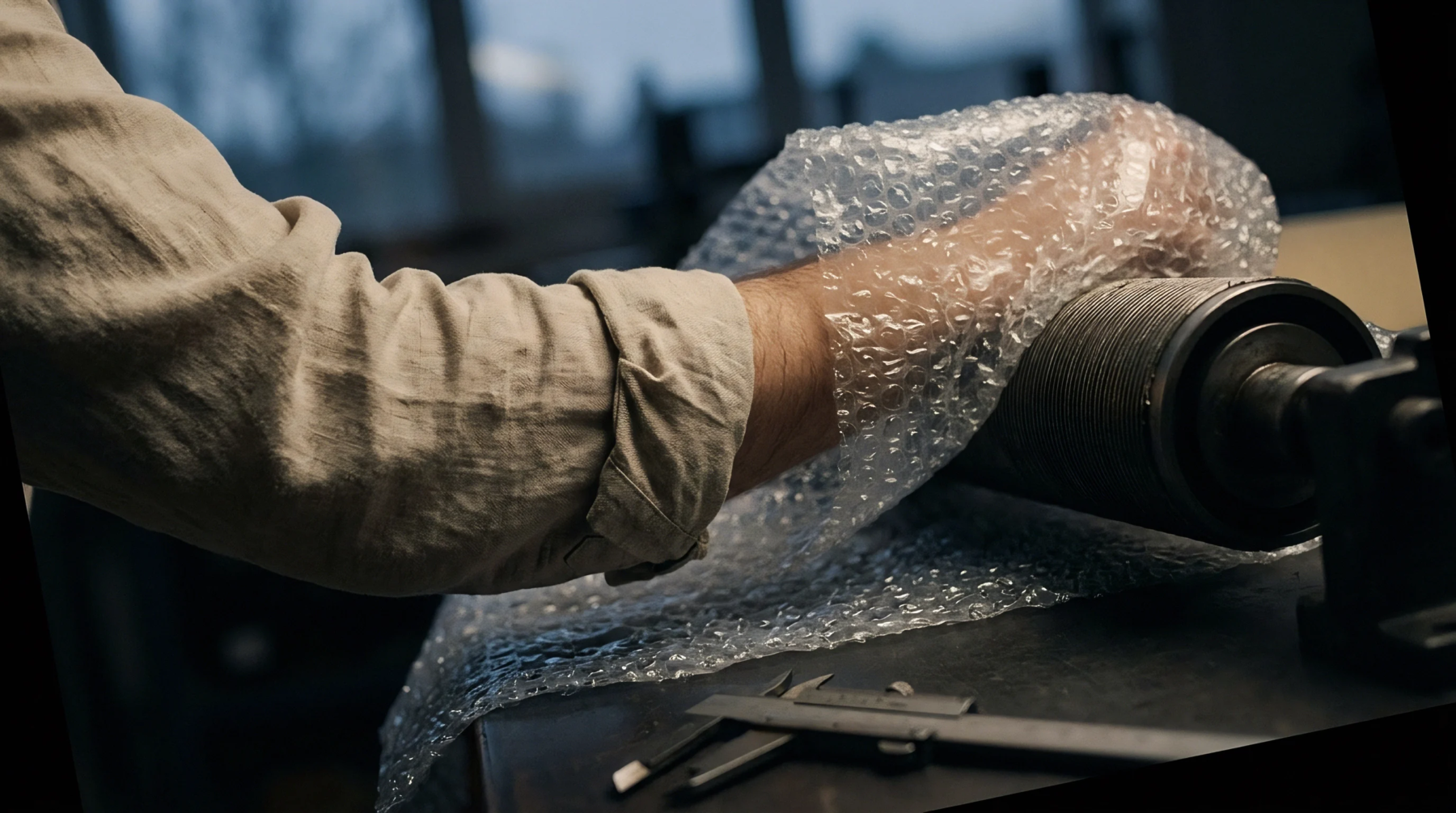
Steam Drainage
Mechanical drainage devices utilize pressure differentials to remove accumulated water from the interior of rotating drying cylinders. In linen drying machinery, the cylinder condensate siphon extracts the water layer that forms as steam transfers its latent heat to the damp yarn sheet. Accumulation of water inside the cylinder must be avoided because it creates a thermal barrier that reduces heat transfer efficiency.
The extraction process relies on steam pressure to force the liquid out through a central axial pipe.
Drying Consistency
Heat distribution across the cylinder surface depends directly on the continuous removal of the internal water layer. When a cylinder condensate siphon fails or becomes blocked, a pooling effect occurs, causing a localized temperature drop on the drum surface. This temperature drop results in uneven drying across the width of the warp sheet, leaving some sections damp.
Damp yarn is highly susceptible to mildew and exhibits poor tensile strength during subsequent winding and weaving stages. Continuous monitoring of the siphon discharge prevents these localized cold spots and protects the yarn from thermal damage.
Mechanical Design
Stationary siphons are positioned close to the inner wall of the rotating drum to maximize fluid capture. This positioning allows for efficient operation across a wide range of rotational speeds.