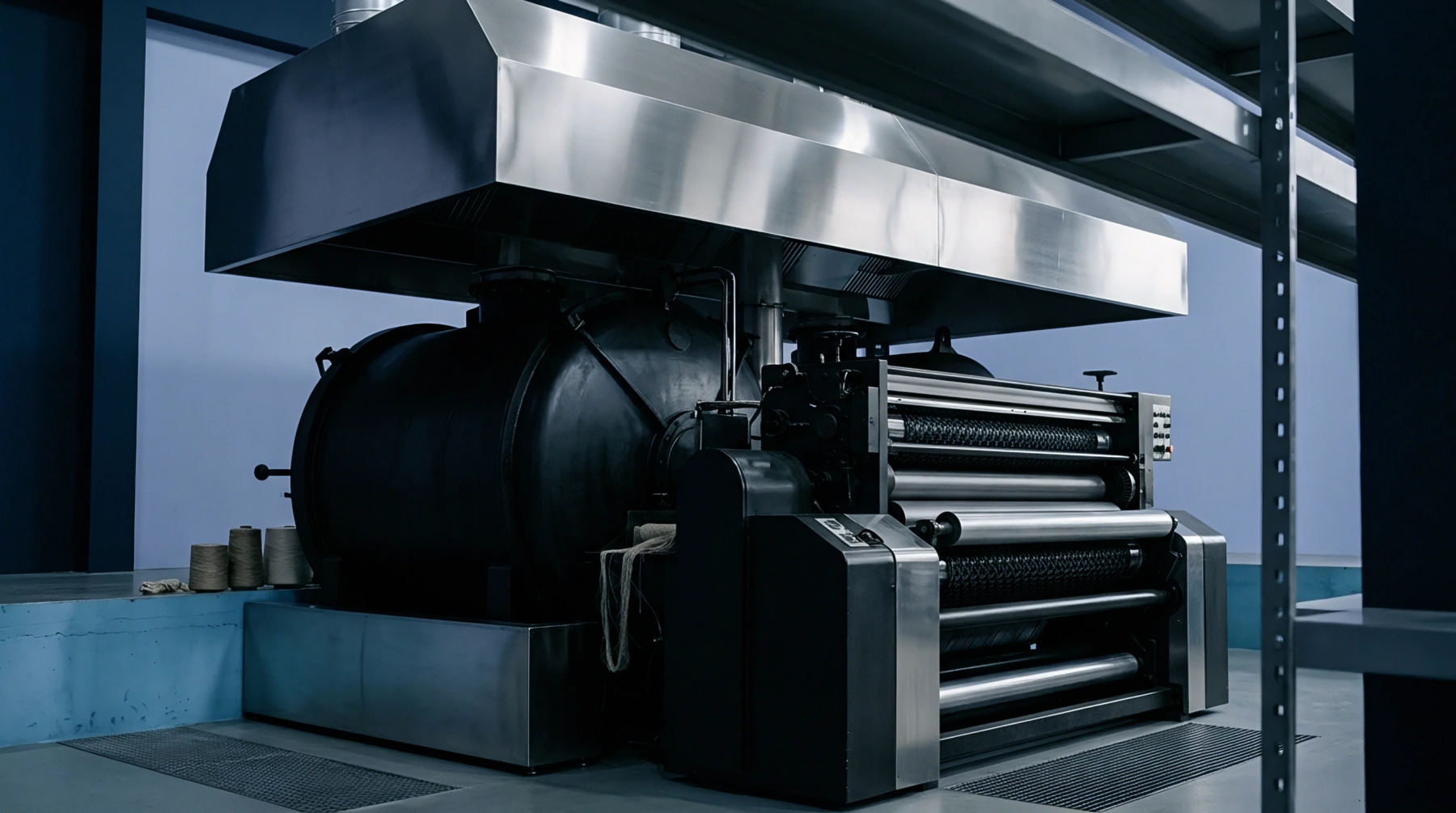
Processing Sequence
Chemical refinement of linen yarn occurs during continuous hank scouring, a process that removes natural waxes and pectin from the flax fibre to improve dye affinity. The technique involves passing interconnected loops of yarn through a succession of aqueous treatment tanks. Automation ensures that every individual hank receives identical chemical exposure, eliminating the manual variations inherent in batch processing.
Operational Parameters
Temperature controls and residence times define the quality of the finish on the flax. High throughput systems maintain consistent chemical concentrations by circulating liquor against the direction of the yarn travel. Sensors monitor the pH levels and turbidity of the fluid, adjusting chemical replenishment to match the uptake rate of the fibre.
Precise regulation prevents over-treatment, which would weaken the tensile strength of the linen, or under-treatment, which leaves residues that interfere with later saturation.
Acceptance Criteria
Quality control protocols record the residual impurity levels and weight loss percentages after the cycle completes. Inspectors compare the processed yarn against a standard sample to verify that the scouring reached the target level of cleanliness. Any deviation outside the permitted tolerance signals a fault in the circulation system or an incorrect chemical ratio.
This rigorous assessment verifies that the physical structure of the flax remains intact while the surface achieves the necessary chemical state for subsequent industrial operations.