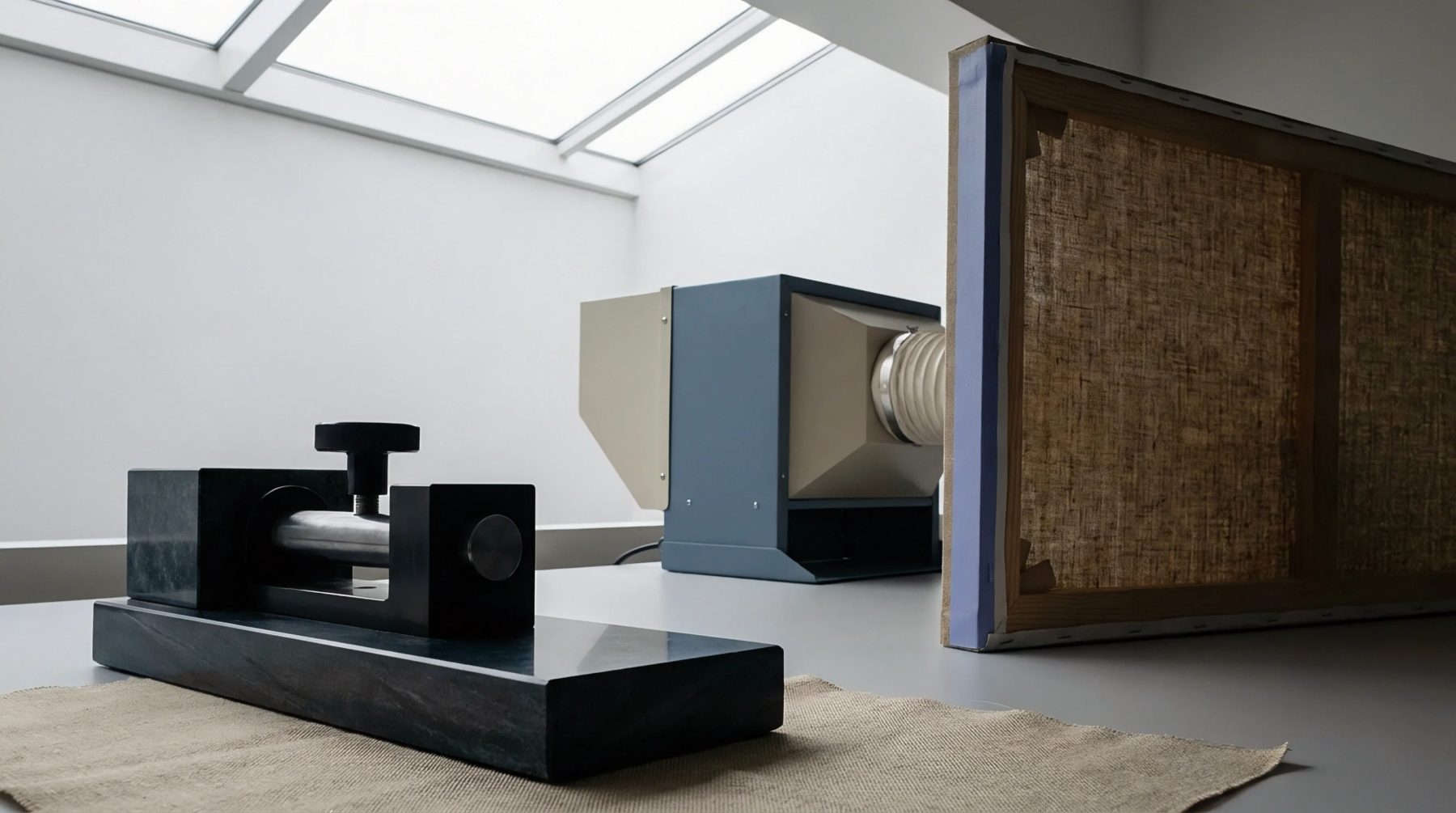
Fabric Compression
Mechanical finishing represents a category of industrial operations that reshape woven linen by applying heat and high pressure through a series of heavy rollers. Through this physical treatment, calendering compresses the fabric structure to close the gaps between the warp and weft yarns, creating a smoother and more compact material. The operation reduces fabric thickness and decreases air permeability while increasing the lustre of the linen cloth.
Surface Alteration
Industrial machines use alternating chilled iron and soft cotton-filled rolls to achieve the desired surface effect. Moisture and temperature are controlled carefully during this stage to prevent scorching the cellulose fibres while maximizing the flattening effect. Adjusting the speed and pressure of the rollers allows mills to modify the final density and stiffness of the woven sheets.
When fabrics are subjected to this treatment, the individual threads lose their round profile and assume a ribbon-like cross-section.
Quality Standard
Acceptance criteria established by international buyers dictate the allowable limits of yarn displacement and residual shrinkage after this process is complete. Mill laboratories record these metrics on the final quality inspection sheet to ensure the finished fabric complies with the specified luster and density requirements before shipment. Fabrics destined for high-end apparel must meet strict tolerances for surface uniformity, while utility textiles undergo less intensive pressure.
If the treatment is too aggressive, it can weaken the tensile strength of the flax fibres, meaning that testing laboratories must verify that the fabric maintains its structural integrity.