Stiffness Evaluation
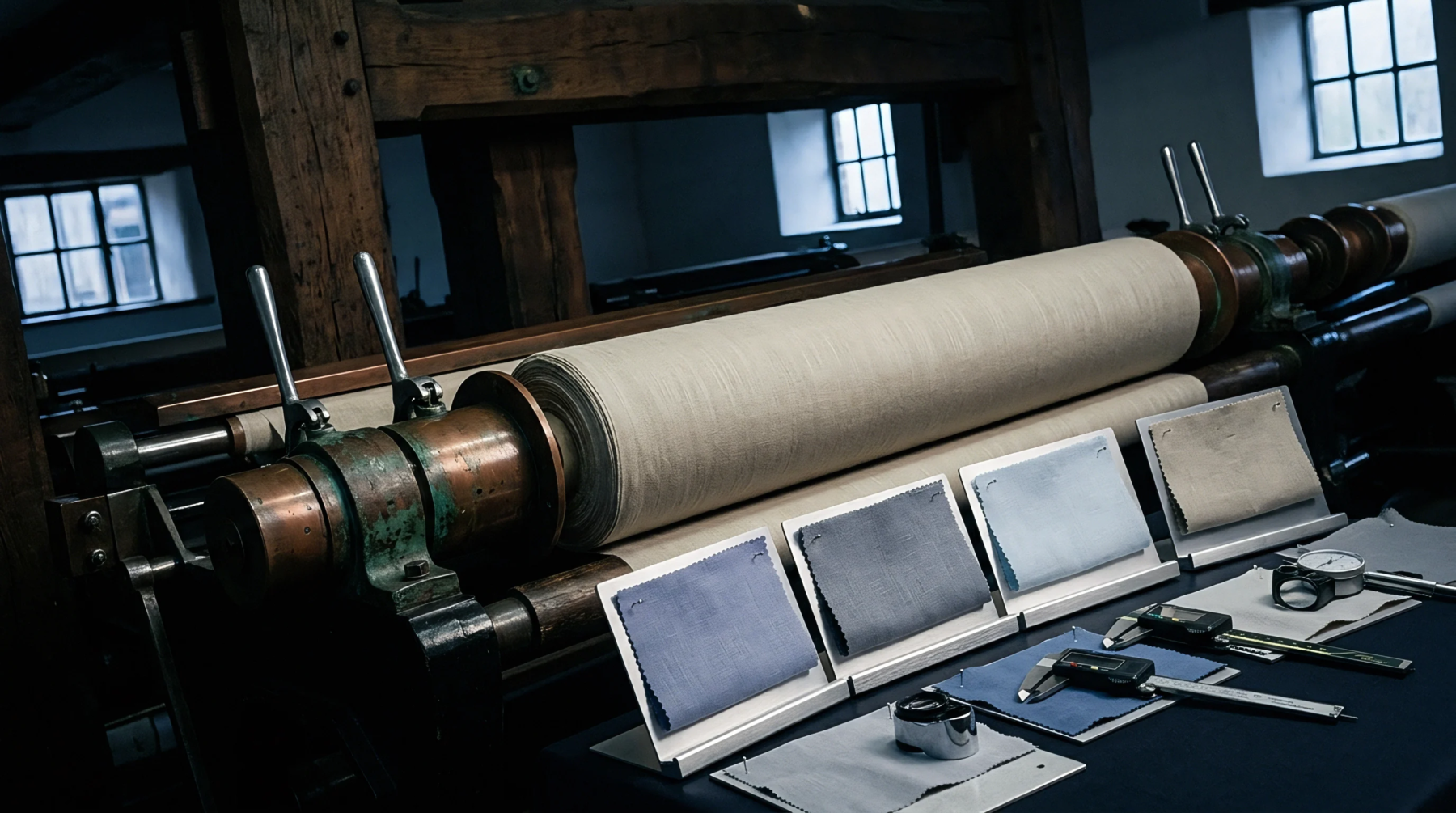
Fabric resistance to bending when cut diagonally measures the drape performance of finished linen cloth. When measuring bias bending length, laboratory technicians test specimens cut at a forty-five degree angle to the length direction. This measurement helps predict how the finished cloth will conform to three-dimensional shapes when sewn.
Testing Mechanism
Standardized bending tests use a rectangular strip of cloth that slides over a smooth surface until its own weight causes it to bend to a specific angle. For bias bending length, the test specimen must overhang the edge of the apparatus at the designated diagonal orientation. Technicians record the length of the overhang in millimetres once the tip of the fabric strip touches the inclined plane.
This recorded value represents the structural flexibility of the material under diagonal deformation.
Finisher Standard
Quality assurance protocols for export require that finished linen fabrics meet the buyer’s drape specifications. The bias bending length determines whether the softening process has achieved the desired hand feel without weakening the fabric structure. Finished goods with excessive stiffness fail the buyer’s acceptance criteria and must undergo additional mechanical washing.
This mechanical intervention relaxes the yarns and lowers the bending value to the permitted range.