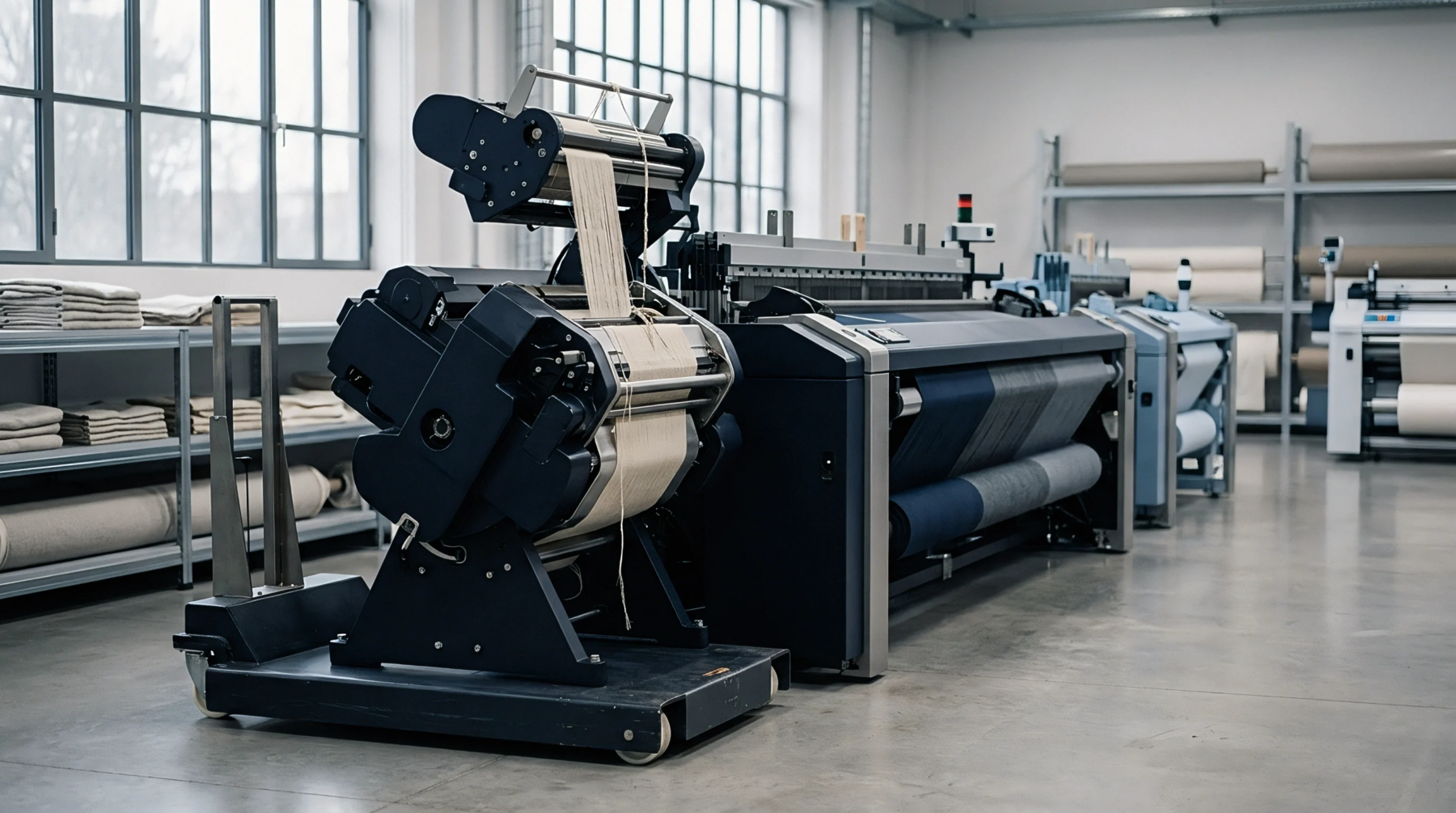
Mechanism Tension
Mechanical resistance within the looms backrest assembly regulates the warp beam feed speed to maintain constant tension during high velocity flax shedding. A backrest dampening system manages the movement of the rear beam by providing an opposing force against the oscillating tension of the warp ends. Sudden spikes in torque from the shedding motion trigger a hydraulic or pneumatic response that slows the beam rotation.
Uniformity in fibre elongation depends on this physical constraint to prevent uneven stretching of the flax strands across the loom width. Production parameters define the set point for this resistance based on the specific count of the linen yarn. High density fabrics require greater dampening force than lighter textiles to avoid warp breakages during the crossing.
Adjustments occur through a central control panel that translates electronic signals into pressure changes at the piston interface. Friction between the brake pad and the beam flange determines the immediate release rate of the material. Variations in flax moisture content alter the elasticity of the yarn and require periodic recalibration of the resistance values.
Constant pressure application protects the fibre from mechanical fatigue.
Calibration Standard
Assessment of the oscillation frequency happens against the mill specific tolerance range for warp let off. Engineers record the dampening response in the loom audit document to verify that the backrest dampening system maintains the target tension window during prolonged operational cycles. Buyer acceptance criteria for high end linen cloths often specify the maximum deviation allowed for yarn density regularity.
Discrepancies between mill settings and these quality standards trigger a mandatory inspection of the pressure seals. Linen fibre exhibits distinct brittle characteristics under rapid load shifts. Precise adjustment of the damping coefficient preserves the structural integrity of the flax.
Quality Verification
Inspection of the finished bolt identifies whether inconsistent tension caused visible density shifts in the woven structure. Operators verify the performance of the backrest dampening system by measuring the variance in beat up force across the width of the fabric. Defective damping performance creates patterns of horizontal shading that lower the grade of the linen piece.
Every roll of premium grade textile undergoes this specific verification to ensure compliance with international fibre quality norms. Stable warp feeding provides the condition for defect free output.