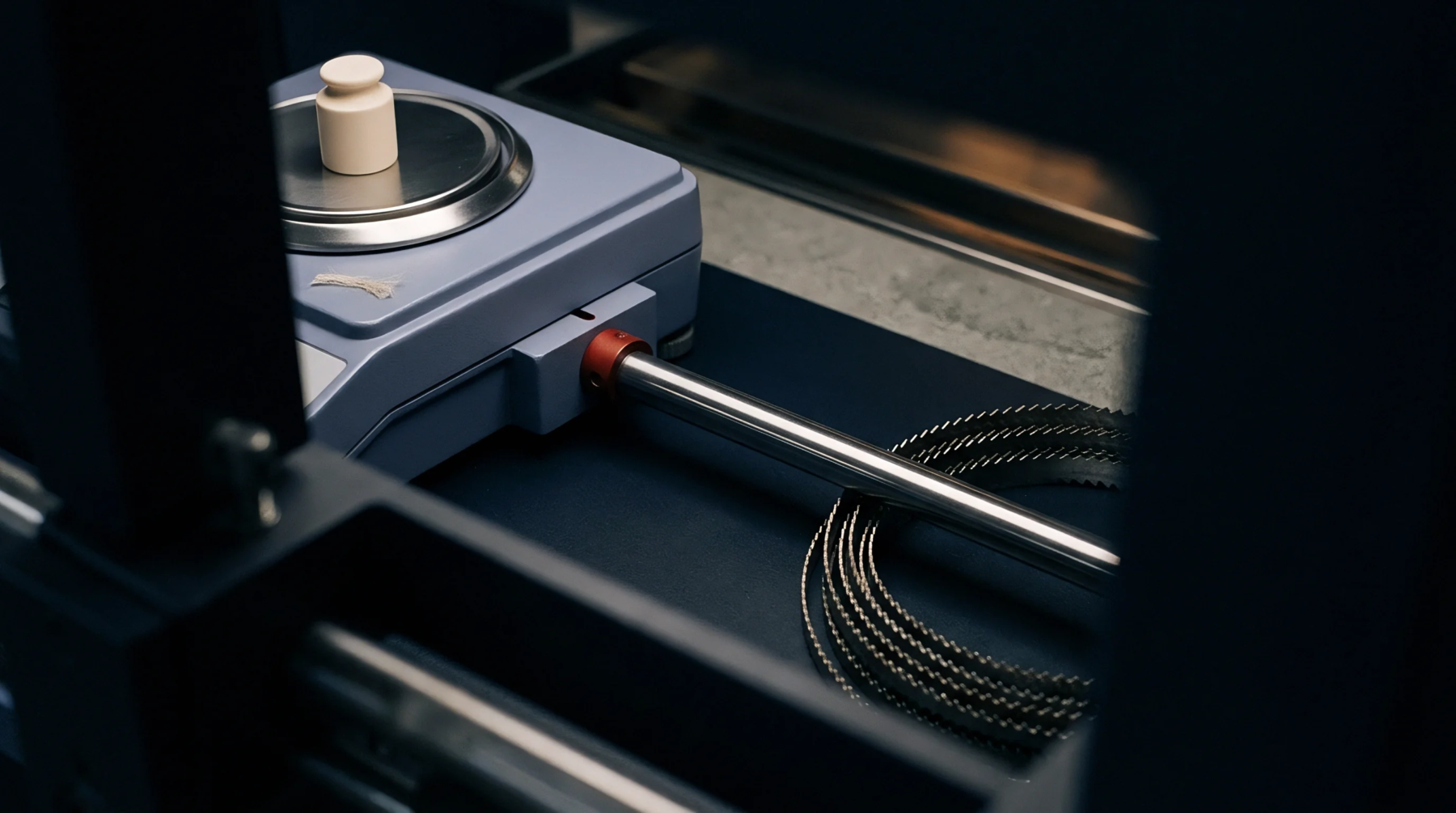
Mass Adjustment
Laboratory calculations adjust the observed mass of a sample to account for the displaced air volume during precision weighing. The air buoyancy correction defines the mathematical offset applied to the apparent weight of flax when the density of the sample differs from the density of the calibration weights. This procedure ensures that measurements taken in a standard atmosphere are equivalent to mass in a vacuum.
Physical Displacement
Every object weighed in air experiences an upward force equal to the weight of the air it occupies. Because flax fibre has a low density compared to brass or steel weights, the upward force on the fibre is greater than the force on the balance weights. This difference creates a systematic error that grows larger as the volume of the sample increases.
The density of the surrounding atmosphere must be monitored to keep this error within tolerable limits for laboratory certification.
Calculation Protocol
Analysts use the density of the air and the density of the material to derive the true mass from the observed reading. Applying the air buoyancy correction ensures that a mill in a high altitude location produces weight certificates that match those from a laboratory at sea level. The standard formula involves multiplying the apparent mass by a factor derived from these densities.
Trade agreements for high value linen rely on this precision to prevent financial discrepancies in bulk shipments.