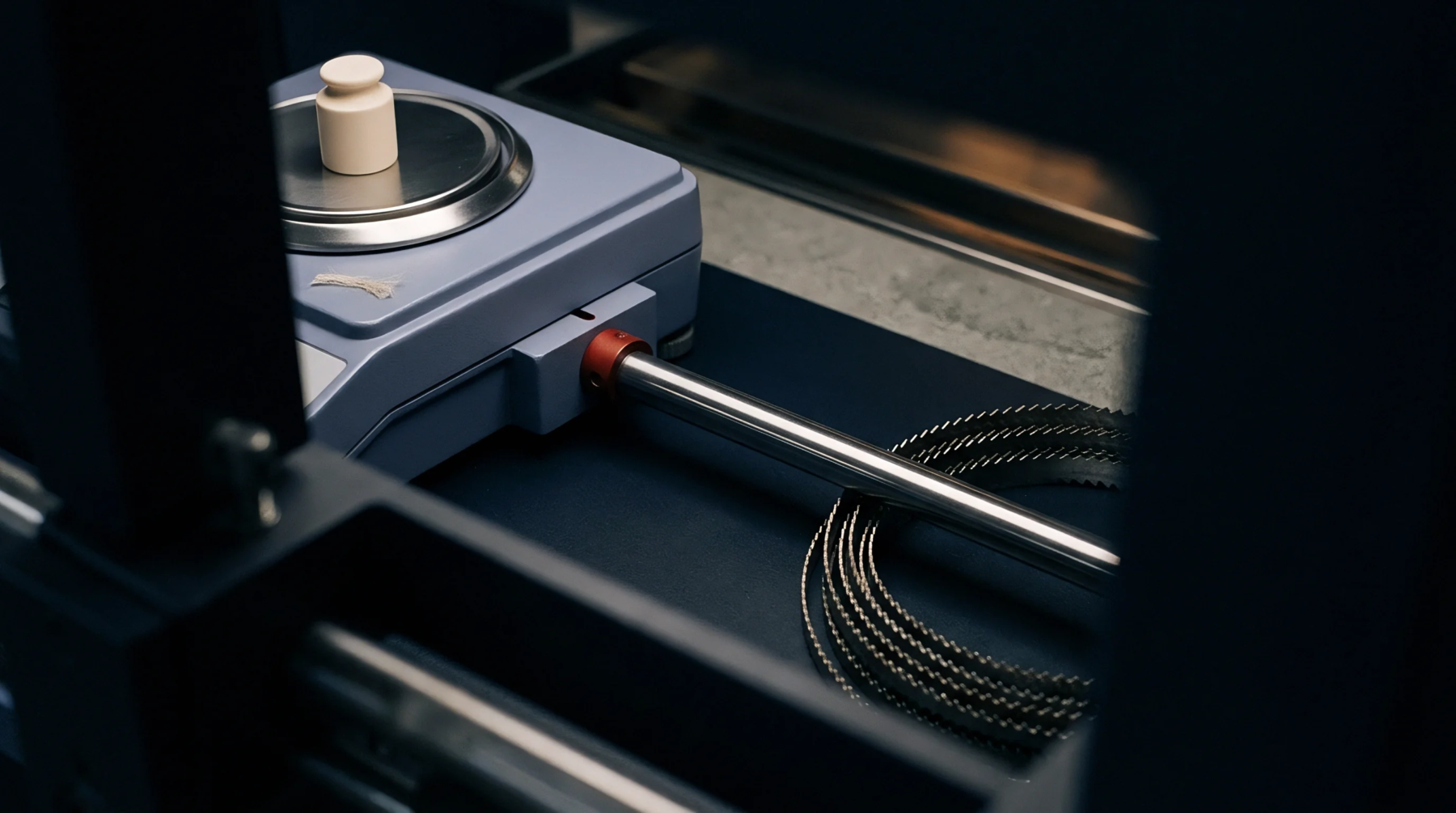
Analytical Instrument
Mass verification routines establish the exact zero reference of high-precision weighing apparatus before technicians log any mass data from botanical bast fibers. Micro-gram balance calibration maintains the metrological integrity required when dry flax strands sit inside sealed glass chambers to eliminate moisture fluctuations during the determination of linear density. Corrective weights of known traceability sit upon the internal or external pan to adjust for thermal drift, mechanical wear, and gravitational variations across different geographical processing locations.
Draft hoods close completely while sensors record deflection angles under loads measured in micro-grams, ensuring that raw material assessments remain uncompromised by ambient air currents inside the testing laboratory.
Traceability Chain
Certified reference masses provide the unbroken comparison link between national standards laboratories and the analytical scales deployed within flax spinning mills. Micro-gram balance calibration relies exclusively upon calibration certificates issued by accredited metrology institutes, which specify the exact mass correction factors and associated expanded measurement uncertainties for every weight used. Technicians verify these working standards against primary prototypes at predetermined intervals, transferring standard uncertainty downward through every stage of textile quality control.
Documentation follows each scale through the supply chain from raw flax bale sorting to finished yarn tenacity testing, providing auditors with a verifiable audit trail for every numerical value entered into the production ledger.
Technical Tolerance
Permissible mass deviations remain extremely narrow during the quantification of single-fiber breaking tenacity and specific fineness parameters. Micro-gram balance calibration compensates for electrostatic accumulation on polyester and cellulose surfaces by employing ionized air curtains around the weighing chamber prior to data capture. Environmental chambers maintain ambient temperatures within tight parameters and relative humidity at fifty-five percent throughout the procedure, because moisture absorption by dried flax specimens alters total mass faster than mechanical drift occurs.
Calibration failures trigger an immediate quarantine of all weighing data generated since the previous successful verification run, preventing faulty mass values from skewing the final grade assigned to commercial linen yarns.