Optimizing Water Injection Parameters for High-Strength Bast Fiber Splicing
Calibrating water injection to thirty-two microliters at five bar raises bast splice tenacity retention to eighty-eight percent and slashes loom stops.


Plume
An automatic winder running at 1,100 metres per minute detects a cross-sectional defect on wet-spun flax, drops the package cradle, and activates the cutter blade. The suction arm retrieves the package end while the lower nozzle lifts the bobbin strand into the splicing block. Compressed air opens the individual bundle tips at 4.5 bar, preparing the overlap zone for water atomization.
The winder resumes instantly.
Liquid injection transforms pneumatic splicing from an abrasive disruption into a controlled cohesion process. Dry bast fibers split along their longitudinal axes when subjected to raw rotational air jets, shedding short fibrils and losing tensile continuity. Direct liquid introduction creates capillary bridges between parallel elementary cells, suppressing perimeter turbulence.
The timing of the fluid discharge relative to the mixing blast determines whether the wet splice consolidates or slips under winding tension.
A metering volume of thirty-two microliters per cycle holds water ring migration inside a four-millimeter perimeter on thirty-nine-tex wet-spun flax.
Water volume governs splice diameter. Dispensing excessive fluid floods the mixing groove, damping the vortex velocity and generating loose tail tails that catch inside yarn guides. Insufficient fluid leaves the lignified outer walls unsoftened, causing internal shearing when the package accelerates back to full winding speed.
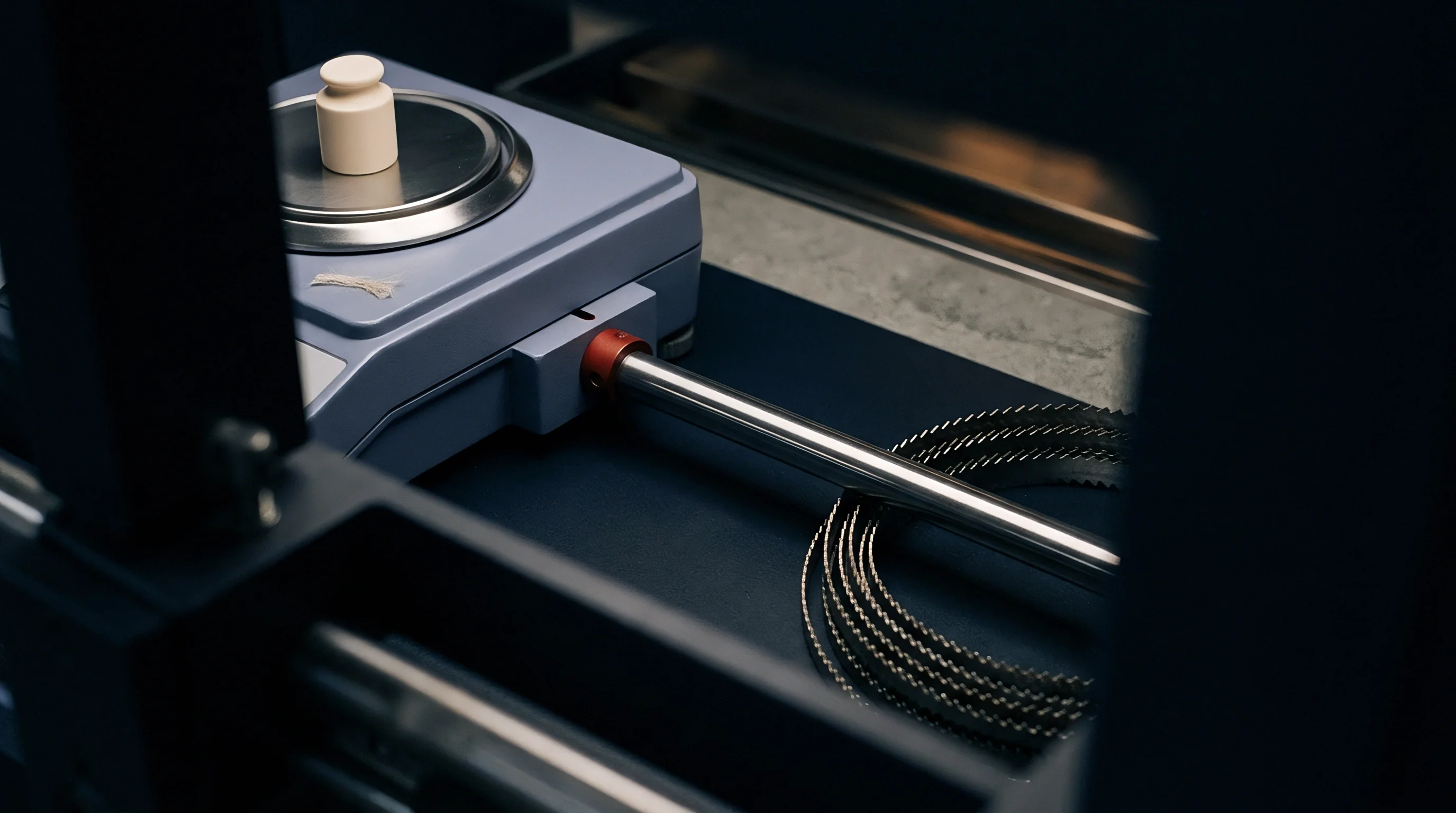
Pneumatic Delivery Pressures
Metering pumps deliver micro-droplets directly into the mixing air stream rather than spraying static yarn strands. Air pressure lines operating at 5.5 bar deliver the primary untwisting impulse, dropping to 4.0 bar during the liquid mingling stage to preserve individual fiber bundles. High pressure shreds individual filaments.
| Yarn Count (Nm) | Linear Density (tex) | Water Injection Volume (μL) | Air Pressure (bar) | Injection Duration (ms) | Cycle Time (s) |
|---|---|---|---|---|---|
| 10 | 100 | 65 | 6.2 | 140 | 1.25 |
| 18 | 55 | 45 | 5.5 | 110 | 1.10 |
| 26 | 39 | 32 | 5.0 | 95 | 0.95 |
| 36 | 28 | 22 | 4.5 | 80 | 0.85 |
| 50 | 20 | 15 | 4.0 | 65 | 0.75 |
Coarse yarns require extended fluid contact to permeate dense bundle centers. When spinning wet-spun flax yarn at Nm 10, the splice block accepts sixty-five microliters across a prolonged cycle, whereas fine Nm 50 yarns demand fifteen microliters to prevent package saturation. Yarn count dictates fluid mass.
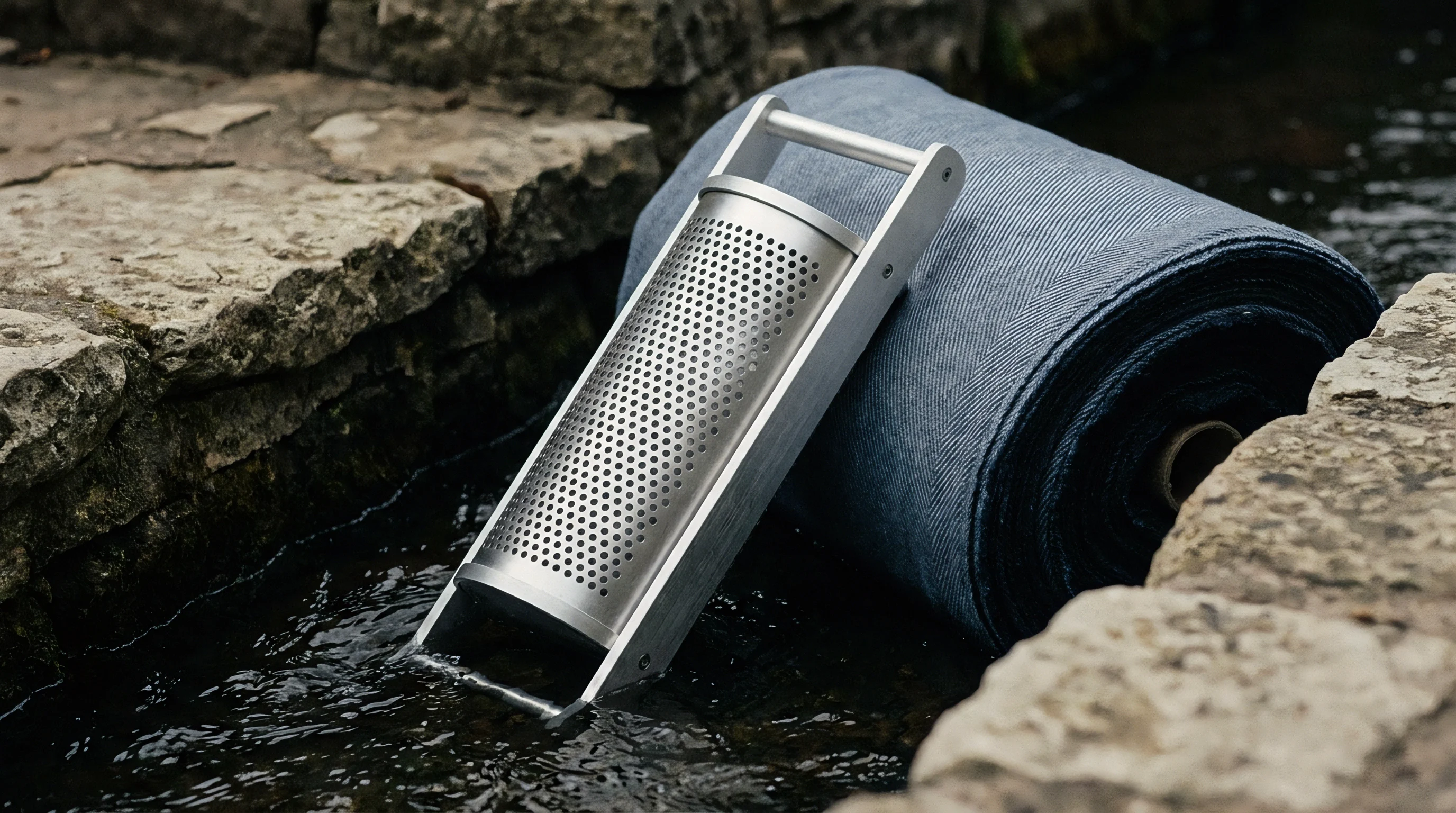
Chamber Geometry Influences
Vortex chambers designed for synthetic or cotton processing fail on long bast strands. Flax filaments display flexural rigidity fifteen times higher than upland cotton, resisting tight rotational wrapping within standard cylindrical cross-sections. Triangular or trapezoidal chambers channel injected liquid droplets directly into the center of the bundle overlap, maximizing capillary attraction between parallel fiber walls.
- Chamber tail length determines yarn tail entrapment during mechanical cutting, where insufficient clearance produces protruding brush ends that foul loom drop wires.
- Nozzle spray orientation directs fluid droplets perpendicular to yarn axes, suppressing droplet reflection off dry fiber skins.
- Exhaust vent clearance expels surplus liquid droplets before moisture reaches package surfaces, eliminating localized mold formation during ocean freight.
Adjusting these physical boundaries maintains yarn cleanliness during high-speed package winding. Deviations in nozzle alignment distribute fluid unevenly across the splice core, leaving dry contact points that pull apart during downstream warp preparation.
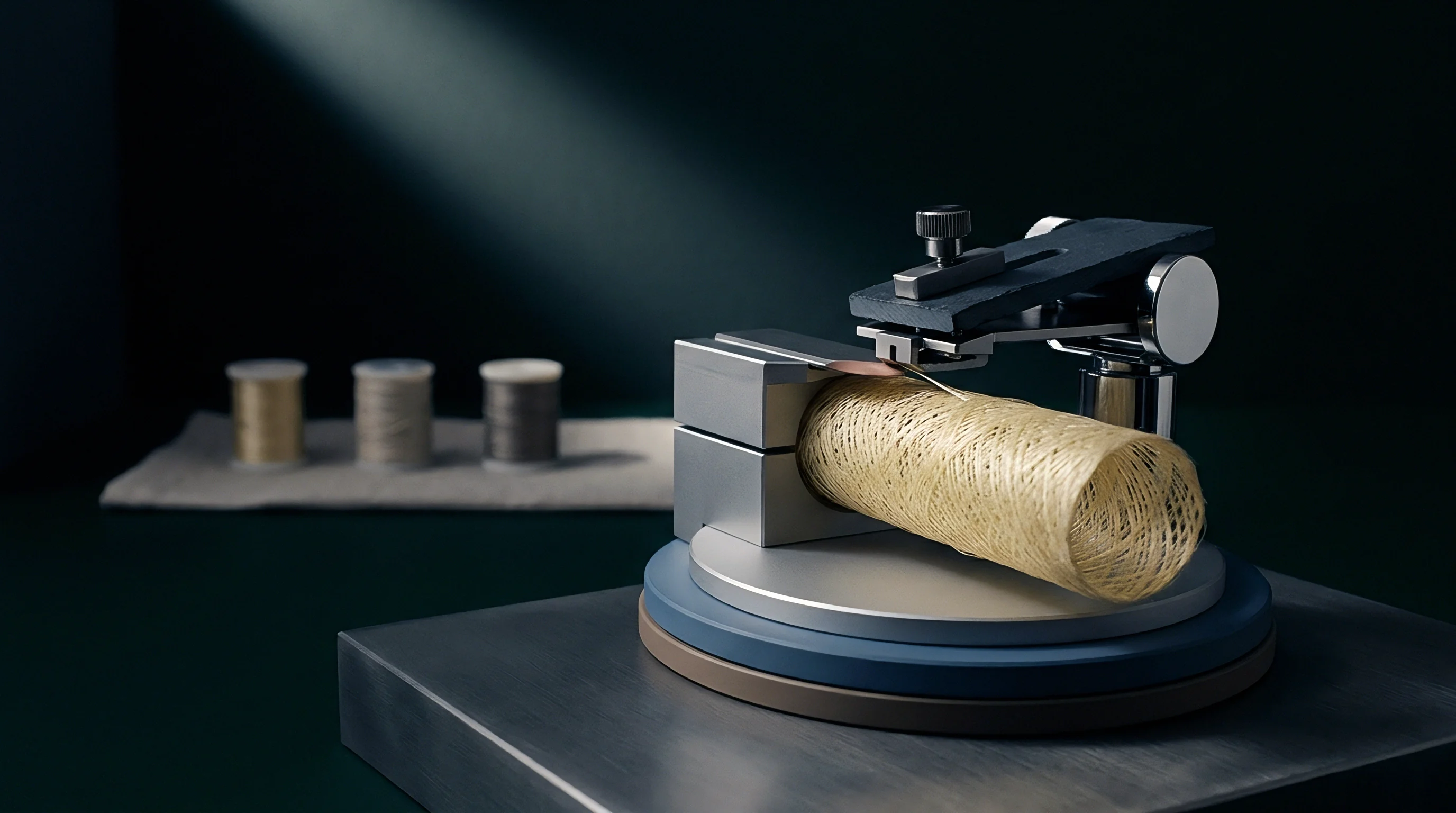

Pectin
Intercellular middle lamellae composed of calcium pectate bind elementary bast cells into structural technical fibers. Dry mechanical stress shatters these amorphous polysaccharide binders, disintegrating technical bundles into weak individual fibrils. Introducing aqueous fluid plasticizes the pectin matrix, lowering the glass transition temperature of hemicellulose components and permitting molecular rearrangement under turbulent air flow.
Water temperature influences plasticization velocity within the mingling groove. Fluid delivered at twenty degrees Celsius requires extended dwell periods to soften stubborn outer encrustations. Warming injection fluid to forty-five degrees Celsius accelerates matrix softening, allowing rapid fiber displacement without cell fracture.
Dry bast fibers snap cleanly.
Cellulose fibril realignment occurs smoothly when bast bundles reach plastic equilibrium before intermingling air discharges.
Cellulose fibrils slip past each other when wet, wrapping tightly around the joint center. Upon drying, hydrogen bonds reform across adjacent cellulose chains, re-establishing cohesive strength without synthetic adhesives or foreign sizing agents. Wet splices shed less lint.

Cellular Plasticization Dynamics
Water penetration follows an uneven gradient through the bast cell hierarchy. The outer secondary wall absorbs fluid rapidly, swelling by eleven percent in cross-sectional diameter within fifty milliseconds of atomized contact. The crystalline cellulose core remains stable, providing axial rigidity while the hydrated outer sheath flows under mechanical mingling forces.
Pectin softens under warm mist.
Surfactant additions lower surface tension from seventy-two millinewtons per metre to thirty-four millinewtons per metre, accelerating liquid migration into dense bundle centers. Non-ionic wetting agents prevent localized bead formation on naturally waxy flax surfaces, spreading fluid across the complete splice span. Excessive surfactant concentrations degrade subsequent warp sizing adhesion, creating weak anchor zones during loom shedding.
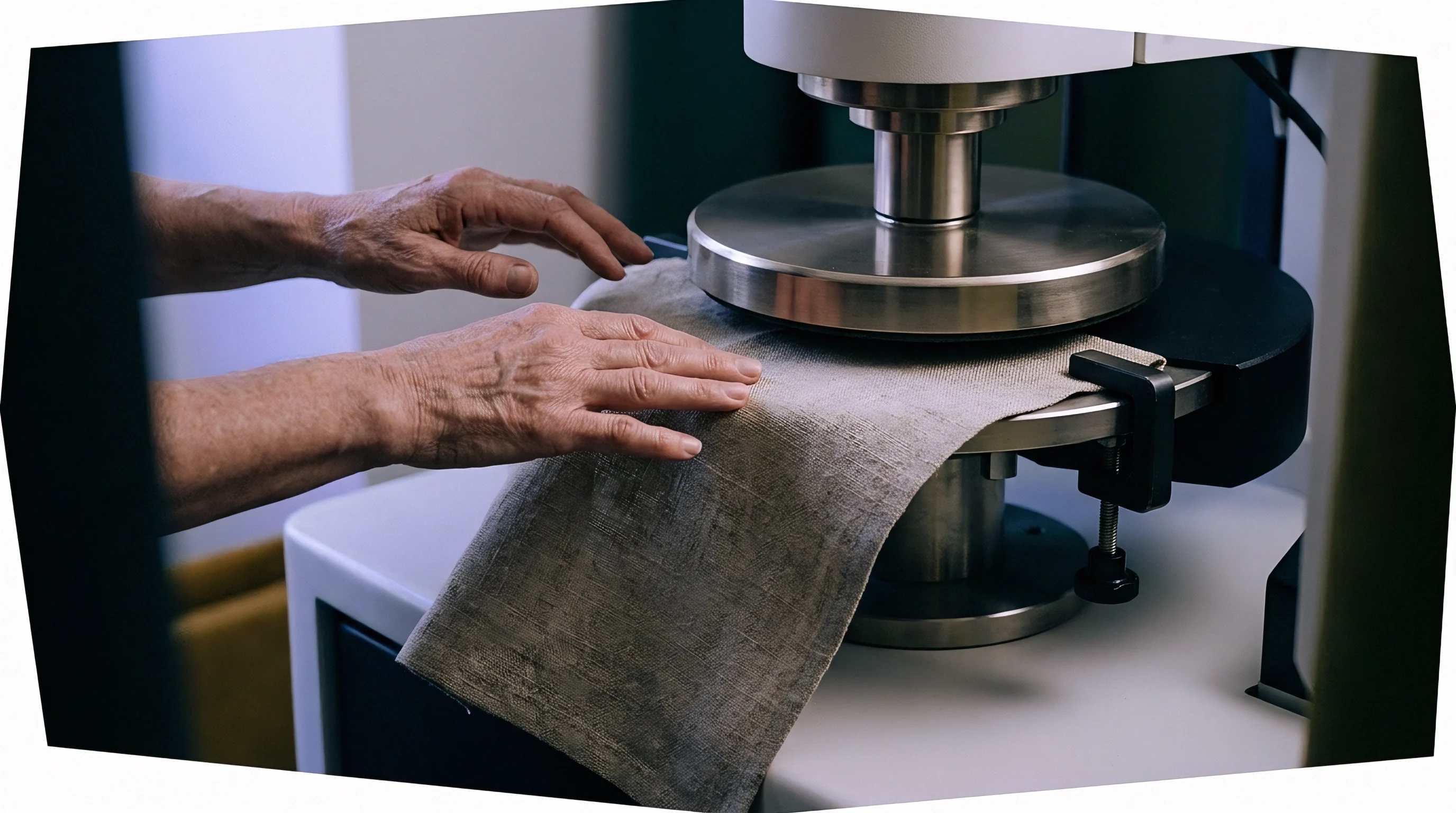
Moisture Dissipation Trajectories
Water added during package winding must evaporate before packaging or beaming. Packages wound with wet splices retain residual moisture pockets if local air circulation drops below sixty percent relative humidity. Trapped liquid induces localized anaerobic fermentation, staining pure bleached flax fibers and weakening cellulosic backbones over thirty-day storage periods.
Winding tensions compress outer package layers, trapping residual moisture within splice cores. Regulating injection volume keeps yarn moisture pickup below two percent of total package mass, letting residual moisture migrate harmlessly into ambient air without forced drying cycles. Wet yarn rings disappear before warper creeling begins, avoiding fungal spots on finished piece goods.
Spinning mills frequently maintain that yarn breaks occur strictly due to natural crop irregularities rather than inadequate splicer water dosage.


Tenacity
Mechanical verification under ISO 2062 confirms the structural integrity of bast splices against parent yarn baselines. Standard dry pneumatic splices rarely retain more than fifty-five percent of parent yarn breaking tenacity on wet-spun flax, fracturing through bundle slippage under steady axial load. Calibrated liquid injection elevates breaking strength retention beyond eighty-five percent of the base yarn benchmark.
Splice geometry determines commercial acceptability across high-speed weaving sheds. A strong joint that doubles yarn diameter creates catastrophic friction within loom reed dents. Water-assisted splicing confines the maximum diameter increase to twenty-five percent over base yarn dimensions, preserving clearance through drop wires and heddle eyes.
Water volume governs splice diameter.
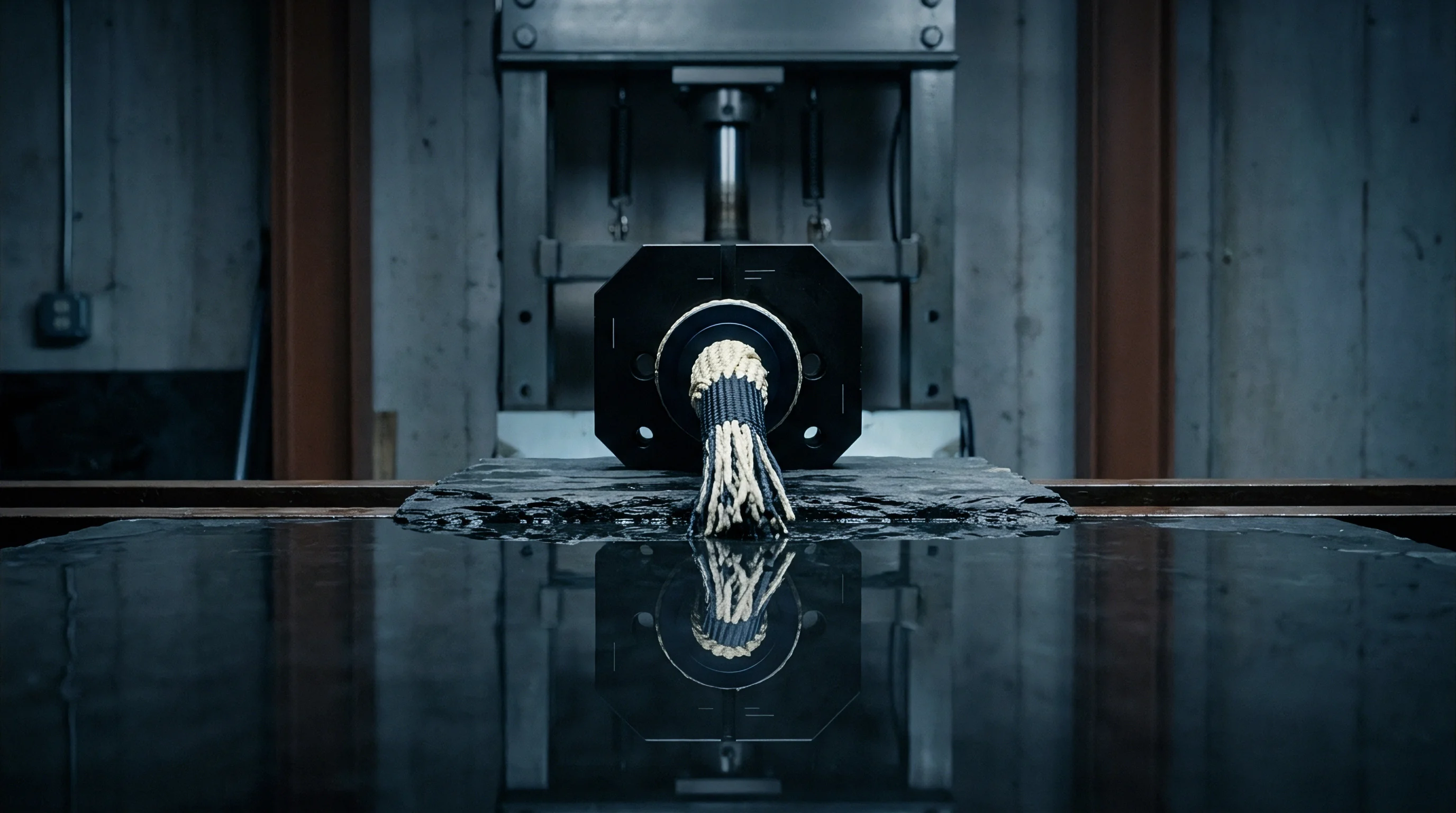
Does Water Injection Volume Alter Bast Tenacity?
Dispensing fluid below eighteen microliters on Nm 26 flax produces inadequate inter-fiber hydrogen bonding, leaving breaking tenacity stranded near sixty-two percent of parent yarn strength. Increasing injection volume to thirty-two microliters raises strength retention to eighty-eight percent while narrowing the tensile coefficient of variation. Injecting beyond fifty microliters oversaturates fiber bundles, causing water droplet displacement that disrupts air vortex formation and drops tenacity back down to sixty-four percent.
| Injection Mode | Fluid Volume (μL) | Retained Tenacity (%) | Elongation Retention (%) | Diameter Increase (%) | Tenacity CV (%) |
|---|---|---|---|---|---|
| Dry Pneumatic | 0 | 54.2 | 62.1 | 48.5 | 18.4 |
| Under-Injected | 15 | 66.8 | 71.4 | 38.2 | 15.2 |
| Balanced Wet | 32 | 87.6 | 86.3 | 22.4 | 8.6 |
| Over-Injected | 55 | 68.1 | 74.2 | 39.1 | 16.1 |
| Excess Flooding | 75 | 59.3 | 65.8 | 52.6 | 21.3 |
Uniformity in breaking force matters more to loom efficiency than absolute peak tensile strength. A splice displaying ninety percent retention with a twenty-five percent coefficient of variation causes continuous warp breaks during shed opening. Balanced fluid dosage compresses breaking force dispersion, ensuring uniform performance under cyclic harness movement.

Tensile Retention across Yarn Counts
Fine counts exhibit extreme sensitivity to injection accuracy. On Nm 50 wet-spun yarn, an error of five microliters shifts the splice from structural cohesion to total air jet blowout. Heavier counts tolerate wider fluid envelopes due to larger cross-sectional fiber counts that absorb localized liquid surplus without collapsing yarn twist.
Heavier yarns demand longer chambers.
- Specimen extraction requires collecting twenty consecutive splices directly from automatic winding spindles, discarding samples touching operator fingers.
- Moisture stabilization demands conditioning extracted splices for twenty-four hours at twenty degrees Celsius and sixty-five percent relative humidity per ISO 139 standards.
- Tensile rupture testing applies a constant rate of extension at five hundred millimetres per minute over a two-hundred-and-fifty millimetre gauge length on automated equipment.
- Dimensional verification measures splice core diameter against adjacent parent yarn using optical projection micrometers under five centinewtons pretension.
Executing these test sequences eliminates discrepancies between laboratory datasheets and shed performance. Splices with balanced water injection mimic parent yarn elongation profiles, extending three percent prior to rupture without step-wise slippage. A flexible splice outlasts a brittle knot through the harness motion.


Abrasion
Loom harnesses exert intense cyclic abrasion against warp ends during shedding and reed beat-up. Every warp strand slides through a stamped steel heddle eye up to seven hundred times before advancing onto the cloth roll. Splices that rely on surface adhesion rather than internal fiber intermingling peel apart under this reciprocating rub action, accumulating loose fibrils behind the drop wires.
The splice thickness increases friction. An oversized joint abrades adjacent warp strands inside dense reeds, causing multiple-end entanglement and loom shutdowns. Water-assisted mingling embeds fiber ends firmly into the yarn interior, creating a smooth cylindrical transition that navigates reed dents without snagging.
Repeated heddle passage strips unbonded surface fibrils from oversized splices during dense reed movements.
Abrasive contact strips loose fibrils. Untreated pneumatic splices unravel when subjected to two hundred cycles on a Zweigle G551 yarn abrasion tester, shedding eighteen percent of their mass as fly lint. Balanced water injection splices endure over six hundred cycles before surface fuzzing appears, matching parent yarn abrasion survivability.

Which Nozzle Profile Prevents Fiber Shedding?
Dual-port opposing fluid nozzles achieve superior bundle penetration compared to single-port lateral injectors. Directing balanced water streams from opposing chamber walls forces liquid directly between incoming yarn tails before intermingling air activates. Single-port injectors wet only the exposed upper yarn perimeter, leaving the bottom strand dry and prone to shed lint during beat-up cycles.
Chamber profile selection governs internal air turbulence patterns. Oval cross-sections produce elliptical yarn movement that rubs wet fiber ends flat against the splice core, wrapping loose surface hairs cleanly into the assembly. Circular chambers permit unconstrained yarn rotation, generating ballooning filaments that snag on reed wires during air-jet weft insertion.

Heddle Passage Friction
Steel drop wires, heddle eyes, and reed dents represent three distinct friction contact zones along the weaving line. Drop wires impose static normal forces of twenty to forty centinewtons, testing surface smoothness as splices exit the back rest roll. Heddle eyes generate reciprocating lateral shear, stripping unbonded fiber tips that lack deep internal twist integration.
Tensile loss halts rapier insertion.
Reed dent passage introduces sudden impact shocks at beat-up, particularly in high-density linen plain interlacing constructions. In a plain weave linen setting of eighteen ends per centimetre using Nm 26 warp yarn, the inter-reed clearance measures under 0.35 millimetres. Splices exceeding base yarn diameter by forty percent jam directly inside reed air gaps, triggering warp breaks that halt loom operation.
Whether chemical sizing agents can fully replace thermal water conditioning in low-twist wet-spun linen splicing remains unresolved across current mill trials.

Outlay
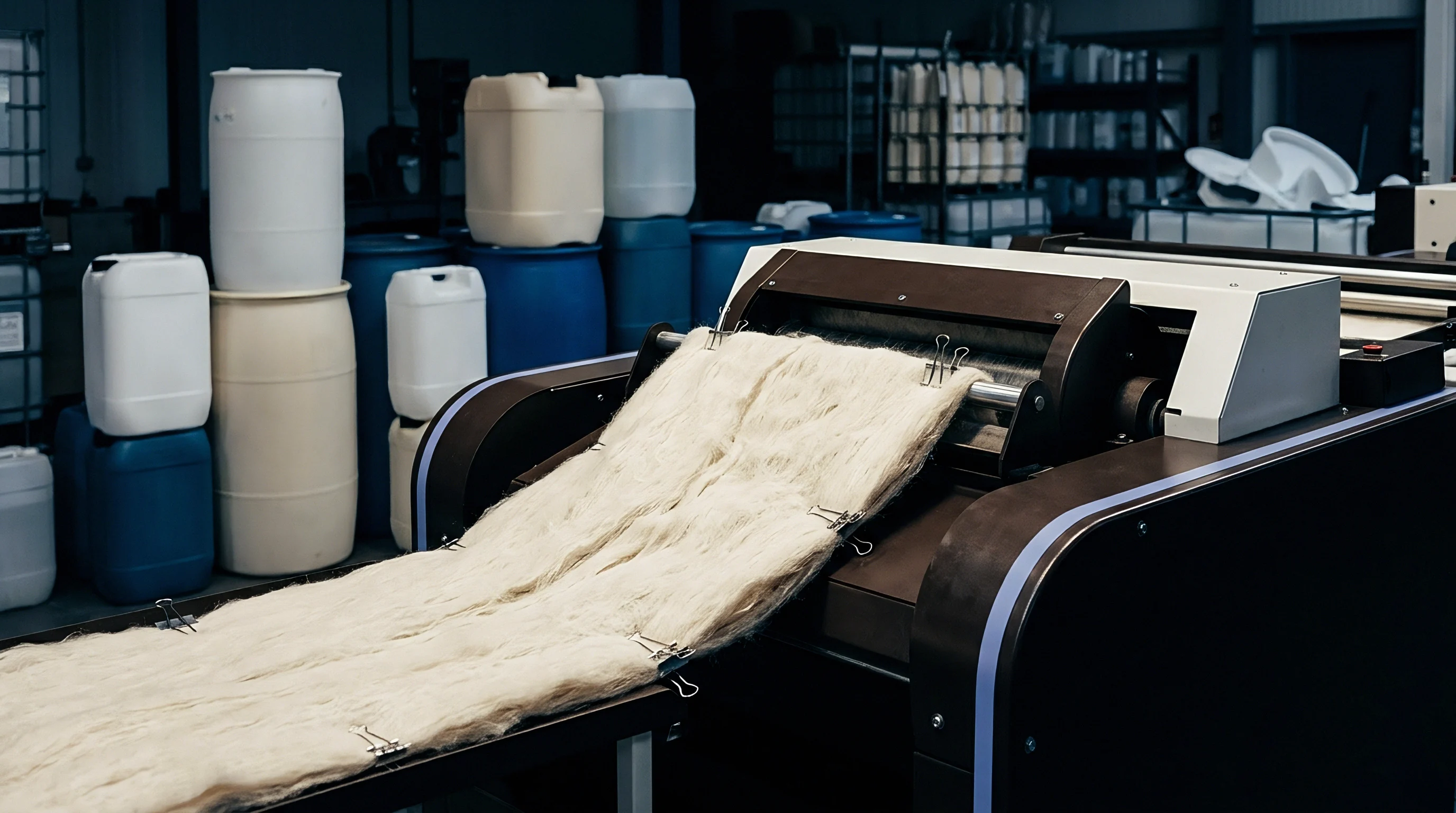
Loom downtime represents the single largest cost driver in woven linen production sheds. Modern rapier looms operating at five hundred picks per minute consume expensive machine hours whether shedding or stopped for warp repairs. A single warp breakage requires an operator three to five minutes to locate, draw through the drop wire, thread the heddle eye, dent through the reed, and restart the loom.
Labor charges and overhead allocations average forty-five euros per loom hour across European weaving mills. Running a warp beam with sixty splice-induced breaks per one hundred thousand picks adds forty-five euros in lost production time per hundred metres of greige cloth. Optimizing water injection parameters drops splice-related warp stops from 1.8 stops per hundred thousand picks to under 0.3 stops, saving direct production margins.
Excess liquid stains the greige.

Winding Clearance Economics
Yarn clearer settings on automatic winders balance fault removal against splicing frequency. Setting optical clearer channels too tight cuts out minor slubs, generating forty splices per kilogram of wound yarn. Every splice cycle consumes compressed air, demineralized water, and ten seconds of winder spindle capacity, inflating winding conversion charges.
Loom stops inflate metre costs.
| Performance Tier | Warp Breaks per 10^5 Picks | Loom Stoppage Time (min) | Downtime Expense (€/100m) | Greige Demerit Points (ASTM D5430) | Net Metre Penalty (€/m) |
|---|---|---|---|---|---|
| Unoptimized Dry Pneumatic | 2.40 | 9.6 | 7.20 | 14.5 | 0.38 |
| Sub-Optimal Water Setting | 1.15 | 4.6 | 3.45 | 7.2 | 0.18 |
| Balanced Water Splicing | 0.25 | 1.0 | 0.75 | 1.8 | 0.04 |
| Flooded Splice Cavity | 0.95 | 3.8 | 2.85 | 8.6 | 0.22 |
Clearer settings aligned with optimized water splicing reduce false stops while maintaining high structural joint integrity. Winders operating with stabilized wet splicing run twenty-four hours without nozzle clogging, avoiding maintenance downtime and manual needle clearing routines. Beam preparation seals the contract.
Landed Metre Surcharges
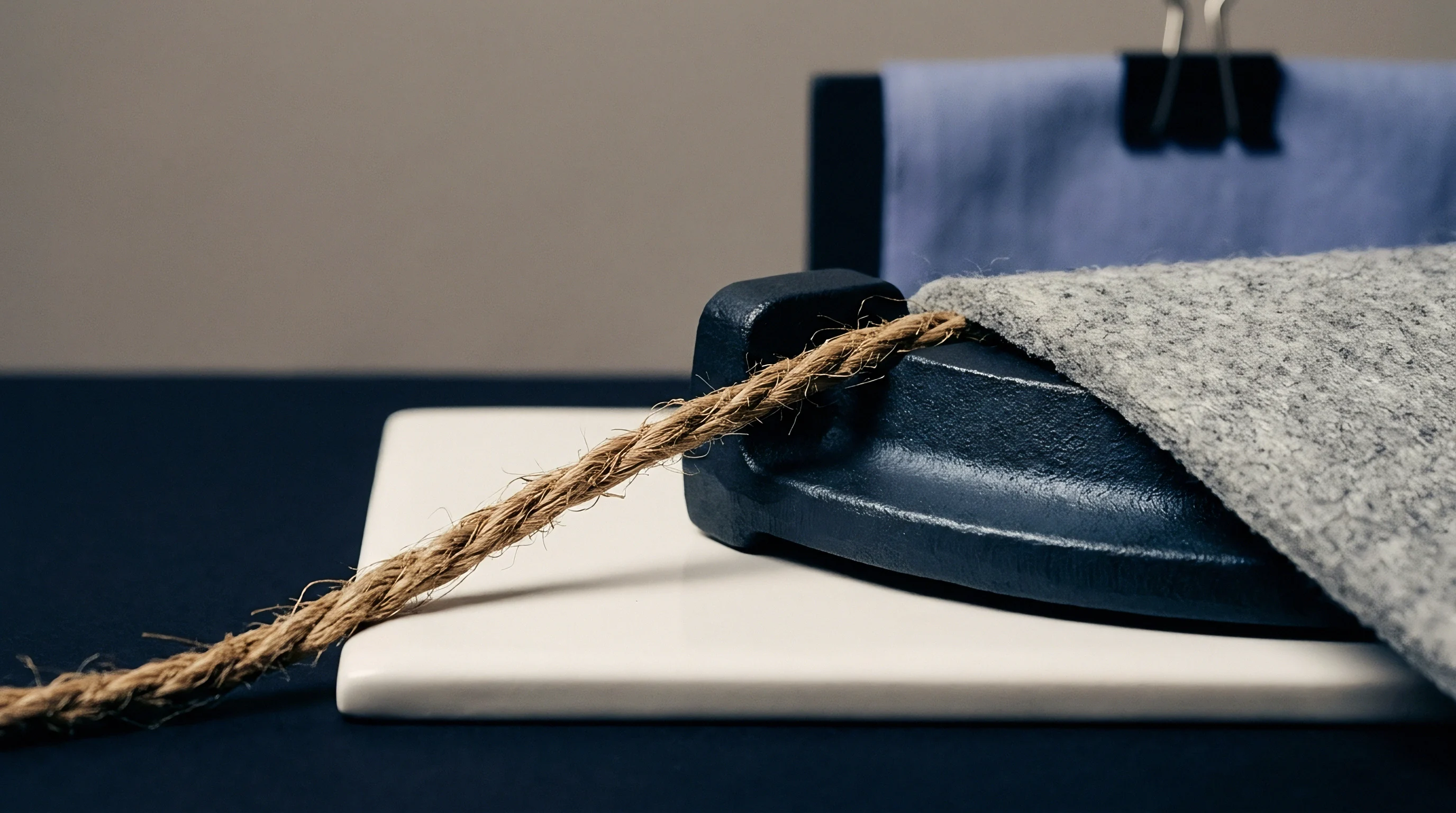
Splice defects that survive loom passage without breaking show up on final inspection frames as visible thick places or irregular filling streaks. Four-point inspection protocols penalize diameter surges exceeding forty percent of base yarn caliper over ten millimetres length. Accumulating demerit points downgrades first-quality linen bolts to second-grade stock, forfeiting up to thirty percent of the wholesale metre price.
Specification clauses enforcing ASTM D5430 four-point thresholds penalize splice-related filling stops through automatic yardage price deductions.
Water-assisted joints blend into the surrounding interlacing field, matching the light reflectance and dye uptake of adjacent parent yarn. Dry mechanical splices exhibit optical density shifts and irregular dye absorption due to crushed fibril ends, generating conspicuous streaks across dyed solid yardage. Incorporating precise water injection tolerances into raw yarn procurement specifications protects cloth buyers against landed quality penalties, ensuring that yarn strength transfers cleanly into first-quality woven piece goods.
Contracts specifying mill adherence to ISO 13934 minimum tensile joint thresholds legally shift loom downtime penalties back to spinning suppliers when delivered yarn lots exceed agreed splice break frequencies.