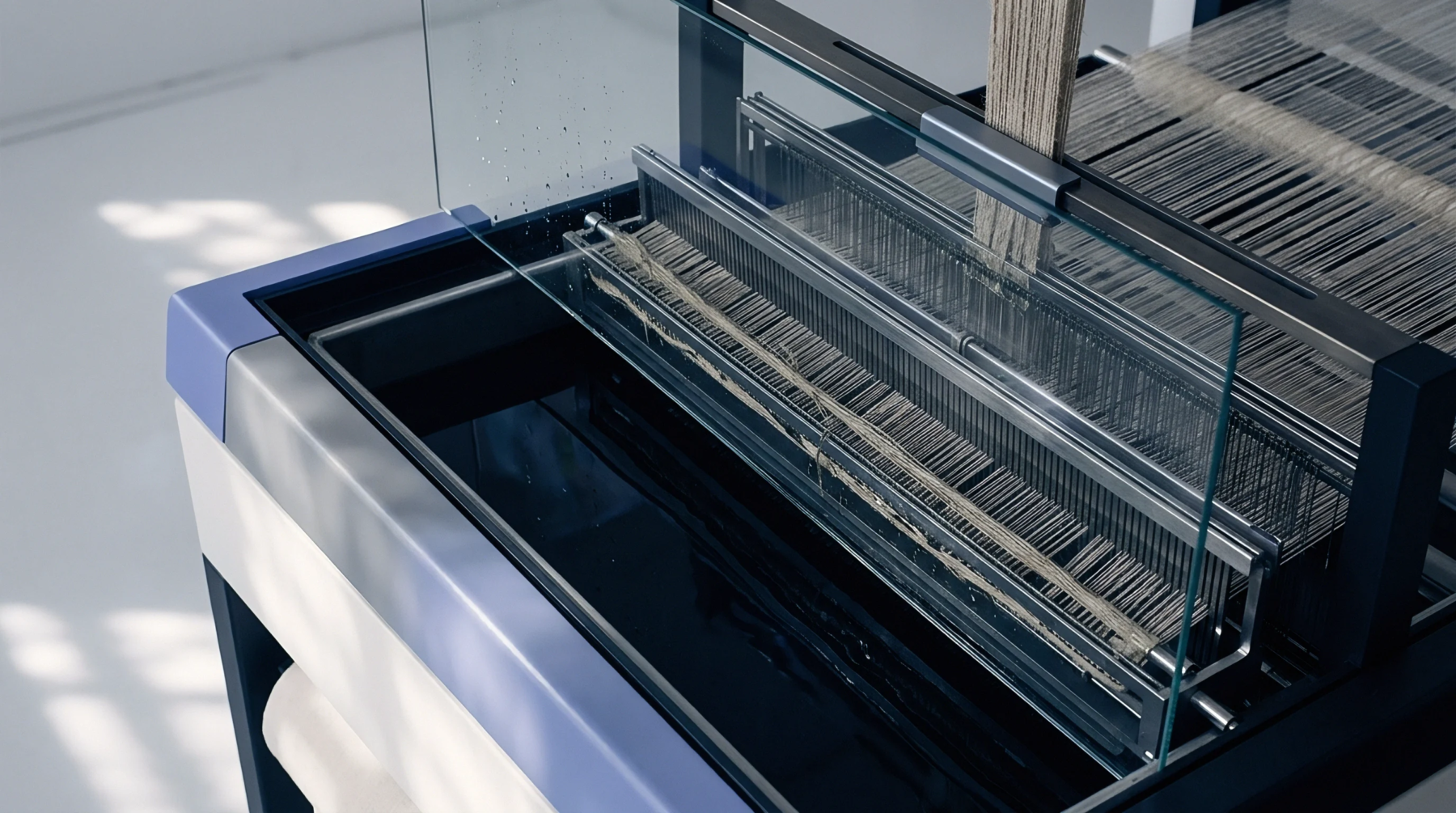
Moisture Content
The amount of water remaining in flax fibers after drying operations determines their physical behavior during spinning and winding. This variable, known as residual moisture, is closely monitored because linen fibers are highly hygroscopic and require a controlled moisture level to maintain their elasticity. Incorrect drying can lead to fiber damage or mold growth during subsequent storage.
Precise Monitoring
Precise monitoring of drying temperatures prevents the over-drying of wet-spun yarn packages. When linen packages are dried too rapidly or at excessive temperatures, the fiber core loses its natural bound water, causing it to become brittle and lose its natural luster. Measuring the residual moisture with electronic probe meters or gravimetric oven methods ensures that the yarn retains a standard moisture regain of about twelve percent before it is packed.
This drying control helps maintain yarn strength and reduces the risk of fiber breakage during the high-speed winding and warping processes.
Excessive Moisture
Excessive moisture can lead to biological degradation and mildew formation in stored yarn. When packed yarn has too much water, the warm conditions inside shipping containers encourage the growth of fungi that stain and weaken the linen fibers. Proper conditioning of yarn packages in a humidity-controlled warehouse prior to shipment ensures that the product remains stable during transport.