Quantitative Attribution of Bast Fiber Dissolution during High Pressure Continuous Caustic Scouring Sequences
Continuous high-pressure caustic scouring removes 10-16% of bast mass; tracking degree of polymerization separates valid gum removal from fiber degradation.


Kinetics

Chemical Fractionation under Pressurized Caustic Exposure
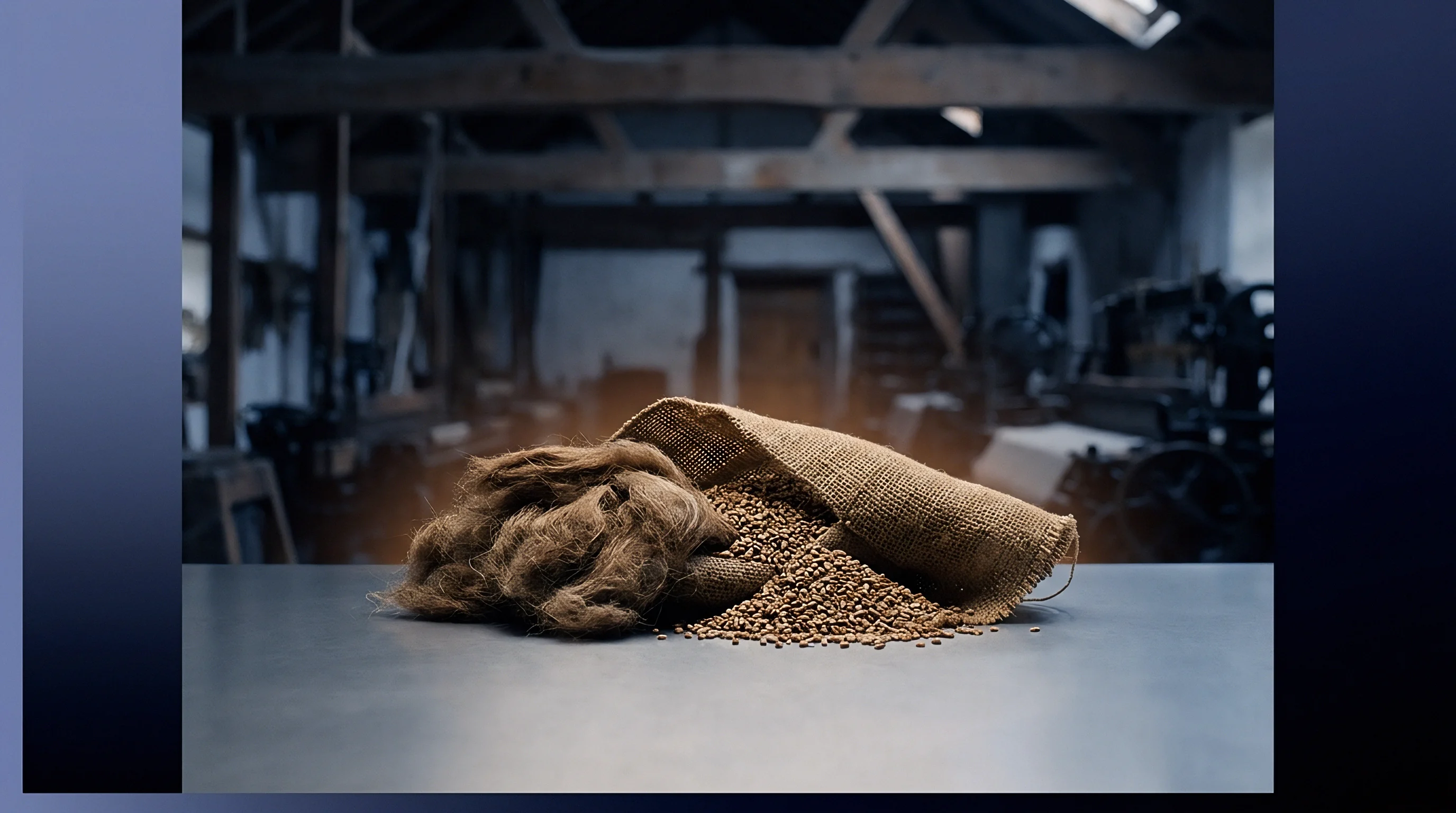
Raw flax bast fiber enters the industrial preparation line carrying substantial non-cellulosic constituents that govern both yarn cohesion and wet processing behavior. The chemical makeup of unretted and dew-retted flax encompasses encrusting substances: pectins, hemicelluloses, lignin, and waxes bound to crystalline cellulose microfibrils. Continuous high-pressure scouring systems, operating at saturated steam conditions between 120 and 140 degrees Celsius, contact the textile substrate with sodium hydroxide solutions ranging from 30 to 60 grams per liter.
Under these hydrothermal regimes, the reaction rates of ester saponification, glycosidic bond cleavage, and carbohydrate dissolution shift by orders of magnitude compared to atmospheric kier boiling.
Alkali attacks amorphous cell walls rapidly. Pectin dissolves before hemicellulose chain cleaves. The primary mass reduction during initial contact stems from the alkaline hydrolysis of polygalacturonic acid methyl esters.
Calcium and magnesium pectate complexes disintegrate as sodium ions replace multivalent cations, generating water-soluble sodium pectates that leach into the scouring liquor. High steam temperatures trigger peeling reactions. Within the pressurized reaction chamber, the removal of polygalacturonic chains exposes underlying xyloglucans and glucomannans.
The rate of this extraction follows pseudo-first-order kinetics, governed by the diffusion rate of hydroxyl ions through the dense fiber bundle lumen.
Under continuous saturated steam at 130 degrees Celsius and 45 grams per liter sodium hydroxide, total pectin extraction reaches 88 percent within six minutes of dwell time.
Cellulose degradation proceeds concurrently through step-wise alkaline peeling rather than direct random scission. Reducing end-groups undergo enolization and beta-elimination, cleaving monomeric glucose units as isosaccharinic acids until a stopping reaction halts chain shortening. Pure cellulose resists dilute cold caustic.
When exposure exceeds five bar steam pressure or caustic concentrations surpass 70 grams per liter, random alkaline hydrolysis breaks intra-chain 1,4-beta-D-glucosidic bonds. This indiscriminate scission lowers the average degree of polymerization, directly compromising individual fiber tensile strength and reducing dry mass beyond the envelope of mere non-cellulosic scouring.

Partitioning Dissolution Fractions across the Fiber Architecture
Attributing weight loss to specific biochemical components prevents misinterpreting severe cellulosic destruction as ordinary non-cellulosic purification. Bast fiber bundles possess distinct morphological layers, each presenting unique thermodynamic resistance to caustic permeation. Middle lamellae, which bind elementary fibers into composite technical fibers, contain the highest concentration of rhamnogalacturonans and phenolic compounds, making them the primary zone of mass depletion during pressure boiling.
- Pectic polysaccharides dissolve through alkaline saponification of carboxymethyl groups, yielding soluble pectic salts and releasing between 4.5 and 6.5 percent of total initial greige mass into the wash liquor.
- Alkali-soluble hemicelluloses undergo hydrolytic chain cleavage along branched xylan backbones, contributing an additional 3.5 to 5.0 percent mass reduction as low molecular weight pentosans dissolve.
- Surface waxes and lipids saponify into fatty acid salts and emulsify with non-ionic auxiliaries, removing 1.2 to 2.1 percent of hydrophobic outer-sheath deposits.
- Lignin components experience cleavage of aryl-ether linkages under elevated temperature, with phenolic fractions solubilizing to deliver a 1.0 to 1.8 percent gravimetric drop.
- Alpha-cellulose chains experience progressive end-group peeling reactions, shedding between 0.8 and 2.4 percent of pure structural mass during standard commercial scouring cycles.
Variations in retting intensity alter these baseline fractions significantly before the fabric reaches the continuous range. Under-retted flax retains intact outer bark fragments and high pectin content, requiring harsher alkali exposure that increases the dissolution gradient across the machine run. Over-retted material presents pre-degraded microfibrils where caustic solutions penetrate directly into the crystalline core.
Mass loss on the continuous range thereby acts as an unforgiving detector of upstream processing consistency.
Dissolution kinetics follow the Arrhenius relationship until mass transfer resistance through dense woven structures dominates the reaction velocity.

Steam

Pressure Chambers and Hydrothermal Liquor Dynamics
Continuous scouring ranges for heavy bast wovens rely on pressurized reaction tubes or pressurized steamer compartments rather than atmospheric roller steamers. Saturated steam prevents localized fiber charring. Direct steam injection elevates the internal vessel atmosphere to 2.0 to 3.5 bar gauge pressure, maintaining thermodynamic saturation without allowing droplet condensate to drip onto the moving cloth web.
Fabric impregnation occurs in an external saturation padder, operating at 80 to 90 percent wet pick-up with an alkaline formulation containing wetting agents, sequestering chelates, and sodium hydroxide.
Caustic concentrations dictate total mass loss. When the fabric enters the seal zone of the pressure steamer, flash heating drives the chemical liquor into the inner core of the bast yarn bundles. The pressurized saturated steam suppresses liquor vaporization, maintaining a continuous aqueous boundary layer around individual filaments.
This thin-film liquid phase allows continuous chemical diffusion while minimizing liquor ratios to less than 1.5 liters per kilogram of textile material. The mass transfer rate inside this pressurized film exceeds atmospheric diffusion by more than three hundred percent.
A stable saturated steam cushion suppresses caustic evaporative crystallization and preserves internal bundle moisture.
Process control demands precise balance between dwell duration, thermal input, and chemical replenishment rates. Insufficient steam pressure slows pectin saponification, leaving residual gums that inhibit uniform dye penetration in downstream processing. Elevated pressures, conversely, accelerate alpha-cellulose degradation, causing fiber tenderization and unrecoverable yardage loss across continuous lots.
| Steam Pressure (bar gauge) | Vessel Temp (deg C) | NaOH Bath (g/L) | Dwell Time (min) | Non-Cellulosic Mass Loss (%) | Cellulose Dissolution (%) | Viscosity Loss (DP drop) |
|---|---|---|---|---|---|---|
| 1.5 | 127 | 35 | 8 | 8.2 | 0.6 | 120 |
| 2.0 | 133 | 45 | 6 | 11.4 | 1.1 | 210 |
| 2.5 | 138 | 50 | 5 | 13.1 | 1.8 | 380 |
| 3.0 | 143 | 60 | 4 | 14.6 | 2.9 | 620 |
| 3.5 | 148 | 70 | 3 | 15.8 | 4.4 | 890 |
Auxiliary Chemistry and Metal Ion Complexation
Liquor formulations designed for pressurized bast scouring include robust sequestering agent systems to handle substantial calcium and magnesium burdens. Bast fibers release divalent ions during middle lamella breakdown, generating insoluble calcium hydroxide precipitates if chelators fail under high temperature. Polyacrylates combined with phosphonates keep multivalent cations mobile within the alkaline bath, preventing salt redeposition on the cloth surface.
The presence of transition metal ions, particularly iron and copper, introduces severe catalytic risks in continuous high-pressure ranges. Dissolved iron species catalyze radical-induced oxidative-reductive scission of cellulosic chains when traces of entrapped air linger inside the vessel, accelerating fiber dissolution beyond predictable chemical peeling.
Commission finishers frequently attribute excessive fabric mass reduction to natural crop variation and heavy field contamination rather than to uncontrolled thermal spikes inside the pressure chamber.
Yield

Mass Balance Reconciliation across Continuous Preparation
Loom receipts confirm delivered greige weight. Weight records expose hidden yarn substitutions. Verifying origin integrity across international linen processing sequences demands exact mass balance tracking from incoming greige fabric rolls to outgoing prepared-for-dyeing bolts.
In certified supply chains, including European Flax and Masters of Linen documentation schemes, raw fiber mass must reconcile through spinning, weaving, and wet finishing stages. High-pressure caustic scouring introduces a primary quantitative drop, removing between 10 and 18 percent of total greige fabric weight within minutes.
Scouring loss alters total yardage calculations. Wet processing mills occasionally exploit this expected mass loss to obscure the blending of inferior fibers or synthetic filaments. An unmonitored mass differential permits mills to substitute lower-grade domestic tow or discard short-fiber waste while declaring normal scouring boil-off on material intake records.
Accurate provenance auditing treats scouring mass loss as a verifiable biochemical equation rather than an arbitrary allowance ledger item.
A documented fifteen percent scouring mass reduction changes the linear yield calculation across every subsequent batch entry.
Auditors track every dry metric ton. Greige rolls arrive with varying moisture content, sizing agent applications, and weaving oils that distort direct gross-to-net weighing. The initial moisture regain of greige linen fluctuates between 8 and 12 percent under standard warehousing conditions.
Establishing a defensible reconciliation model demands converting all fabric lots to bone-dry mass equivalents before and after the continuous scouring range, deducting known water-soluble sizing formulations applied during warp preparation.
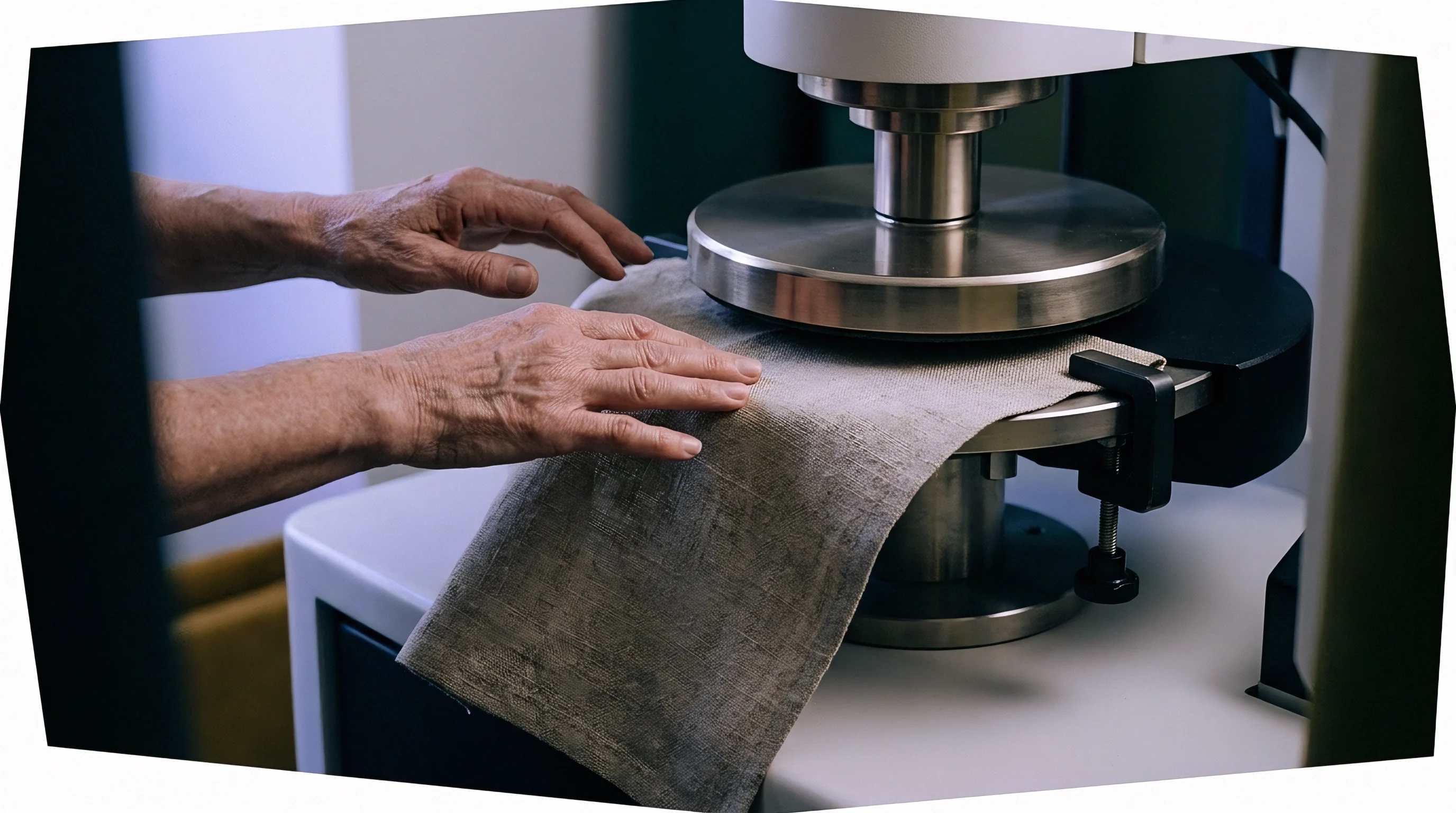
The Continuous Mass Accounting Protocol
- Determine incoming bone-dry fabric weight by testing representative roll samples at 105 degrees Celsius according to ISO 6330 conditioning standards, establishing absolute dry fiber input.
- Extract warp size compounds using targeted cold-water and enzyme desize washes, isolating water-soluble sizing agents from intrinsic bast fiber components.
- Record caustic bath chemical consumption, tracking sodium hydroxide mass addition and bath replenishment volumes per linear meter of processed cloth.
- Collect and dry all lint filter screenings and continuous bath outflow particulates to separate detached fiber bundle debris from truly dissolved molecular fractions.
- Sample scoured fabric exiting the final neutralizer and wash boxes, drying specimen coupons to zero moisture to calculate net operational mass depletion.
- Calculate the final gravimetric loss balance, comparing delivered yardage weights against verified theoretical bounds to flag undocumented inventory insertions.
Discrepancies exceeding two percent between predicted chemical dissolution and documented roll-rack mass loss trigger immediate investigation under strict chain-of-custody oversight. When scouring losses appear artificially elevated, uncertified cheap tow yarns have frequently been blended into warp or weft beams to absorb the declared mass deficit, resulting in immediate transaction certificate invalidation and buyer rejection at port inspection.


Viscosity
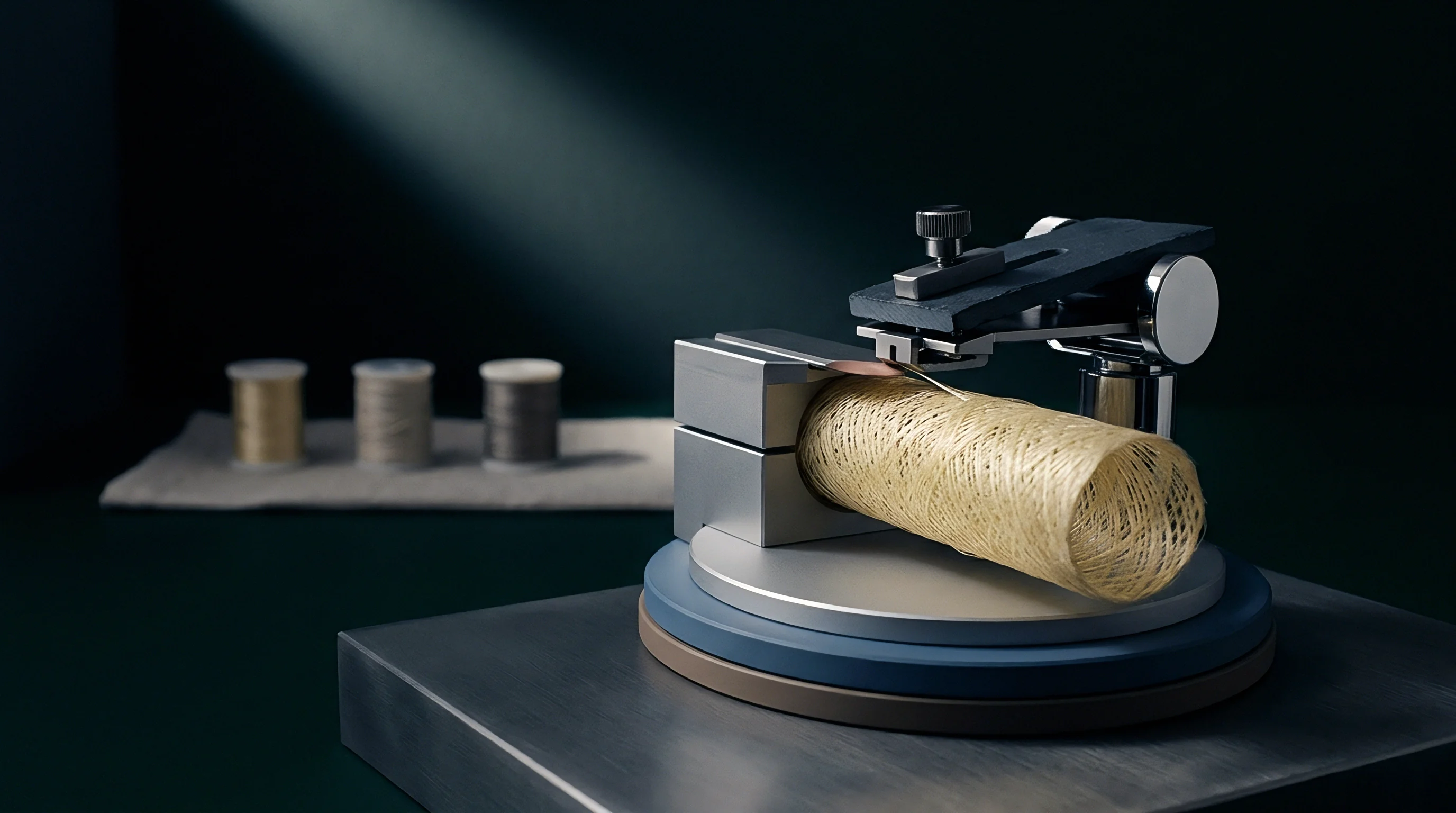
Separating Chemical Cleavage from Mechanical Attrition
Fluidity tests isolate true cellulosic damage. Viscometric analysis provides the definitive analytical mechanism to separate acceptable non-cellulosic gum extraction from unacceptable alpha-cellulose structural degradation. Industrial continuous scouring removes unwanted binding substances, leaving high molecular weight cellulose intact.
When chemical exposure turns excessively severe, hydrolytic cleavage cuts the cellulose polymer chains, lowering their average degree of polymerization and reducing the physical tensile capacity of the finished cloth.
Capillary viscometry using cupriethylenediamine hydroxide solvent according to ISO 5351 measures intrinsic viscosity directly. Unprocessed dew-retted flax bast fibers display degree of polymerization values between 2500 and 3500. Well-controlled continuous high-pressure scouring reduces these values moderately to a range of 2000 to 2400 through limited terminal peeling.
Severe pressure boiling regimes, characterized by prolonged dwell or unbuffered caustic liquors, drop the degree of polymerization below 1400. This drop signals significant chain scission, showing that measured fabric mass reduction represents destroyed structural cellulose rather than successfully eliminated non-cellulosic impurities.

Analytical Attribution Verification Array
- Capillary viscometry testing quantifies the degree of polymerization through cupriethylenediamine dissolution, revealing internal molecular chain breakdown caused by unmitigated alkaline hydrolysis under pressure.
- High-performance anion-exchange chromatography separates dissolved neutral sugars and uronic acids in spent wash liquors, measuring exact ratios of extracted rhamnose, galactose, and xylose against glucose monomers.
- Thermogravimetric mass analysis measures the thermal decomposition profiles of cleaned fiber samples, distinguishing residual lignin and hemicellulose degradation peaks from bulk cellulose pyrolytic breakdown.
- Fourier transform infrared spectroscopy evaluates residual ester carbonyl absorption bands at 1740 inverse centimeters, confirming complete pectin removal without destructive oxidation of secondary alcohol groups on the cellulose ring.
Nitrogen levels confirm residual protein extraction. Residual protein and wax content assessments complement viscometric measurements. Raw flax contains cellular proteins and cytoplasm residues within the elementary fiber lumen.
Pressurized scouring hydrolyzes these nitrogenous compounds. Kjeldahl nitrogen determination shows protein levels dropping from 0.8 percent in raw tow down to less than 0.1 percent in thoroughly scoured linen. When nitrogen content remains above 0.3 percent despite heavy gravimetric losses, the scouring process has removed structural cellulose through harsh alkaline degradation while failing to clean the interior fiber lumen.
The boundary between benign surface peeling and destructive macro-molecular dissolution remains contested when processing blended yarns containing variable flax maturity grades.

Settlement

Contract Allowances and Transaction Certificate Scope
Invoices settle against verified dry mass. Yield tolerances protect the linen buyer. Commercial contracts for continuous wet finishing specify clear limits on allowable mass reduction during scouring and bleaching operations.
Sourcing entities buying finished linen goods against European Flax origin declarations face regulatory exposure if weight records show irregularities that mill offices cannot defend. When a commission processor in Jiangsu or Zhejiang processes European greige fabric, transaction certificates issued by third-party certification bodies verify the continuity of certified volume from yarn bale to finished shipment.
Standard commercial agreements establish a baseline scouring loss allowance, typically pegged between 11 and 14 percent for standard dew-retted plain weaves. Losses surpassing agreed thresholds alter the finished fabric weight per square meter, altering tariff classification lines under Harmonized System Chapter 53 and destabilizing Customs valuations. The buyer absorbs economic harm twice: once in the lost yield per woven bolt, and again in elevated landed cost per usable meter of cloth.
| Fiber Grade Classification | Declared Origin Scheme | Nominal Scour Loss (%) | Reconciliation Variance Limit | Commercial Penalty Action |
|---|---|---|---|---|
| Long Line Dew-Retted | Masters of Linen | 10.5 to 12.5 | Plus or minus 1.0% | Direct invoice debit per square meter |
| Standard Dew-Retted | European Flax | 12.0 to 14.5 | Plus or minus 1.5% | Full batch DP re-testing at mill expense |
| Tow and Line Blends | Documented Traceable | 13.5 to 16.5 | Plus or minus 2.0% | Audit escalation and mill yield chargeback |
| Unretted Water-Scoured | Conventional Commercial | 15.0 to 19.0 | Plus or minus 2.5% | Transaction certificate suspension review |

Audit Verification and Landed Cost Arithmetic
Evaluating mass loss during annual origin audits requires inspecting steam pressure logs, chemical dosing records, and weighbridge receipts across concurrent production runs. A facility declaring a uniform twelve percent scouring loss on production tickets while dosing caustic at sixty grams per liter under three bar steam pressure creates a direct documentary contradiction. Physical dissolution under those thermodynamic conditions exceeds fourteen percent.
The unrecorded two percent mass variance reveals an uncredited inventory balance, indicating that undocumented fiber entered the processing lot to balance output tonnage.
Standard purchase agreements require mill operators to furnish certified mass reconciliation reports alongside every transaction certificate dossier. When verified mass losses deviate from the contracted target by more than one point five percent, standard provenance defense clauses activate immediate price adjustments based on true fiber dry mass rather than nominal delivered yardage.