Interfacial Pectin Dissolution Kinetics and Non-Isothermal Boundary Layer Instability in High-Speed Wet Roving Drafting
Precision thermal boundary control in wet roving troughs prevents pectin stripping, stabilizing drafting dynamics and reducing yarn irregularity at high speeds.
Matrix
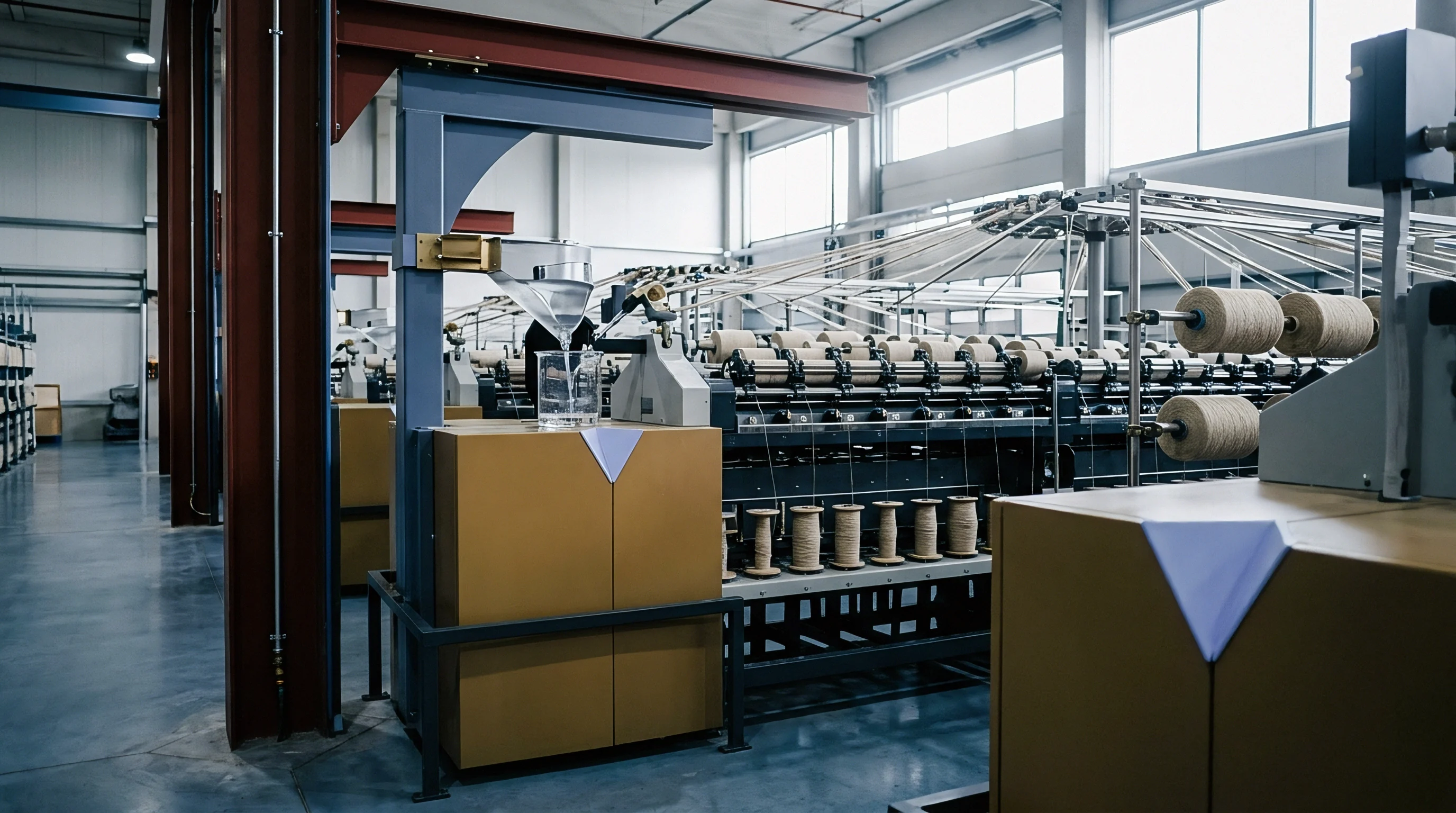
Hot water troughs in wet-spinning frames alter the structural cohesion of bast fiber bundles within fractions of a second. Processing high-grade long-staple flax into fine wet-spun yarns requires controlled removal of middle lamella polymers without stripping the structural integrity of individual technical fibers. Pectin polymers act as the primary intercellular cement holding elementary fibers in cohesive bundles.
Water temperatures maintained between 50°C and 75°C hydrolyze ester linkages within the pectinic matrix, releasing solubilized fractions into the trough bath. At elevated delivery speeds exceeding 40 meters per minute, the residence time of the roving strand inside the heated trough drops below two seconds. This compressed interaction time forces the dissolution process into a kinetic regime dominated by interfacial mass transfer rather than equilibrium chemical degradation.
Pectin Solubilization Kinetics in Heated Troughs
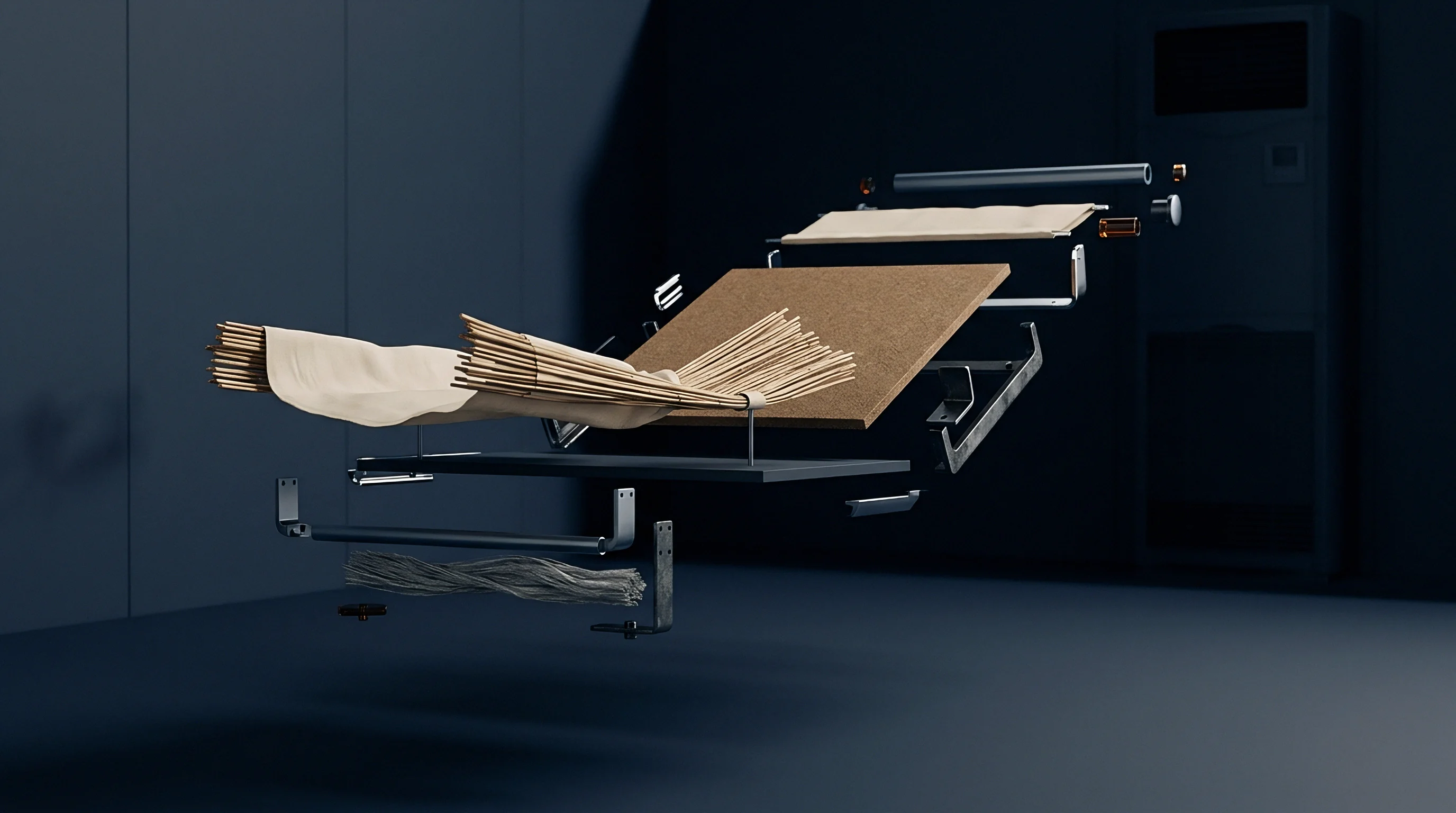
Homogalacturonan chains within the middle lamella undergo rapid thermal hydrolytic cleavage upon immersion. The dissolution rate constant scales exponentially with bath temperature according to Arrhenius kinetics. Standard laboratory measurements place the activation energy for calcium pectinate dissolution at 48.5 kJ/mol.
This figure derives from isothermal bath trials conducted on twenty-meter sliver samples under static immersion at pH 6.2 in a 2022 bast-fiber study. Lowering the calcium ion concentration in the process water shifts this activation energy downward to 41.2 kJ/mol, accelerating binder stripping at lower temperatures. Cold fluid sinks.
Hot water softens pectin. Dissolution rates double rapidly.
| Trough Temp (°C) | Residence Time (s) | Solubilized Pectin (%) | Shear Strength (kPa) | Rate Constant (s⁻¹) |
|---|---|---|---|---|
| 50 | 1.8 | 4.2 | 142.5 | 0.024 |
| 60 | 1.2 | 8.6 | 98.1 | 0.075 |
| 70 | 0.9 | 15.4 | 54.3 | 0.188 |
| 80 | 0.6 | 24.1 | 22.7 | 0.462 |
Middle Lamella Softening and Fiber Cohesion
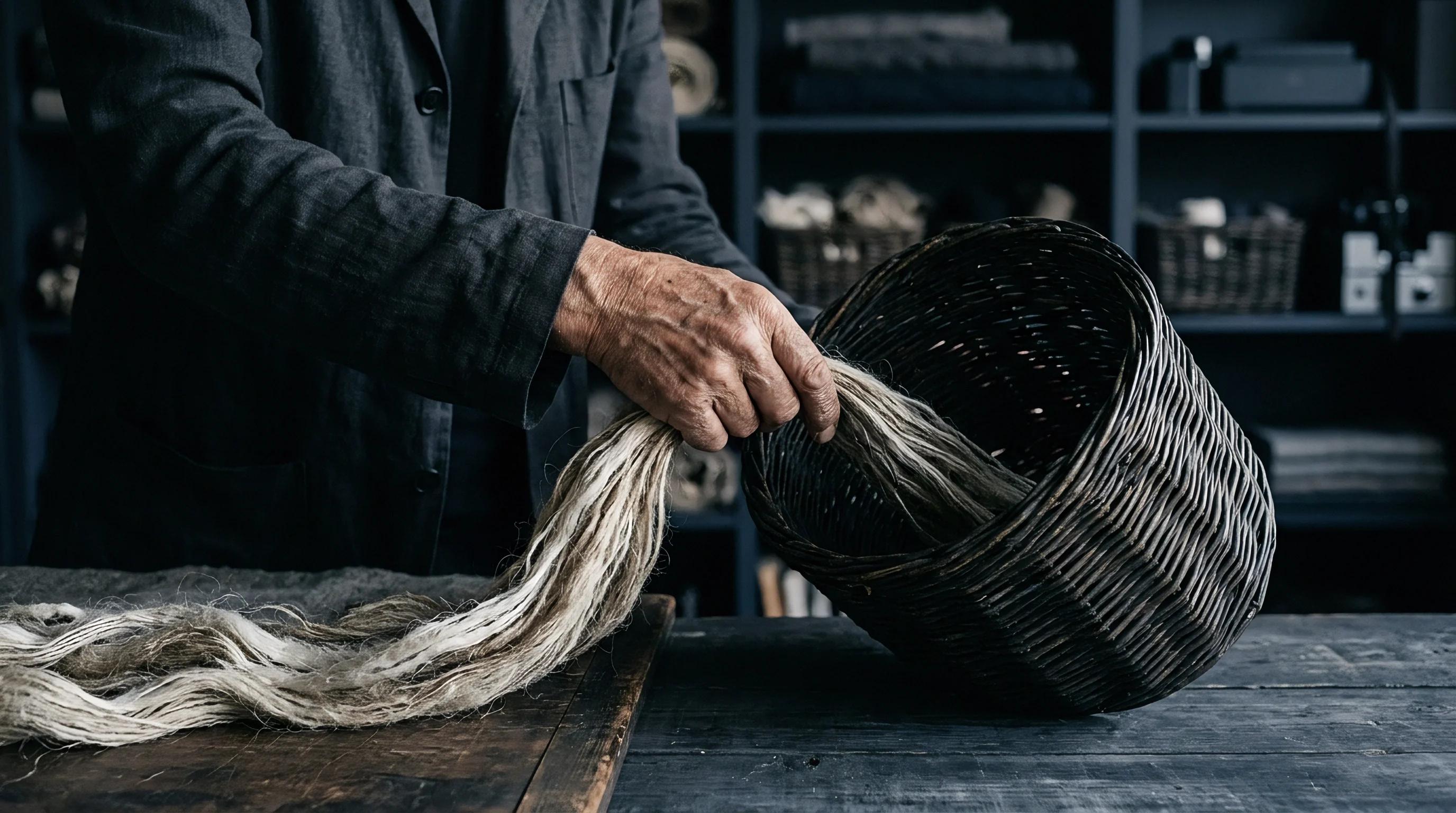
Individual ultimate fibers slide past one another only after the intercellular glue weakens under thermal fluid contact. As the ester bonds cleave, cohesive shear strength between elementary fibers decreases from over 140 kPa to less than 30 kPa. When cohesive strength falls below the applied drafting force, fiber bundles undergo controlled slip and attenuation.
Excessive pectin removal leads to premature strand separation, fiber flocking, and localized drafting waves. Insufficient solubilization leaves fiber bundles stiff, yielding coarse yarns with high mass variation and poor tenacity values under ISO 2062 testing protocols.
Higher bath temperatures accelerate binder breakdown while shortening the allowable residence time before bundle integrity collapses.
Spinning machinery representatives often claim that increasing bath temperatures solves drafting instability, ignoring how accelerated chemical breakdown destabilizes the fiber core under high drafting tensions.


Film
Liquids surrounding high-speed fiber strands establish dynamic hydraulic boundary layers that dictate chemical flux. When wet roving moves continuously through a static or counter-flowing water bath, liquid friction forms a boundary layer that travels alongside the strand surface. Boundary layer thickness drops.
High-speed drafting thins this fluid coating, shortening the diffusion path for dissolved pectin molecules moving out of the fiber bundle core into the bulk fluid bath. At drafting speeds above 50 meters per minute, dynamic fluid shear forces within the boundary layer approach the tensile yield limit of softened middle lamellae.

Hydrodynamic Boundary Layer Dynamics at High Lineal Speeds
Moving strand surfaces pull adjacent water forward through viscous drag forces inside the bath. The thickness of this boundary layer varies inversely with the square root of the local Reynolds number along the strand axis. Near the entry point of the trough, the boundary layer expands rapidly, creating a viscous drag sheath.
As linear velocity escalates, the shear rate within this thin liquid layer increases exponentially. High shear stress strips solubilized pectin molecules from the outer strand boundary, maintaining a maximum concentration gradient that drives further dissolution from internal fiber interfaces.

Mass Transport Resistance across Liquid Interfaces
Solubilized polymers face a steep concentration gradient between the strand core and the bulk fluid bath. Fickian diffusion governs the mass flux of pectin fragments through intra-bundle pores, while convective transport dominates movement across the external hydrodynamic boundary layer. When boundary layer transport outpaces internal pore diffusion, the strand exterior becomes depleted of binder while the strand core remains unsoftened.
This non-uniformity creates severe mechanical stress differentials across the roving cross-section during drafting attenuation.
- Boundary layer detachment leads to uneven binder removal along the strand axis, causing localized thick and thin segments during attenuation.
- Hydraulic boundary starvation occurs when boundary fluid fails to replenish, trapping dissolved polymers near the fiber surfaces.
- Viscous dissipation drag spikes line tension beyond the yield threshold of softened middle lamellae.
- Turbulent boundary mixing strips excess inter-fiber binder prematurely, inducing fiber flocking in the drafting zone.
Higher linear delivery speeds demand tighter thermal bath controls to prevent local boundary layer thinning from eroding bundle cohesion.

Plume
Temperature differences between incoming ambient fiber strands and heated bath liquor generate localized fluid instabilities. Ambient roving enters the trough at temperatures between 18°C and 22°C, while bath liquor operates at 60°C to 75°C. Viscosity drops sharply. Thermal energy transfers rapidly from the bath fluid into the cold strand, inducing localized density variations within the fluid boundary layer.
Buoyancy forces act upon these density gradients, generating vertical fluid plumes and micro-convective eddies surrounding the advancing fiber bundle.

Thermal Instabilities inside Hot Water Troughs
Cold strands entering a seventy degree bath create immediate lateral temperature gradients within the surrounding boundary fluid. Water dynamic viscosity drops from 1.002 mPa·s at 20°C down to 0.467 mPa·s at 60°C. This massive drop in fluid viscosity destabilizes the laminar flow profile within the boundary layer. Buoyancy-driven convection currents disrupt the steady-state diffusion of pectin, causing local variations in fluid temperature and dissolution rates along the strand path.
The thermal Rayleigh-Bénard convection cells observed within wet-spinning troughs mirror the buoyancy-driven flow instabilities encountered in double-pipe heat exchanger jackets. Controlling these micro-eddies prevents localized flow separation along the moving boundary. Thermal gradients disturb alignment.
Friction governs drafting stability.
Water dynamic viscosity drops by fifty-three percent as fluid temperature rises from twenty to sixty degrees Celsius, shifting boundary drag mechanics dramatically.
| Local Fluid Temp (°C) | Dynamic Viscosity (mPa·s) | Prandtl Number | Boundary Thickness (mm) | Rayleigh Number |
|---|---|---|---|---|
| 20 | 1.002 | 7.01 | 1.45 | 1.2 x 10³ |
| 40 | 0.653 | 4.34 | 1.12 | 4.8 x 10³ |
| 60 | 0.467 | 3.01 | 0.88 | 1.5 x 10⁴ |
| 80 | 0.355 | 2.22 | 0.69 | 3.9 x 10⁴ |
Viscosity Gradients and Hydrodynamic Boundary Instability
Fluid shear stress fluctuates across the thermal boundary, creating uneven hydrodynamic drag on outer fiber bundles. Fluid boundary layer thickness calculations rely on a baseline thermal diffusivity of 1.43 x 10⁻⁷ m²/s for pure water at 60°C. This parameter rests on standard hydrodynamic tables from ISO 6741 calibration environments using ten parallel strand observations. Increasing the dissolved organic load in recycled bath liquor alters fluid heat capacity, expanding boundary layer thickness by up to twelve percent.
When thermal instability triggers local turbulence, boundary layer drag forces shift erratically, causing mechanical jitter at the drafting roller entrance.
- Thermal boundary collapse occurs when cool incoming fiber bundles strip heat faster than trough recirculation manifolds supply it.
- Localized viscosity surging alters hydrodynamic drag forces within the front drafting nip.
- Convective plume divergence deflects incoming strands off the ideal drafting plane.
- Interfacial temperature oscillation induces cyclic variations in pectin hydrolysis rates.
Uncertainty remains regarding whether high-frequency thermal imaging can capture micro-convective thermal plumes inside narrow drafting troughs before yarn evening variations manifest on the cone.


Roving
Attenuating wet fiber slivers between back and front drafting rolls requires precise balancing of inter-fiber friction. Flax fibers require cohesion. As the strand exits the trough and enters the roller nip, combined forces of hydrodynamic drag, mechanical clamping, and interfacial friction dictate attenuation behavior.
Drafting speed alters drag. Slip-stick behavior creates defects. End breaks raise costs.
Non-isothermal boundary layer instabilities disrupt the uniformity of liquid film thickness between individual fibers, causing abrupt transitions between static and kinetic friction during fiber displacement.

Drafting Force Fluctuations and Fiber Slip
Slippage occurs when hydrodynamic drag and binder dissolution reduce inter-fiber shear strength below the drafting force threshold. When boundary layer instabilities cause local temperature spikes, pectin dissolution rates accelerate instantly. The sudden loss of middle lamella shear strength reduces inter-fiber friction, allowing whole fiber bundles to slip uncontrolled through the drafting zone.
This uncontrolled slip creates severe thin places in the drawn strand, followed immediately by thick places as un-softened strand segments resist attenuation.

Which Temperature Threshold Triggers Interfacial Slip?
Operating bath temperatures above sixty-five degrees Celsius rapidly accelerate pectin stripping and trigger premature fiber sliding. The exact critical shear stress threshold required to initiate micro-slip at 55 meters per minute remains uncertain across unhackled tow blends, with published estimates spanning 12 to 28 kPa. Industrial buyers handle this uncertainty by specifying a conservative maximum operating trough temperature of 62°C in yarn supply contracts.
Uniform temperature prevents waves. Yarn strength depends on binder.
- Measure incoming strand temperature and ambient moisture regain prior to trough entry.
- Submerge the fiber strand into the heated water trough at a controlled line speed of forty-five meters per minute.
- Monitor local temperature gradients at the entry nip using sub-millimeter thermistors placed two millimeters from the strand surface.
- Adjust draft ratio settings at the front roller assembly to compensate for reduced inter-fiber dynamic friction.
- Sample output yarn on a daily basis to verify mass variation coefficients according to ISO 2060 standards.
Yarn delivery contracts specifying ISO 2062 breaking tenacity compliance suffer immediate penalty rejections when trough thermal spikes induce structural drafting waves.
Failing to stabilize non-isothermal boundary layers during high-speed drafting increases yarn irregularity, driving end-breakage rates above acceptable mill targets and raising production costs per linear meter.


Audit
Verification of wet-spinning thermal control systems demands rigorous mill-floor inspection routines. Operating frames at delivery speeds above 50 meters per minute exposes every flaw in fluid temperature regulation and chemical bath circulation. Trough flow requires monitoring.
Technical auditors check fluid circulation velocities, thermal manifold delivery variations, and organic load buildup in process water. Inadequate bath control degrades yarn Lea count consistency, directly affecting finished fabric weight and market pricing per meter.

Mill Floor Verification of Drafting Boundary Conditions
Systematic monitoring of trough fluid circulation prevents localized temperature drops that corrupt binder dissolution rates. Fluid delivery manifolds maintain uniform flow rates across all spinning positions on the frame. Auditors deploy submerged thermal sensor arrays to verify that fluid temperatures vary by less than 0.8°C along the entire length of the drafting trough.
Automated dosing pumps adjust fresh water turnover rates to keep dissolved pectin concentrations below critical saturation levels, preserving rapid mass transfer kinetics across the strand boundary.
| Lineal Speed (m/min) | Trough Temp (°C) | End Breaks (/1000 sp-hr) | Mass CV% (ISO 2060) | Tenacity (cN/tex) | Landed Cost ($/kg) |
|---|---|---|---|---|---|
| 35 | 55 | 18.2 | 11.4 | 28.5 | 8.45 |
| 45 | 62 | 22.5 | 12.1 | 27.2 | 7.90 |
| 55 | 68 | 41.0 | 15.8 | 22.1 | 8.15 |
| 65 | 75 | 78.4 | 21.2 | 17.4 | 9.10 |
Economic Trade Offs in High Speed Wet Spinning
Capital expenditures for precision thermal management systems pay dividends by allowing higher frame speeds without sacrificing Lea count evenness. Increasing line speed from 35 to 45 meters per minute reduces spinning labor and overhead costs by 12 percent per kilogram of yarn produced. Pushing line speeds to 65 meters per minute under un-stabilized bath conditions increases end breaks to 78 per 1000 spindle hours, obliterating yield gains through excessive fiber waste and frame downtime.
Linear density dictates yarn count.
Precise temperature regulation in the wet drafting bath maintains consistent dynamic friction along the entire fiber strand profile.
Incorporating ISO 6741 conditioning requirements alongside strict thermal tolerance clauses in yarn procurement agreements shifts financial liability for mass irregularity back to the spinner.