Moisture Contraction
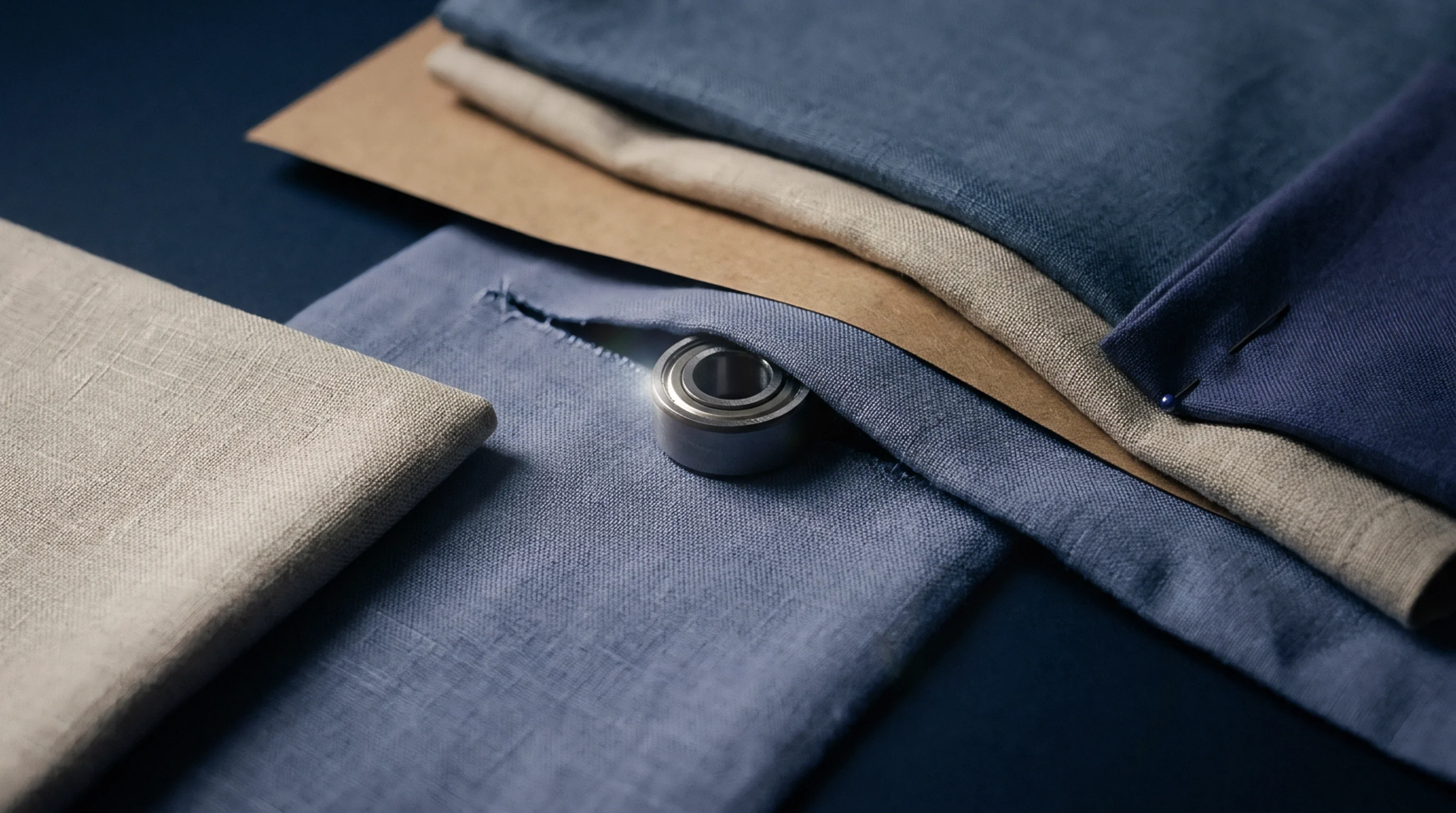
Dimensional fabric reactions that occur when a newly woven textile is immersed in water and allowed to dry without tension determine the permanent reduction in its length and width. This process is called wet relaxation shrinkage, which arises from the release of mechanical stresses introduced during spinning and weaving. It is the primary cause of dimensional instability in untreated linen fabrics.
It differs from thermal or chemical shrinkage in that it is driven entirely by the relaxation of the fibers.
Strain Release
Soaking the woven linen in water allows the swollen fibers to reorganize into a more stable physical state, which reduces the internal tension of the yarns. The wet relaxation shrinkage is particularly high in linen because of the high tension applied to the warp threads during high-speed loom operation. When the fabric is wetted, the flax fibers swell and the yarns crimp, drawing the fabric closer together in both directions.
This relaxation must be fully completed before the fabric is cut and sewn to prevent subsequent shrinkage during laundering. Mills use continuous washing and drying machinery to trigger this relaxation before the fabric is shipped to buyers.
Quality Control
Measuring the fabric dimensions before and after a standard washing cycle provides the percentage of dimensional change. This test is a standard requirement for linen export shipments to ensure compliance with buyer specifications. Achieving low relaxation values prevents consumer returns.