Mechanical Equilibrium
Woven linen manufacturing depends upon the precise warp let off tension setting to govern beam release during shedding. Chinese flax mills record this operational boundary inside the production register alongside yarn count and pick density. Excessive beam constraint restricts movement, whereas slack delivery introduces loose picks that degrade fabric uniformity.
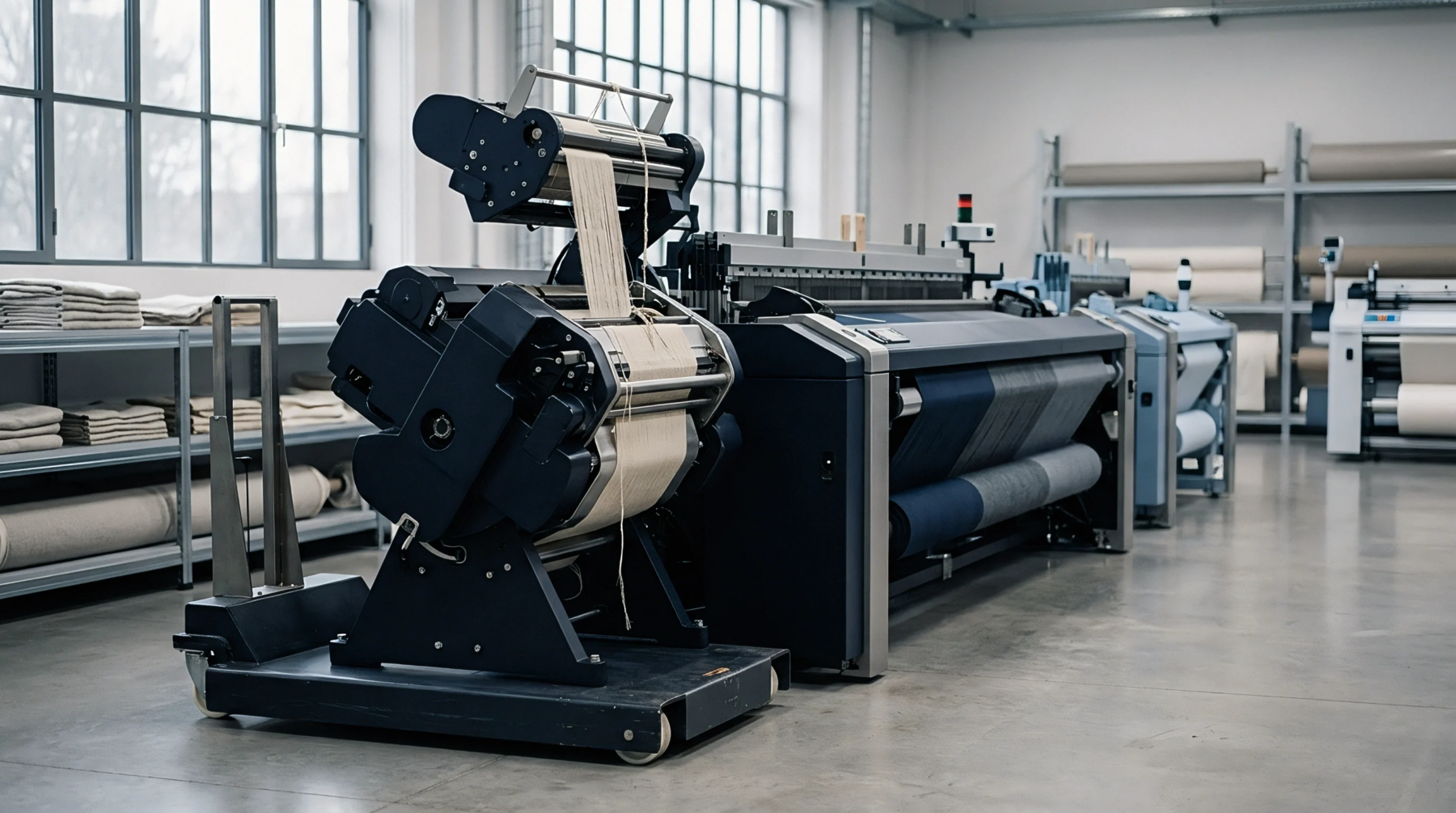
Mechanical regulators govern the mechanical release mechanism by monitoring beam diameter reduction. Sensors detect declining circumference during consumption and adjust brake friction progressively to maintain consistent longitudinal force from full beam to empty core. Raw flax fibres possess variable elasticity along each stalk, so automated calibration compensates for raw material inconsistency before yarn reaches the heddle frame.
Beam geometry changes continuously during production, so mechanical compensation prevents progressive elongation drift that damages finished cloth. Production supervisors inspect the mechanical log weekly to verify calibration accuracy against factory reference standards. Uncontrolled release speeds cause yarn abrasion during shuttle passage, while overcorrection snaps individual ends.
Beam Regulation
Tension control directly determines whether greige cloth satisfies commercial export grade criteria or drops to domestic utility categories. Export inspectors measure breaking load across random samples taken from finished bolts. Fabric grade standards demand uniform warp density without horizontal distortion, so proper mechanical calibration prevents density waves across the reed width.
Mill internal specifications impose stricter tolerances than buyer acceptance criteria to absorb environmental humidity shifts during storage. Ambient moisture alters flax elongation behaviour inside the damp weaving shed. Humidity swells cellulose microfibrils, so operators recalibrate beam resistance whenever hygrometer readings exceed factory thresholds.
Fibre grade classification occurs earlier during carding and combing, while fabric grade assessment evaluates the final woven structure. Buyer representatives reject shipments containing uneven reed marks, because irregular tension produces permanent visual stripes during subsequent piece dyeing.
Operational Boundary
Production parameters stop applying once the loom reaches the designated tail end threshold near the beam barrel. Below a specific remaining circumference, mechanical leverage alters beyond corrective limits. Operators disengage the automatic brake assembly during this final phase and finish the remaining yardage under manual observation.
Factory quality auditors verify that manual finishing procedures adhere to designated safety limits specified in the mill protocol. Mill management mandates retraining whenever final yard rejection rates exceed standard tolerances. Finished rolls undergo dimensional stability testing before packaging for maritime transport.
Final inspection certificates record whether warp tension remained within specified limits throughout the entire weaving cycle.