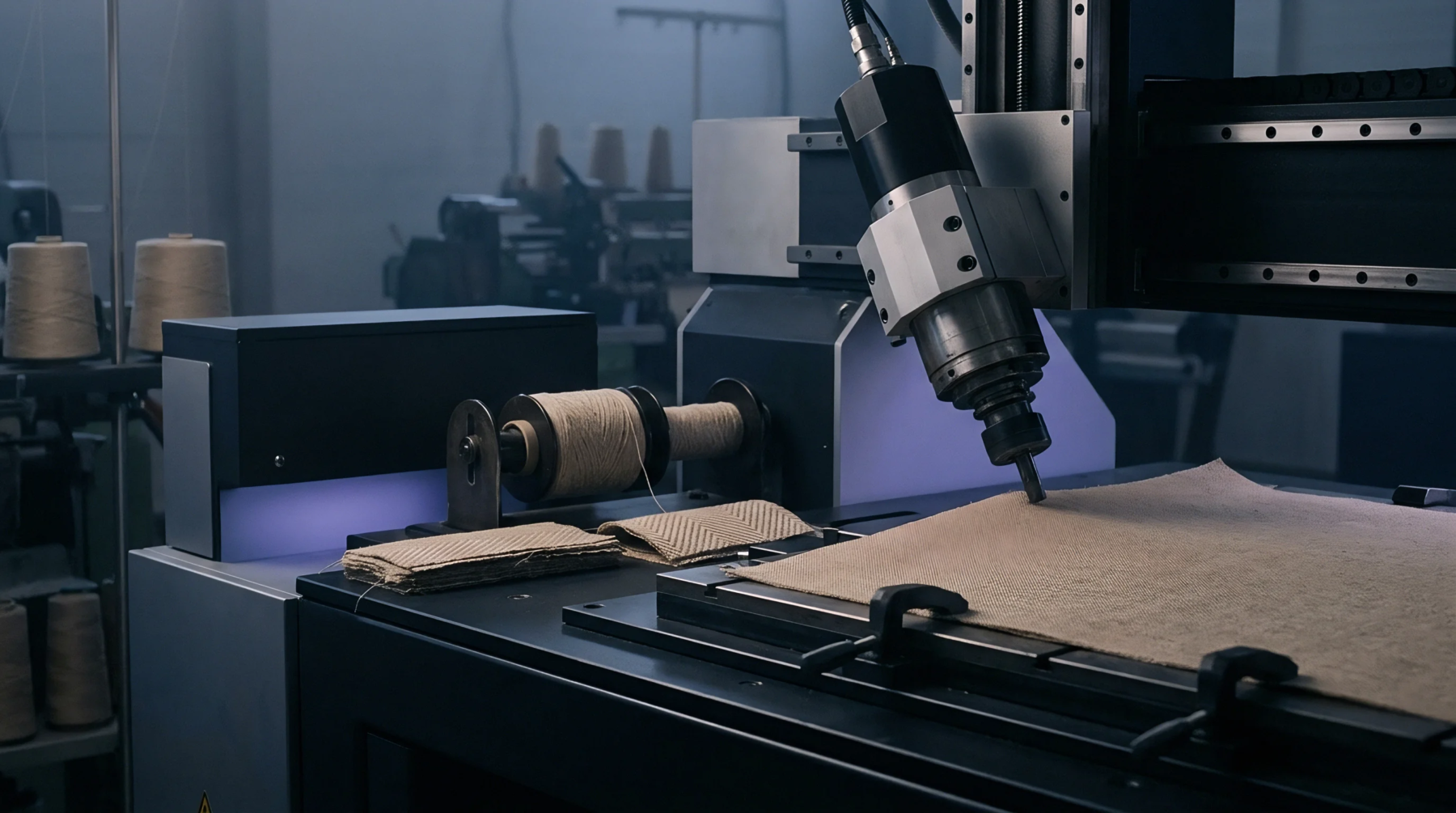
Greige Substrate
Loom-state textile fabrics formed from raw flax yarns exit manufacturing sheds without undergoing aqueous scouring, alkaline boiling, or chemical whitening. Fabric converters purchase unbleached flax cloth as the base raw material for specialty apparel and home furnishings. The natural textile retains its original greyish-tan colour, high pectin content, and native cellular encrustations.
This classification ends once the material enters preparatory scouring kettles or chemical bleaching baths.
Compositional Character
Non-cellulosic impurities account for fifteen to twenty-five percent of the total dry weight in raw flax textiles. Lignin, pectin, natural waxes, and mineral hemicellulose reside within the primary and secondary cell walls of the constituent bast fibres. These natural bonding substances impart pronounced stiffness and low moisture absorbency to the grey cloth.
Warp sizing agents applied during preparatory slashing operations contribute additional starch or synthetic polymers to the outer fabric surface. Evaluating the greige fabric involves measuring tensile strength and pick density under standard laboratory conditions. Inherent surface slubs and thickness irregularities reflect traditional flax yarn spinning methods, providing the tactile irregularities associated with authentic linen goods.
Commercial Acceptance
Physical grading protocols verify greige fabric quality against national standards such as Chinese GB/T 5324 before batch dispatch. Purchasing contracts for unbleached flax cloth specify strict tolerances for mechanical defects, including oil stains and broken warp ends. Defect frequency determines whether a fabric roll achieves first-class or substandard commercial categorization under standard four-point grading frameworks.
Converters calculate expected dimensional shrinkage during subsequent wet finishing, factoring in typical area losses of five to twelve percent. Systematic batch inspection guarantees that unbleached flax cloth meets structural specifications before converters commit funds to expensive dyeing and finishing processes.