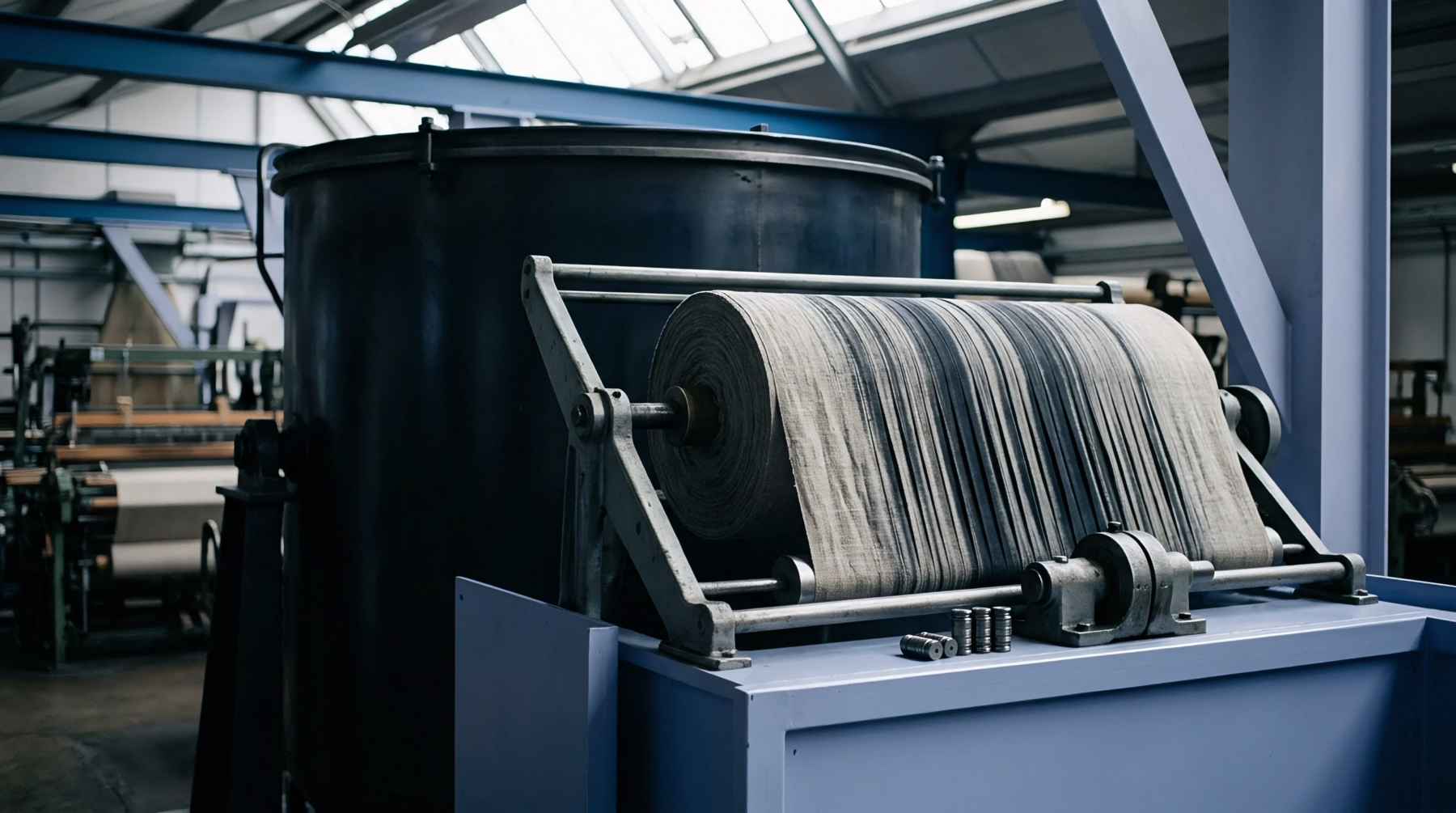
Warp Mechanical
Automated equipment connects individual yarn ends from a supply beam to a residue beam during the final stage of weaving preparation to maintain continuous production cycles in high volume linen mills. A tying in machine performs this linkage by selecting specific threads from a depleted warp and joining them to the corresponding strands of a new supply. Sensors detect the presence of individual flax yarns while mechanical needles execute the knotting process at speeds exceeding several hundred connections per minute.
Precise alignment prevents crossed threads which cause loom stops and damage fabric uniformity. This hardware minimizes idle hours between beam changes to keep equipment running.
Linkage Technical
Operators load the machine onto the loom or a stationary frame before adjusting the tensioning guides for the specific yarn count. Each strand passes through a detection head that verifies yarn presence and identifies broken filaments. Once the device registers the alignment, it initiates the mechanical binding sequence.
The unit cycles across the full width of the reed to connect thousands of ends in a continuous sweep. Internal monitoring systems detect improper knots and stop the cycle to prevent flawed sections in the cloth. Correct setup ensures the warp density matches the loom configuration requirements exactly to avoid downstream defects.
Production Operational
Mills measure efficiency by the ratio of successful knots to total ends per meter of warp width. These figures appear on the daily output report alongside downtime logs for maintenance or equipment error. Management assesses the output against the quality requirements stipulated in the buyer contract to ensure compliance with density and strength norms.
Fabric acceptance criteria depend on the consistency of these joints, as weak connections fail under the high tension of the weaving process. A machine with consistent knotting performance reduces the frequency of warp breakages during the subsequent conversion of flax fibre into finished cloth. Stable performance of this equipment dictates the overall throughput of the facility and prevents significant material waste during high speed operation.
Proper adjustment allows for the production of consistent linen textiles across lengthy runs.