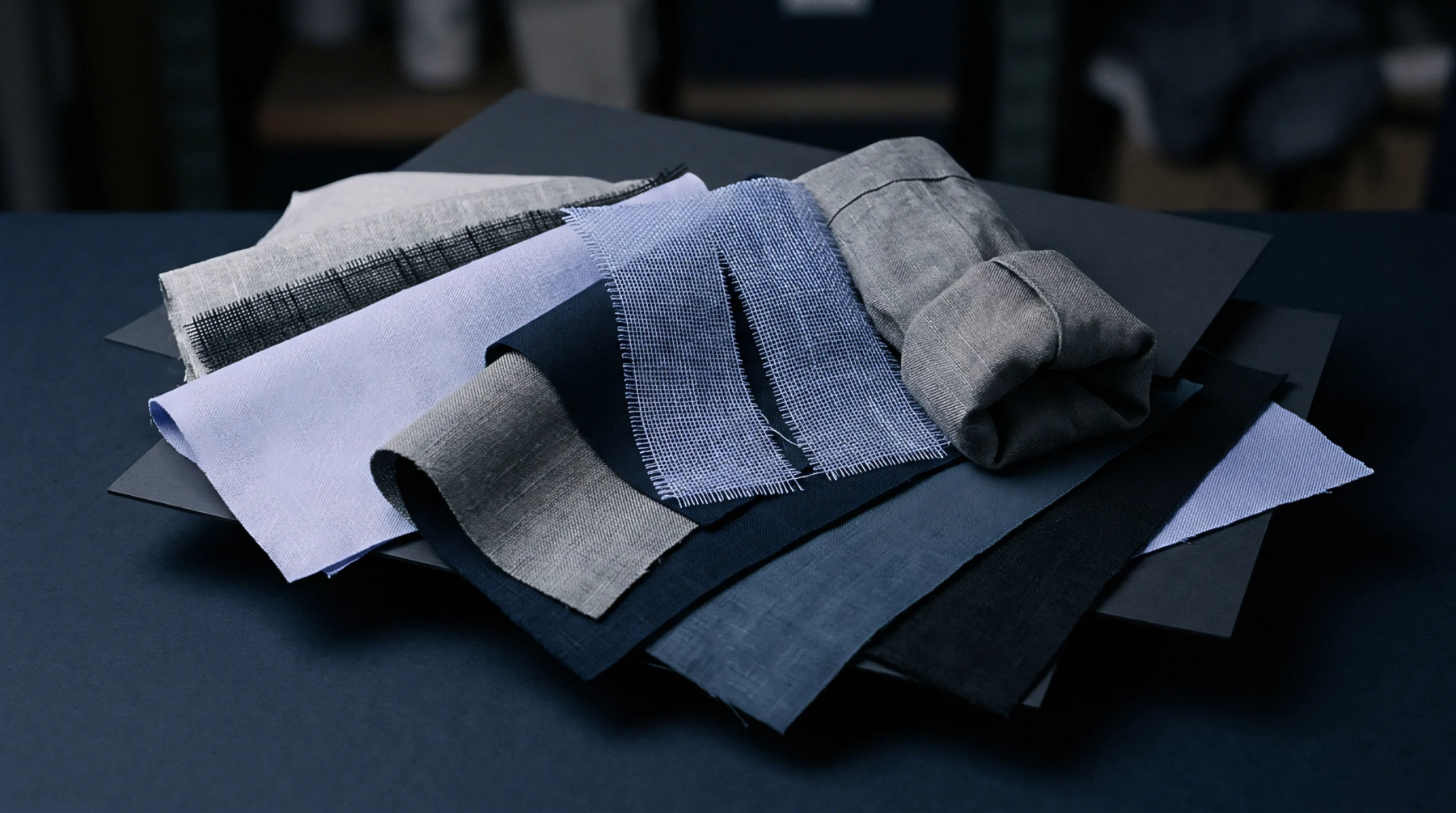
Mechanical Finish
Kinetic relaxation belongs to the finishing stage of linen production, where woven cloth passes through pressurized pneumatic nozzles to relieve internal yarn stresses accumulated during high-speed loom operations. Air streams drive the fabric loop through cylindrical chambers at controlled velocities, causing constant high-frequency collisions between individual strands and internal machine walls. Mechanical action alters the microstructural geometry of flax yarns by releasing torsional constraints locked into the core during wet spinning and warp sizing.
Tensionless air-jet tumbling operates exclusively on dry woven fabric immediately after desizing and scouring, terminating before any resin application or calender smoothing alters the final hand. Residual shrinkage values and breaking elongation percentages recorded in the mill finishing log determine the required duration of pneumatic agitation.
Fabric Handle
Softness metrics depend entirely on the randomized kinetic impact generated by pneumatic agitation, which breaks microscopic hydrogen bonds holding rigid cellulose microfibrils in tight parallel alignment. Individual flax fibers separate slightly within the yarn bundle during repeated high-speed collisions, yielding a supple drape without sacrificing the tensile strength demanded by garment exporters. Buyer acceptance criteria differ fundamentally from internal mill quality standards, because retail purchasers evaluate surface friction and drape flexibility by handfeel, whereas mill technicians measure bending length and crease recovery angles using standardized Shirley stiffness testers.
Fabric grades achieved through pneumatic softening satisfy high-end apparel specifications where traditional mechanical beating causes warp distortion or yarn breakage.
Process Limit
Pneumatic treatment parameters must remain within strict operational boundaries to prevent excessive fuzz formation on the face of the linen cloth. Excessive nozzle pressure accelerates fiber surface abrasion beyond acceptable limits, turning the natural matte luster of flax into an unwanted flannel-like nap that violates export grade specifications. Operators adjust air velocity and dwell time according to the areal density of the woven batch, compensating for variations in initial yarn twist and flax staple length.
Mechanical relaxation protocols stop immediately when fabric tearing strength drops below the minimum threshold established in the buyer purchase contract.