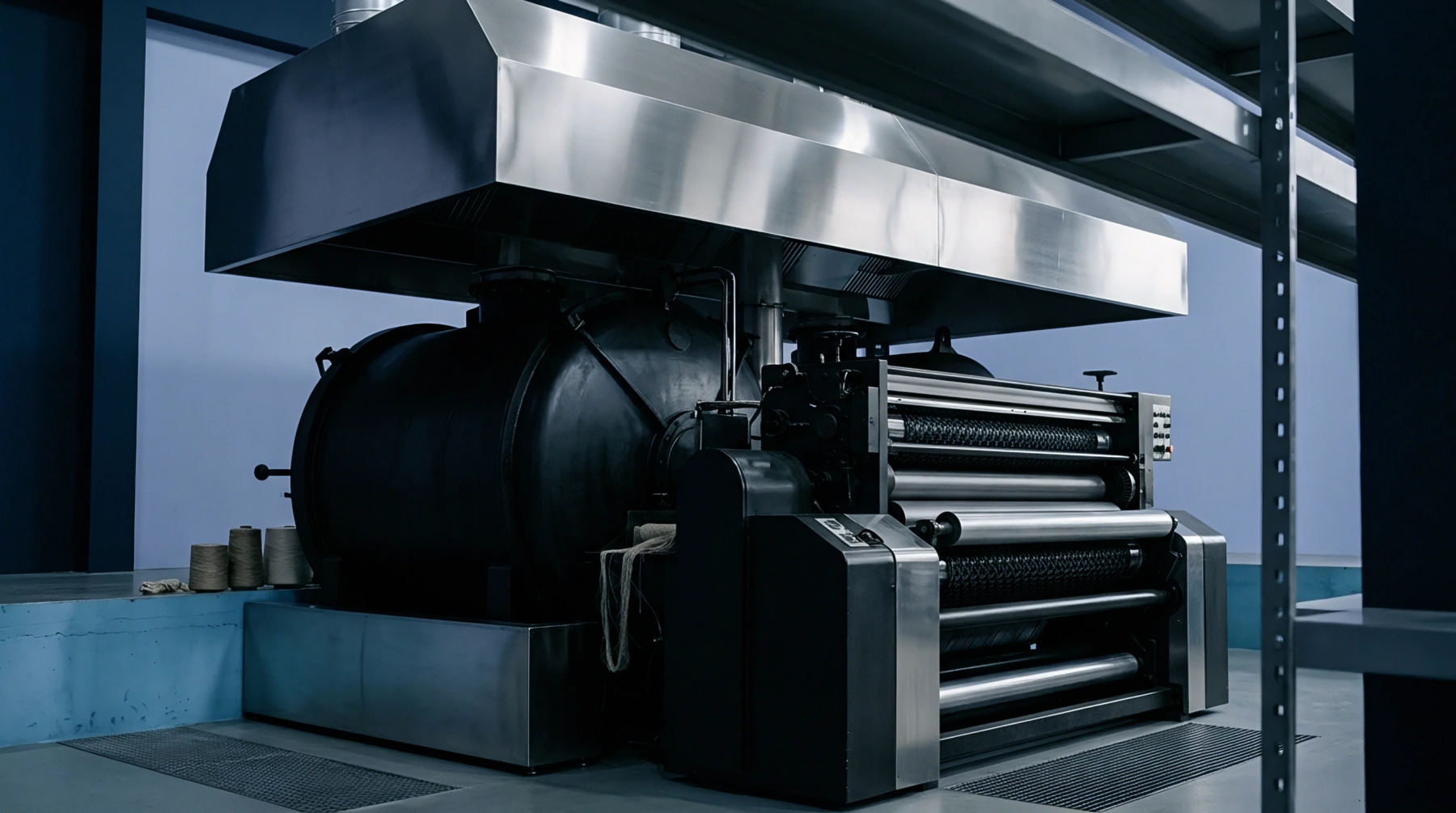
Hydraulic Fiber Treatment
Mechanical energy transmission via liquid projection drives the separation of bast fibers from woody shive particles during the wet-processing phase of flax refining. Submerged micro-jet agitation uses high-velocity nozzles directed into a pulp suspension to dislodge botanical impurities without compromising the structural integrity of the cellulose strands. This physical displacement process creates a turbulent environment that forces debris away from the main fiber mass into a secondary filtration stream.
Effective separation relies upon the precise calibration of jet velocity relative to the fiber density inside the tank.
Operational Efficiency
Consistent throughput at the finishing station requires precise control of the fluid pressure generated by the pump units. Submerged micro-jet agitation stabilizes the consistency of the fiber slurry by preventing the settling of heavy pectin remnants on the base of the processing vessel. Technicians monitor the discharge pressure to ensure that fiber breakage stays below the threshold defined by standard textile grade assessments.
Increased turbulence reduces the time required for chemical scouring stages. Proper management of these flow dynamics prevents the formation of clumps that obstruct downstream extrusion or carding machinery.
Traceability Documentation
Batch records generated during the initial refining stage document the duration and intensity of the jetting cycle. Manufacturers track the usage of submerged micro-jet agitation to verify that every lot of fiber undergoes uniform cleaning before moving to the bleaching or spinning departments. Quality auditors cross-reference the recorded flow rates against the batch inventory tags to ensure the finished product meets the chemical-free purity requirements for linen fabric production.
High-intensity fluid cycles improve the tensile strength of the resulting yarns. Precise machine logs confirm the elimination of biological contaminants prior to the final export certification.